Saturday, February 10, 2018

The Ariel Poems: The Cultivation of Christmas Trees


There are several attitudes towards Christmas,
Some of which we may disregard:
The social, the torpid, the patently commercial,
The rowdy (the pubs being open till midnight),
And the childish – which is not that of the child
For whom the candle is a star, and the gilded angel
Spreading its wings at the summit of the tree
Is not only a decoration, but an angel.
The child wonders at the Christmas Tree:
Let him continue in the spirit of wonder
At the Feast as an event not accepted as a pretext;
So that the glittering rapture, the amazement
Of the first-remembered Christmas Tree,
So that the surprises, delight in new possessions
(Each one with its peculiar and exciting smell),
The expectation of the goose or turkey
And the expected awe on its appearance,
So that the reverence and the gaiety
May not be forgotten in later experience,
In the bored habituation, the fatigue, the tedium,
The awareness of death, the consciousness of failure,
Or the piety of the convert
Which may be tainted with a self-conceit
Displeasing to God and disrespectful to the children
(And here I remember also with gratitude
St. Lucy, her carol, and her crown of fire):
So that before the end, the eightieth Christmas
(By “eightieth” meaning whichever is the last)
The accumulated memories of annual emotion
May be concentrated into a great joy
Which shall be also a great fear, as on the occasion
When fear came upon every soul:
Because the beginning shall remind us of the end
And the first coming of the second coming.

--T.S. Eliot

Friday, February 09, 2018

Well, is it?


I hate taking things out of context.  Then again, I like the practice of lectio divina.

Go figure.

So the daily news holds no interest for me at the moment.  Maybe I'm subconsciously preparing for Lent.  Less grandly, maybe I'm just at the end of my interest for the moment.  Either way, I'm pondering this sentence by Levinas:

"Is time the very limitation of finite being or is it the relationship of infinite being to God?"

Talk among yourselves.  I'm gonna be busy for awhile.

Wednesday, February 07, 2018

Missed it by that much!


Or:  close only counts in horseshoes and hand grenades.

Yeah, it was cool to see those rocket boosters land like something out of a CGI movie.  But imagine this was a manned flight.

Not so cool anymore....

UPDATE:  NTodd tried to post a comment here and failed (I blame Elon Musk!).  I felt it only fair I at least link to it.  So I did.

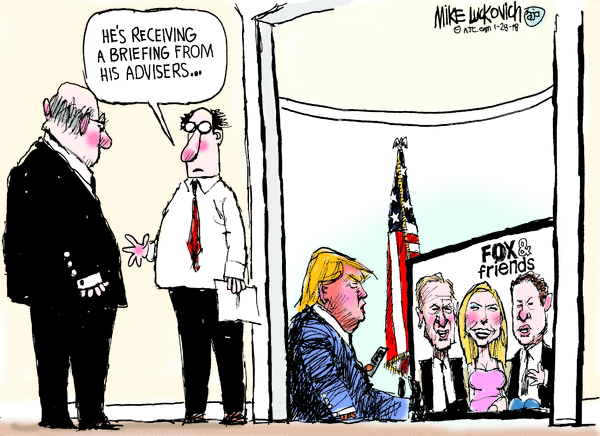
Clearly this WAS his "Intelligence Briefing"


Isn't it obvious?

ADDING:  If I'd known this "bombshell" originated with Sen. Ron Johnson (R-Box o' Rocks), I'd have known it was as significant as the "secret society" he also found in these texts.  But you know, it's frightening this is the information the President pays attention to during an "intelligence briefing."

When everything is a conspiracy


Are we all co-conspirators?  Or has the stock market committed treason?

Tuesday, February 06, 2018

None Dare Call It Reason


There is a scene at the end of Bradbury's Something Wicked This Way Comes which has acquired more importance for me recently.  The elderly father of one of the young boys in a town terrorized by Cougar and Dark's Pandemonium [House of All Demons!  Been a long time since I read that novel, and I didn't make the connection to Milton's neologism until now!] and Shadow Show, finds himself injured and trapped in the town library with the Dust Witch, who attempts to weave a spell and stop his heart.  What prevents this horror from happening?  He starts laughing.  Fear of the witch is based entirely on taking her seriously, and this he finds he cannot do.  He starts laughing, and it is his best weapon.

I cannot recommend that lesson too strongly with that is going on now.

It started here:

"They were like death and un-American. Un-American. Somebody said, 'treasonous.' I mean, Yeah, I guess why not? Can we call that treason? Why not? I mean they certainly didn't seem to love our country that much."

And even Chris Cilizza knew where it was going next:

Trump loyalists will dismiss all of this as much ado over nothing. He was joking! He didn't even say that it was treasonous! He was just agreeing with people who said it was treasonous!

Because it did:

 “The president, Gidley said, was simply trying to make the point that there are positive things going on that all Americans should celebrate regardless of their party.”

Asked for further comment, White House press secretary Sarah Huckabee Sanders told TPM in an email: “Hogan is correct. He was clearly joking. He was making the point that even when good things are happening they are still sitting there angry.”

Which can be tossed off as just the White House still trying to prove it's point, that "angry Dems" means he won the schoolyard contest.  But then what to make of this?

“I think that says it all when it comes to the Democrat response,” Collins claimed. “They were stoic, sitting on their hands. They did not want to applaud at any turn…it was just a very partisan reaction. And I’ve sat through some of former President Obama’s states and we were–”

Camerota played a series of clips from President Barack Obama’s address in 2010 and 2013, showing Republicans stone-faced, many shaking their heads.

“Why wasn’t that embarrassing?” Camerota asked.

Collins argued that it was a level of “degrees.” Democrats did the same thing to Trump, however, it was different, Collins argued. Because “Democrats were more subdued” while Republicans were “reserved.”

Camerota laughed out loud asking how both groups not applauding can mean one was more subdued than the other. 
(and kudos to Alisyn Camerota for not playing that in the old school manner of "You heard it here first, folks!"  Some assertions don't deserve the deadpan "objective" response of a "journalist."  Laughter is the best poison.)

Pointing and laughing is always a good response, because this particular meme is not dead yet:

“I would say it was un-american. And they don’t love our country. I don’t know if I would go as far as treasonous,” Tenney said on CNN Tuesday morning when asked About Trump’s comments about Democrats’ behavior during his speech.

Tenney defended Trump’s criticisms for Democrats, telling CNN that the President just “likes to talk in colorful language.”

“But I sat on the Democratic side, and I was frankly appalled at the behavior of the Democrats,” she added.

The congresswoman was particularly offended that Democrats were not more enthusiastic about Trump’s offer to grant a path to citizenship to the 1.8 million immigrants eligible for the Deferred Action for Childhood Arrivals program.

“My first blush at it at the State of the Union was, wow, this is really generous. And I was just shocked. I had Democrats sitting behind me that sat on their hands, not seeing what the President was trying to do,” Tenney said.

Asked if Republicans were equally resistant to President Barack Obama during his State of the Union speeches, Tenney insisted they were not.

“I saw many more Republicans en masse standing up in President Obama’s State of the Union addresses,” she said.

And even the RNC thinks this is a valid point for a political ad.    And yes, glib use of the word "treason" is not something to take lightly:

-- Obama used the word “treason” only twice during his eight years in office. Not coincidentally, he was discussing the rise of Trump both times. As the Republican primaries raged on in March 2016 and the establishment tried to block Trump from securing the nomination, Obama said during a fundraiser in Austin that their party wouldn’t be in that position if elected Republicans had not looked the other way for years while Trump falsely accused him of being from Kenya.

“As long as it was directed at me, they were fine with it. … Now, suddenly, we're shocked that there's gambling going on in this establishment,” Obama said. “What's happening in this primary is just a distillation of what's been happening inside their party for more than a decade. The reason that many of their voters are responding is because this is what's been fed through the messages they've been sending for a long time: that you just make flat assertions that don't comport with the facts; … that compromise is a betrayal; that the other side isn't simply wrong … but the other side is destroying the country or treasonous.

“So they can't be surprised when somebody suddenly looks and says, ‘You know what, I can do that even better! I can make stuff up better than that! I can be more outrageous than that! I can insult people even better than that! I can be even more uncivil,’” Obama continued. “If you don't care about the facts or the evidence or civility in making your arguments, you will end up with candidates who will say just about anything and do just about anything.”

The next day in Dallas, Obama lamented Trump’s proposed Muslim ban and his harsh anti-immigrant rhetoric. “We can have political debates without thinking that the people who disagree with us are all motivated by malice,” the then-president said. “We can support candidates without treating their opponents as unpatriotic or treasonous or somehow deliberately trying to weaken America.”
Compare and contrast; but don't take it so seriously you ignore the forest for the trees.  Yes, there is a reason treason is the only crime whose elements are specified in the Constitution.  Yes, it is the nuclear bomb of criminal charges, and no, there are no "small" acts of treason that can be alleged in order to deter larger acts (anymore than a "small" nuke can be used on a belligerent as a warning, rather than an act of war unforgivable by the nations).  But we cannot remove Donald Trump from office for such loose (and louche) language.  Pointing and laughing is definitely the response called for.

It's the one thing Trump can't stand.

Monday, February 05, 2018

Knocking Down Plaster Saints

I didn't watch the Super Bowl (no brag, just fact; I was out for dinner, and generally not all that interested in it), so I missed the Dodge MLK ad:


Which I only post here so I can set up this:


Both excerpts are from the same sermon by Dr. King.  What a difference that makes.

The Morning After the morning after

As always, where the real entertainment was....

I really wondered how long it was going to take him:


Of course, this is only because he listened to his brain trust:

Or that could be because they praised him for keeping the elephants away from the Super Bowl.  Still, F&F has to be where this came from:
This was believed to be a reference to a "Save the NHS" march on Downing Street on Saturday demanding more funding for the health service.
(and here's the link to the BBC story that was originally linked in that quote)  But as ever, it's a pretty safe bet that, if Trump said it, it has no relationship to reality whatsoever.

Sunday, February 04, 2018

"Seeing is Believing"


Isaiah 64:1-9
64:1 O that you would tear open the heavens and come down, so that the mountains would quake at your presence--

64:2 as when fire kindles brushwood and the fire causes water to boil-- to make your name known to your adversaries, so that the nations might tremble at your presence!

64:3 When you did awesome deeds that we did not expect, you came down, the mountains quaked at your presence.

64:4 From ages past no one has heard, no ear has perceived, no eye has seen any God besides you, who works for those who wait for him.

64:5 You meet those who gladly do right, those who remember you in your ways. But you were angry, and we sinned; because you hid yourself we transgressed.

64:6 We have all become like one who is unclean, and all our righteous deeds are like a filthy cloth. We all fade like a leaf, and our iniquities, like the wind, take us away.

64:7 There is no one who calls on your name, or attempts to take hold of you; for you have hidden your face from us, and have delivered us into the hand of our iniquity.

64:8 Yet, O LORD, you are our Father; we are the clay, and you are our potter; we are all the work of your hand.

64:9 Do not be exceedingly angry, O LORD, and do not remember iniquity forever. Now consider, we are all your people.

The sphere of intelligibility--the reasonable--in which everyday life as well as the tradition of our philosophic and scientific thought maintains itself, is characterized by vision.  The structure of a seeing having the seen for its object or theme--the so-called intentional structure--is found in all the modes of sensibility having access to things.  It is found in the intellectual accession to the state-of-things or to the relationships between things.  But apparently it is also found in the company human beings keep among themselves, between beings who speak to one another, and of whom it is said they "see one another."  This priority of knowledge is announced, where all that we call thought, intelligence, mind, or simply psychism, ties together.

--Emmanuel Levinas

We preference sight.  "To see" is to understand.  To have insight, is to have a deeper understanding.  Truth is a lamp for our feet.  Ignorance is darkness.  To gain knowledge is to bring something to light.

"Do you see this woman?"

It is dangerous to make fetishes out of phrases, but I can't escape this one.  To see is to know and to understand, so of course Simon doesn't see her.  How could he dare do so?  But that's only a part of it.  "Lord, when did we see you?," the sheep and the goats ask in Matthew's gospel.  You didn't; but you did.  And unless you see, how can you believe?  Oh, that God would come down, as in days of old!  If only we could see!

"The sphere of intelligibility...in which everyday life...maintains itself, is characterized by vision."  "Do you see this woman?"

More and more I think that simple question is at the heart of Christianity; or it should be.  Set aside the miracles, the sermons, the prayer in Gethsemane, even the loquacious Jesus who sucks all the air out of the room at his last meal before the crucifixion in John's Gospel (John alone among the gospels has Jesus eat another "last meal" before his gospel ends).  Don't toss it aside as irrelevant, but set it aside, gently, for the moment, and listen:  "Do you see this woman?"  The question is immediately followed with a challenge to the host's hospitality:

"Do you see this woman? I walked into your house and you didn't offer me water for my feet; yet she has washed my feet with her tears and dried them with her hair. You didn't offer me a kiss, but she hasn't stopped kissing my feet since I arrived. You didn't anoint my head with oil, but she has anointed my feet with myrrh. For this reason, I tell you, her sins, many as they are, have been forgiven, as this outpouring of her love shows. But the one who is forgiven little shows little love."

Jesus makes it perfectly clear:  what is important is how you treat people; what's important is your hospitality towards guests (we'll come to the issues of "hospitality" and "guests" in a moment).  In this case seeing is not understanding, seeing is accepting.  Of course, what Jesus is asking Simon to see, is Simon.  Everything she has done, he has not done.  Her actions are actually those of a lover; they are straight out of 1st century Greek erotic literature (which Luke would know if Jesus didn't, and Luke is telling this story).  Jesus sees them as hospitality, however, and contrasts that to Simon's failures to act as the perfect host.  It isn't really that she has shown love; it is that Simon has not shown hospitality.  "Do you see this woman?"  The question is not about sight, but about insight; not about vision, but about understanding.

See?

The sheep and the goats in Matthew's parable ask a pleading question, especially those about to be sent to the place of darkness, of wailing and gnashing of teeth:  "Lord, when did we see you?"  They mean vision, not metaphor.  Had they known it was God, they'd have been on their best behavior.  But they did not see, because they did not see.  They missed the sight, because they lacked insight.  Actually, all they lacked was an understanding of the importance, and the requirements, of hospitality.  The priority of knowledge, of seeing is believing, of seeing is understanding, led them to ignore the priority of humanity:  we must love one another.

"We must love one another, or die," Auden wrote; then decades later he decided that was a damned lie, we must die anyway.  But just as "love" doesn't have to mean a carnal or even intimate relationship with another, "die" doesn't have to mean "cessation of animal life."  There are many ways to love; there are equally many ways to die.  In "The Death of Ivan Ilyich," Ilyich is dead for his entire life, until he finally dies; there, in the moment before death, screaming his death agonies and his fears until death finally stops his breath, he realizes internally that death holds no terror for him.  In that moment he is alive; in that moment, he is fully human.  And then when he dies, although to his family and friends he is gone, it is as if he hasn't died.  But it's easy to see how dead he was, for so long, before he actually died.  Auden wasn't wrong; we must love one another, or die.  But Herbert McCabe was right, too:  if you do that, they'll kill you.

Do you see this woman?

Simon doesn't want to see her, of course.  She's a prostitute, and what is almost worse, a woman.  Actually, it is because she is a woman that she is a prostitute.  She is in his house where she has no excuse to be, because she is a woman among men.  She is anathema, and brings shame on him.  Shame is death, too.  We want to shame people today, to bring the opprobrium of death on them.  We don't want to kill Harvey Weinstein or Matt Lauer or Charlie Rose, but we want them to suffer the living death of ostracism through shaming.  Simon the Pharisee doesn't want to be shamed. He doesn't want to see that woman.  If a stripper were to walk into our dinner party and start giving the guest of honor a lap dance, who among us would want to see that woman?

Hospitality plays such a big role in Jesus' life and teachings.  The sheep and the goats are divided based on how hospitable they were, because in caring for or ignoring others, they cared for or ignored the God of Abraham.  The father of the prodigal throws a party when the prodigal returns, but throws it at a house owned by the elder son, with the fatted calf and all the expenses paid from the son's money.  Yet the father's question to his elder son stops all complaints:  "Your brother who was dead is alive again."  Who among us wouldn't support a resurrection, and yet the younger son was never dead.  Well, not physically.....  His father's response is extravagant hospitality to which all are invited, a celebration of resurrection which challenges the elder son's understanding of status, of hierarchy, of honoring his father and his mother, of justice and restoration and even repentance.  Who among us would not want to join the feast?  Who among us would not stand at the threshold, challenged to go in, challenged to stay out?

Do you see the problem?  More importantly, do you see a solution?

Seeing, as Levinas points out, involves something being seen.  That seems painfully elementary, but as Orwell said, it takes all the effort we can muster to see what is right in front of us.  So let's start with that observation:  to see is to relate to something, to that which is seen.  "Do you see this woman?" is a very pointed question, because Simon's first mental response is undoubtedly:  "No, I see a whore."  When you see, you establish a relationship with what is seen.  How you do that is, of course, the question.

So in the matter of hospitality, do you see a threat, or a guest?  A danger, or a stranger? (sorry, some rhymes are irresistible).  We don't just see when we look, we interpret; we decide; we define.  The "priority of knowledge" is the a priori-ty (sorry!) of interpretation.  So, look again:

Do you see this woman?

Once again, when Levinas writes that the "sphere of intelligibility--of reason--...is characterized by vision," he doesn't mean it must be characterized that way, or it's a philosophical premise that this is how reason is characterized.  He means that's how we understand (!) it:  we are the ones who give reason the character of vision.  Reason, of course, is our primary tool of interpretation.  Pick up a stone, and reason tells you it is a stone; it may even tell you what kind of stone, and provide some history of the landscape where you found it (travel with a geologist sometime).  Pick up a stone as a child, for the first time, you don't even know to call it "stone."  You see it, but not the way you will see it later, when you have learned to reason about it.  To see is to interpret, to interpret is to understand.  You may see Greek letters, for example; but you do not understand, unless you can read them, which is to say, you can interpret them.  French is easier; it's the same alphabet.  You may not know French, but you can make a stab at the words.  But Greek?  Two levels of interpretation are called on; and without reason, without knowledge and how to apply it, you cannot interpret.  You see; but you don't see.

Do you see this woman?

The importance of sight is drawn in the distinction between the language of the synoptics (Matthew, Mark, Luke) and the gospel of John.  Semeia the synoptics call the "miracles" of Jesus (in quotes because it's how the word is traditionally translated into English).  It actually doesn't translate as "miracle" in English, but "sign."  The miracles of Jesus are signs; they are signifiers.  They point to something else, the way all signs do (and here be glad I don't go into a discourse on semiotics.  I'm the Francophile here, not you).  Dunamis is what John's gospel calls them; acts of power.  John doesn't want us to see; so doubting Thomas must see in order to believe in the risen Christ.  John even includes the sight of Jesus on the shore of the lake, cooking and eating fish, so the readers of the gospel see, literally not metaphorically or figuratively, that Jesus of Nazareth is returned to life, not living a mere ghostly existence.  The synoptics want you to see the sign that is a signifier, to understand what it points to but is not, in itself.  There is Biblical warrant for this:

And he said, Go forth, and stand upon the mount before the LORD. And, behold, the LORD passed by, and a great and strong wind rent the mountains, and brake in pieces the rocks before the LORD; but the LORD was not in the wind: and after the wind an earthquake; but the LORD was not in the earthquake: 12And after the earthquake a fire; but the LORD was not in the fire: and after the fire a still small voice.  1 Kings 19:11-12, KJV
The presence of God to Elijah is not seen, but it is signified.  God is present in signs.  John doesn't want us to believe because we see, or to look for signs.  John wants us to experience God, as acts of power must be experienced.  Acts of power are not seen as acts of power; they are experienced, in order to be acts of power.  They work on you; they are not passive, they are active.  There is no power without resistance, but the resistance of not seeing is the absence of the experience.  Isaiah is about that, in the quote at the beginning.  Isaiah is less interested in God being seen, than the presence of God being experienced as an act of power.  That, too, is because of a story about Elijah:

 And Elijah said unto the prophets of Baal, Choose you one bullock for yourselves, and dress it first; for ye are many; and call on the name of your gods, but put no fire under. 26And they took the bullock which was given them, and they dressed it, and called on the name of Baal from morning even until noon, saying, O Baal, hear us. But there was no voice, nor any that answered. And they leaped upon the altar which was made. 27And it came to pass at noon, that Elijah mocked them, and said, Cry aloud: for he is a god; either he is talking, or he is pursuing, or he is in a journey, or peradventure he sleepeth, and must be awaked. 28And they cried aloud, and cut themselves after their manner with knives and lancets, till the blood gushed out upon them. 29And it came to pass, when midday was past, and they prophesied until the time of the offering of the evening sacrifice, that there was neither voice, nor any to answer, nor any that regarded.

30And Elijah said unto all the people, Come near unto me. And all the people came near unto him. And he repaired the altar of the LORD that was broken down. 31And Elijah took twelve stones, according to the number of the tribes of the sons of Jacob, unto whom the word of the LORD came, saying, Israel shall be thy name: 32And with the stones he built an altar in the name of the LORD: and he made a trench about the altar, as great as would contain two measures of seed. 33And he put the wood in order, and cut the bullock in pieces, and laid him on the wood, and said, Fill four barrels with water, and pour it on the burnt sacrifice, and on the wood. 34And he said, Do it the second time. And they did it the second time. And he said, Do it the third time. And they did it the third time. 35And the water ran round about the altar; and he filled the trench also with water.

36And it came to pass at the time of the offering of the evening sacrifice, that Elijah the prophet came near, and said, LORD God of Abraham, Isaac, and of Israel, let it be known this day that thou art God in Israel, and that I am thy servant, and that I have done all these things at thy word. 37Hear me, O LORD, hear me, that this people may know that thou art the LORD God, and that thou hast turned their heart back again. 38Then the fire of the LORD fell, and consumed the burnt sacrifice, and the wood, and the stones, and the dust, and licked up the water that was in the trench. 39And when all the people saw it, they fell on their faces: and they said, The LORD, he is the God; the LORD, he is the God. 40And Elijah said unto them, Take the prophets of Baal; let not one of them escape. And they took them: and Elijah brought them down to the brook Kishon, and slew them there.--1 Kings 18:25-40, KJV

Oh, that you would come down, indeed.

We have come to treasure sight because we have not had an overwhelming experience.  The healings of Jesus in the synoptics are today analyzed as acts misreported, or cures that are metaphorical rather than actual; because history doesn't record such things as possible, and because the gospel record as reliable history is so unreliable.  It doesn't mean they didn't happen, but:  who can prove it?  They do not enter the sphere of intelligibility of our everyday life.  That's why they are miracles!, the faithful proclaim.  Yes, and that's why they are not part one everyday life, of the tradition of our philosophical and scientific thought.  History is part of that, thanks to the Greeks; tales of miracles, violations of natural law, are not.  The dunamis of John's gospel are less amenable to this analysis:  Lazarus rises from the dead, water is turned to wine; these are acts that show the power of Jesus as the incarnate God of Abraham (Luke gets closest with Jesus walking on the water, but still it is a sign, a witness, a thing to be seen and understood afterward).  So we see, but what do we see?  And what is the power of our sight against the power of experience?  When Jesus says "Father, glorify your name," John's gospel reports that a voice answers "I have glorified it, and I will glorify it."  And the gospel further tells us that some standing there heard an angel speak; and some heard nothing.  All we are certain of, is that there was nothing to see.

Do you see this woman?

Do you have to see the fire burn to know God?  Do you have to hear the voice, drink the wine that was water?  Do you have to have the experience of power, or read the signs?  Do you see this woman?

Do you even know what it is, to see?  "This priority of knowledge is announced, where all that we call thought, intelligence, mind, or simply psychism, ties together."  Is that what it means?  And what if we untie all those things?  What then?

(Half of) Seven Days in February

"Old times there are not forgotten"

Uh, wait, what?

The tale doesn’t end in the mid-20th century. The racial progress of the civil rights era led to a series of political assassinations and, shortly thereafter, to the election of Richard Nixon — who quickly caused a democratic and constitutional crisis of his own. In the aftermath of that period, little was done — and much was undone — on civil rights, and American democracy stabilized.

That is, it stabilized until the election of President Barack Obama, which led to a hard turn toward confrontation in the Republican Party, and — perhaps predictably, given this history — to the election of Donald Trump, who pairs racial resentment with a deep skepticism of both democratic process and the legitimacy of his opponents.

That's about as ahistorical an analysis as I can imagine.  It glosses over Reagan, H.W. Bush, Iran-Contra, Clinton and Whitewater, Gingrich and the Contract on America, George W. Bush and torture, as well as the right wing loons in the GOP who never got over the fact Goldwater lost.

American democracy "stabilized"?  When, after Bush v. Gore?  After Clinton's impeachment?  After Bush pardoned in Iran-Contra everybody on his way out the door?  After Ford pardoned Nixon, or Iran took over the U.S. Embassy?  After W. invaded Iraq and discovered Abu Ghraib was not a country club prison?

The Immigration Act of 1917 was a direct result of the rise of the Ku Klux Klan and was a direct imposition of restrictions on immigration to America based on race and xenophobia.  You could look it up.  It wasn't until after World War II that Harry Truman integrated the armed forces, and shortly after that began the civil rights movement in the '50's, which led to the Civil Rights and Voting Rights acts of the '60's.  And it was during the '60's, especially 1968, that people thought the American republic was being threatened.

And there was, of course, the Red Scare under Truman and Eisenhower, which presented a very serious threat to democracy and our democratic institutions.  All the Commies weren't just in Hollywood being blacklisted; many supposedly resided in the State Department, and J. Edgar used the powers of the FBI to root them out (when he wasn't going after MLK or engaging in the acts of COINTELPRO, all of which helped buttress faith in American institutions immensely, aside from the failure of the Vietnam War).  The Red Scare had roots in the Great Depression, when many people looked to Communism as a viable alternative to a collapsed and apparently defeated capitalism.  Were it not for the actions of FDR, we might well be picking through the ruins of democracy already; as, were it not for the efforts of the Allies, Germany might still be doing after Hitler.  No, I'm not violating Godwin's law, I'm following Klein's argument:

The classic example is the rise of Adolf Hitler, which was engineered by a coalition of conservatives who thought they could control the inexperienced chancellor. “We’ve engaged him for ourselves,” bragged Franz von Papen, an architect of the plan. “Within two months, we will have pushed [him] so far into a corner that he’ll squeal.”

In this, Hitler’s allies were reprising a common tragedy. Levitsky and Ziblatt quote Rafael Caldera, the former president of Venezuela who helped Hugo Chávez take over the political system, reflecting on his mistakes. “Nobody thought that Mr. Chávez had even the remotest chance of becoming president,” Caldera said years later.

No, they never do.
Again, context matters, and the context of Hitler's rise is the context of the collapse of the global economy in the '30's, a collapse so great democracy wasn't just threatened in Germany, but in America as well.  And Hitler's rise, of course, was based in large part on racism; the racism America had put into law after 1916, especially with its miscegeny statutes and its laws on forced sterilization, which the Nazis studied and learned from.

You could look it up.

Over and over again, we meet the enemy, and he is us.  Over and over again, we refuse to look in that mirror.  Klein recognizes the pervasiveness of racism in American history, but continually draws the wrong lesson from that truth:

Levitsky and Ziblatt trace a troubling thread of American history: Our democracy was built atop racism and has been repeatedly shaken in eras of racial progress. The founding compromises that birthed the country included entrenching slavery and counting African Americans as three-fifths of a person. The bloodshed required to end slavery almost ended our democracy with it — habeas corpus was suspended, a third of American states sat out the 1864 election, and the South was under military occupation.

Then in the the Civil War’s aftermath, the pursuit of equality fell before the pursuit of stability — in Reconstruction and continuing up through the mid-20th century, the Democratic and Republican parties permitted the South to construct an apartheid state atop a foundation of legal discrimination and racial terrorism, and it was in this environment that American politics saw its so-called golden era, in which the two parties worked together smoothly and routinely. 
Notice how that "legal discrimination and racial terrorism" stabilized American democracy until Nixon.  Yes, the paragraph after that quote is the one I started with.  Equality fell before stability, and the demands for equality again led to instability, which led to Nixon, in Klein's telling.  And yes, civil rights were more undone than done before Obama, but that's the key issue in the "instability" of American democracy, as Klein tacitly acknowledges, this time quoting Levitsky and Ziblatt:

"The nonwhite share of the Democratic vote rose from 7 percent in the 1950s to 44 percent in 2012. Republican voters, by contrast, were still nearly 90 percent white into the 2000s. So as the Democrats have increasingly become a party of ethnic minorities, the Republican Party has remained almost entirely a party of whites."

And it doesn’t stop there:

"As the political scientist Alan Abramowitz points out, in the 1950s, married white Christians were the overwhelming majority — nearly 80 percent — of American voters, divided more or less equally between the two parties. By the 2000s, married white Christians constituted barely 40 percent of the electorate, and they were now concentrated in the Republican Party."
And still the problem of "stability" in American democracy is that white people are upset.  That's the only conclusion you can draw here:  either American democracy was founded on the fatally flawed notion that whites can legally subjugate blacks and "other races" as they see fit (we still ignore what we did and continue to do to Native Americans; does anybody younger than me know anything about AIM, Wounded Knee, or remember Russell Means?, just to name one group); or the white separatists are right, and America can only exist if we don't allow "race mixing."  And either foundation, per Klein's argument, means American democracy is doomed.  Oddly enough, it wasn't doomed after the Trail of Tears, or the abolitionist movement, or the Civil War, or Reconstruction, or the rise of racism and forced sterilization statutes and immigration quotas based on racist ideals, or after the collapse of capitalism in the Great Depression or the violence that met the Civil Rights movement, or the political violence of the '70's that was the aftermath of the political foment of the '60's (ah, yes, I remember it well, but already we recall the '60's as hippies, Vietnam, and '68, the '70's as disco, and then came Morning in America, and nothing else remarkable happened until 9/11), or even Bush v. Gore or Weapons of Mass Destruction or Iran-Contra (or COINTELPRO in the '60's and '70's; or the HUAC, which functioned for two decades rooting out "un-American activities"; or Hoover using the FBI to make politicians dance on his strings).  It's only doomed now, because Ezra Klein is here to observe it, and every day is a new day when you're that big a goose:

What if, instead of a louche, undisciplined, boorish, and insulting demagogue, Trump were a smooth, calculating, strategic, and disciplined demagogue? What if it were not Trump who had won the 2016 Republican presidential nomination, but John Kelly — a four-star general who shares many of Trump’s cultural grievances and his xenophobic intuitions but could wrap himself in the flag, in the rhetoric of patriotism, in the dangers that lurk beyond our borders?

Someone should send him a DVD of "Seven Days in May."  That seemed a more realistic scenario at the time than "The Manchurian Candidate" ever did.  Speaking of movies, let's slip him a copy of "Citizen Kane," too, to remind him of the days of "yellow journalism," long before Rupert Murdoch was a gleam in his grandfather's eye.  Everything old really is new again, and what happens in the American present really is a product of American History, including American culture, political and otherwise.

Are we at greater risk of losing our democracy than anytime since the Revolutionary War, or the War of 1812, or the Civil War, or the Great Depression, or 1968?  Or are we at risk of finally, after a century of suppression, acknowledging that white males are not the dominant political force in America, nor the most important one?  Yes, that is a dangerous and near-revolutionary idea, and it is a radical one as it strikes at the root of American democracy, which was founded on white male landowners being the only people entitled to self-governance (all others need merely be governed), but is the realization of true self-governance for all the end of democracy, or its fulfillment?  The panel on Meet the Press this morning was marveling that the right wing of American politics was vilifying the FBI, while the left-wing was praising them as the source of all that is good and right in our country, a complete reversal of positions from only a few years ago.  Is that cognitive dissonance really any different from leftist commenters convinced the end is near and all hope is lost?

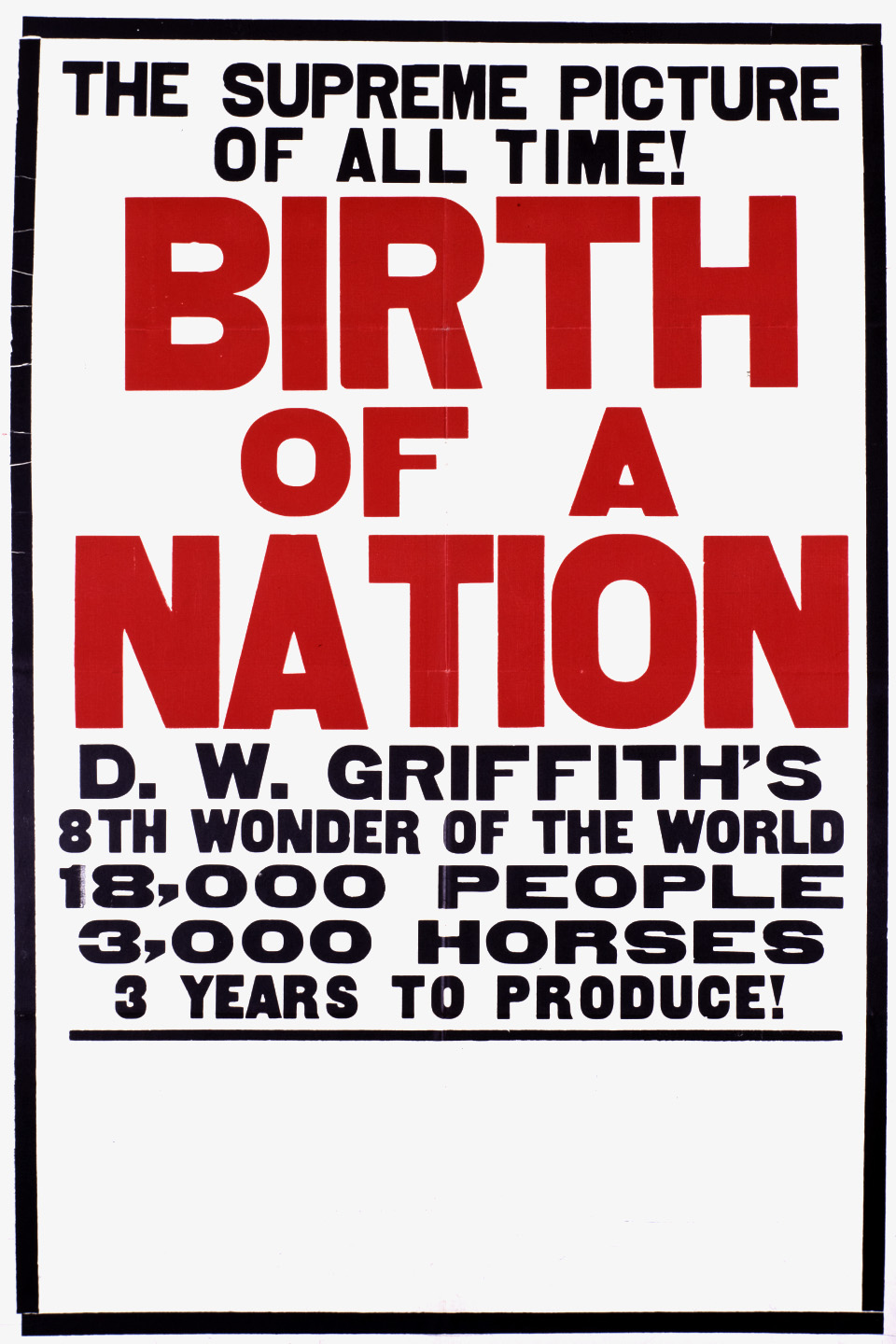
Or is it lost only because the present doesn't resemble the hallowed past, when all decisions led to good outcomes and nobody disagreed about why we went to war (except watch "The Best Years of Our Lives" again.  Movies can be so instructive.) or why we have a capitalist system ("It's a Wonderful Life."  Anyone remember who the villain is in that?), or just how to get along (except in "Birth of a Nation," apparently blacks were happiest when they served whites).  You know, just because you are alive now, doesn't mean it was any less complicated "back then."

Or that everything is sui generis since you started paying attention.

These things that pass for knowledge I don't understand.

Saturday, February 03, 2018

Pointing and laughing went on far into the night


Dear Media, the Emperor...er, President, has a bone to pick with you:


So please don't talk about today's tweets:

Letting them eat cake


A secretary at a public high school in Lancaster, PA, said she was pleasantly surprised her pay went up $1.50 a week … she said [that] will more than cover her Costco membership for the year. https://t.co/yLX1Bod1j0
— Paul Ryan (@PRyan) February 3, 2018

Apparently Paul Ryan posted this message on Twitter, and then took it down.  Perhaps he finally figured out the snark, that a high school secretary needs a Costco membership just to get by, and all this "tax break" does is pay for that membership; if she can manage to save that $1.50 every week and put it aside to pay the annual fee.  She might as well have said she can finally afford a cup of coffee at Starbucks now.

$1.50 a week has a way of evaporating before it hits the ground.

Pointing and laughing must become a way of life if anything is to change.

Submitted for your amusement


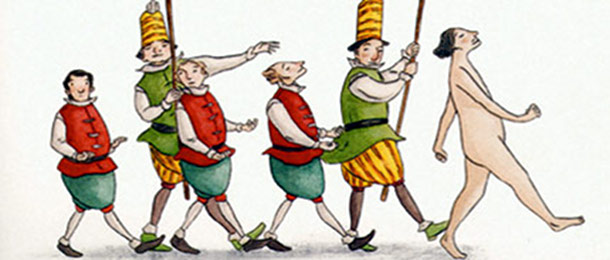
The emperor is naked and screaming at us to admire his finery.  Now is the time to point and laugh.

*Surely the lamest meme on the internet.

Lagniappe:


No, probably not.  Pointing and laughing shall continue as before.

The Ariel Poems: Marina


Quis hic locus, quae regio, quae mundi plaga?

What seas what shores what grey rocks and what islands
What water lapping the bow
And scent of pine and the woodthrush singing through the fog
What images return
O my daughter.

Those who sharpen the tooth of the dog, meaning
Death
Those who glitter with the glory of the hummingbird, meaning
Death
Those who sit in the sty of contentment, meaning
Death
Those who suffer the ecstasy of the animals, meaning
Death

Are become insubstantial, reduced by a wind,
A breath of pine, and the woodsong fog
By this grace dissolved in place

What is this face, less clear and clearer
The pulse in the arm, less strong and stronger—
Given or lent? more distant than stars and nearer than the eye
Whispers and small laughter between leaves and hurrying feet
Under sleep, where all the waters meet.

Bowsprit cracked with ice and paint cracked with heat.
I made this, I have forgotten
And remember.
The rigging weak and the canvas rotten
Between one June and another September.
Made this unknowing, half conscious, unknown, my own.
The garboard strake leaks, the seams need caulking.
This form, this face, this life
Living to live in a world of time beyond me; let me
Resign my life for this life, my speech for that unspoken,
The awakened, lips parted, the hope, the new ships.

What seas what shores what granite islands towards my timbers
And woodthrush calling through the fog
My daughter.

--T.S. Eliot

Friday, February 02, 2018

The Usual Suspects


"Moonlighting," which made Bruce Willis a star and proved once and for all Cybill Shepherd was just a pretty face (ask your grandfather about it, punk!) died when the romance teased between the characters played by Bruce and Sybill was finally consummated.  If Shelley Long hadn't left "Cheers" for bigger and better things (bad choice!), they might have had to kill her off, because the romance with Sam was on again/off again almost one time too many.  Everybody likes the anticipation more than the reality.

Likewise, the Nunes memo was probably better as a scary concept than a calamitous reality.  I have no expertise in this area, but this guy does:


That, of course, won't faze Sean Hannity or Lou Dobbs of Jeanine Pirro, who apparently comprise Trump's Brain Trust, but for most of us, there is no there there.  Yes, the FBI is right to be insulted that this was released at all, or that Trump decided to release it before he'd read it (back to the Brain Trust, eh?), but is this the hill Christopher Wray wants to die on?   James Comey doesn't think so:


 I think Wray would be better off staying put and shaming Trump with this; because if this is all the GOP's got, they got nuthin'.

The memo admits the Steele dossier didn't prompt an FBI investigation,  the antics of George Papadapolous  ("Coffee boy") did; which more than explains why Trump labeled him that way.  This memo doesn't begin to turn attention away from Trump; it refocusses it.  As Charlie Pierce said the other day, the desire to get this memo out is beyond political posturing.  But once again, we've overestimated the intelligence of the monkeys running the monkey house.  Even Trey Gowdy wants to play with public ignorance about FISA and 4th Amendment law, but he can't jump into the abyss all the same:


Trump wants cover to fire Rosenstein and find the Bork who will fire Mueller.  He doesn't appear to be any closer to that goal.

UPDATE:  Yeah, it's this bad:

Redstate (ahem, Redstate!) noticed that the memo also very obviously mischaracterizes Comey’s public testimony about the Steele memo, bringing the rest of its claims into question.
Maybe I should add a picture of a garbage fire.  As I said, this reflects more on the people in charge than on government in particular.   For example:

"Trump, by accusing the leadership of having a bias against Republicans, is once again maligning people he appointed to their roles, including FBI Director Christopher Wray, a man Trump nominated after he fired former FBI Director James Comey in May."

They hit everything but the target.  Problem is, they hit people they aren't firing at.

Thursday, February 01, 2018

In Other Words....


This is a very careful way of calling something a pack of lies:

"With regard to the House Intelligence Committee's memorandum, the FBI was provided a limited opportunity to review this memo the day before the committee voted to release it," the FBI said in a statement. "As expressed during our initial review, we have grave concerns about material omissions of fact that fundamentally impact the memo's accuracy."

But it's a nice way of getting around to this:


Which even FoxNews, by the standards set by Director Wray, said was a lie:

For the younger members of the audience (you know who you are!), 1993 was Bill Clinton's first address to a joint session of Congress (by tradition not considered a SOTU in the new president's first year in office), 2003 was W's third SOTU, 2009 Obama's first address to a joint session, 2010 his first official SOTU, 2017 his last; and then there's Trump's.  Note Trump barely clears the bar set by W. in his seventh SOTU.

That more people watched it on FoxNews than any other network (I'll take that as read, though it comes from Fox&Friends) only underlines where most of the audience for this was located.

You can say Trump was simply "incorrect" in his assertion, but let's be honest:  he's lying.  I know everyone thinks this is being "normalized" because the President hasn't been zapped by lightning or dragged out of the White House by an angry mob and tarred and feathered yet, but I see the glass as half-full:

It's getting more and more likely that even the media is willing to call a lie a lie, even when the President says it.  The fear that this kind of assertion will run rampant, and everyone will call everything a politician says a lie, is wildly overblown.  That horse has left the barn, and the barn has burned down.  All that needs to change is for the media to catch up to reality, and when reality is lying to them on a daily basis, maybe they will finally see what is right in front of their nose.  Or maybe we just all need to learn to call it a "material omissions of fact that fundamentally impact the [statement]'s accuracy."

It kind of feels like that's what's going to be normalized out of this Presidency.

Wednesday, January 31, 2018

"Oh, God, Make This Stop!"

Pee-pee tape!

Pretty weenie!

President Donald Trump’s first State of the Union speech had a particular set of goals: talking up the economy and job creation, outlining a plan to keep the U.S. safe and, apparently, getting Democrats to frown on camera.

For the most part, he succeeded.

Democrats did their best to show their displeasure with Trump’s address—with many lawmakers rolling their eyes, shaking their heads, and groaning at some of the president’s remarks. Others looked down at their cell phones for much of the evening.

Even before Trump started, the indifference and rancor was evident. When the president made his way to the podium, Rep. Judy Chu (D-CA) remained seated, reading a newspaper.

The structure of the speech seemed designed, at times, to produce this imagery. Trump led with positive economic news and a rundown of companies investing in the United States or awarding their employees raises or bonuses. With cameras attuned to the members of Congress in the crowd, the economic talking points produced memorable dichotomies between the ostensibly positive news heralded from the podium and the sour faces of congressional Democrats in the crowd.

The reactions delighted members of the administration who felt, early on, that the visuals of the evening would be as important as the speech itself. The day before the address, the White House had summoned some of the president’s trusted allies and outside advisers to the Entrance Hall in the official residence in order to give marching orders and a pep talk. Trump noted that they all had to “fight” because the news coverage of his presidency has been so negative, and mentioned that it was nice to be surrounded by friends who go on TV to say “nice” things about him for a change.

The one reaction to a SOTU I still remember is:  "You lie!"  Despite the blatant racism, insult, and violation of decorum of that outburst, Republicans went on to win big in the mid-terms that year.

Frowning on camera?  That's your measure of success?  That doesn't bury the bar, it throws it on the trash heap.

The Fat, Hanging Slow Pitch


During an interview with Fox & Friends on Wednesday, President Trump’s son said that he was “focused on the Democrats” while his dad was speaking to the nation.

“And I honestly think they’re scared,” he opined. “And if I look around [during Tuesday’s speech], they don’t have the personality to go against him. They were sitting there. They looked, quite frankly, defeated.”

“I mean, they didn’t stand for anything,” the younger Trump continued. “When he said ‘In God We Trust’ — when my father mentioned ‘In God We Trust,’ the guiding principle of this country, no one stood.”

The hosts of Fox & Friends were ready to support Eric Trump by playing a “montage” of Democrats refusing to stand.

“You know what, I think it’s actually very sad,” Eric Trump stated. “There are things as Americans we should be united on. And if we can’t be united on God, if we can’t be united on African-American unemployment being at the lowest it’s ever been.”

Sometimes the universe puts one right over the plate.  Or maybe it's just Eric.....

State of the Uniom

Well, that, too....

This is what I didn't miss last night:

“Our nation has lost its wealth, but we’re getting it back so fast.” 

Before Trump, we were all standing on bread lines. Ah, yes, I remember it well....

(Although NTodd does it better.)

Tuesday, January 30, 2018

Let us all give thanks for Netflix


In the days of my feckless youth I considered the State of the Union Address something of a patriotic duty to attend to.  I was a dedicated Democrat thanks to Richard Nixon, so I suffered through the things under Reagan and both Bushes, and tolerated them from Carter, Clinton, and Obama.

I've finally decided I don't have to do that much, especially because the current President is a moron with the eloquence of a carnival barker and the moral perspicacity of a toad.

It's a curiously silly thing, the SOTU.   As Slate points out, it arises from a literal reading of Article II, Section 3, of the Constitution:

He shall from time to time give to Congress information of the State of the Union and recommend to their Consideration such measures as he shall judge necessary and expedient.

We don't need the damned thing, not even as a political speech (which is all it is anymore).  Thomas Jefferson, Wikipedia tells me, declined to deliver an address personally to Congress, considering it too monarchical.  It wasn't until 1913 that Woodrow Wilson revived the speech, then known as "The President's Annual Message to Congress."  Note the tradition of "annual," although the Constitution doesn't set any kind of calendar on the thing.  FDR started calling it the "State of the Union."  He also gave the first one at night, leading us to all suffer through it in prime time to this day.  As Jim Newell points out, there's no reason to expect anything from Trump's speech, at all:

Trump is as mercurial and lacking in attention span as the news cycles that would bury his message, and he is just as likely to be the one trampling on it. There is no reason to believe that he agrees with anything in his speech, or will remember on Wednesday morning what he said Tuesday night. Why should you?

Why, indeed?

I do wonder now what "Constitutional Crisis" it would prompt to ditch the damned thing, or just revert to sending a written message over for a clerk to read to Congress, as was done for almost 150 years.   Should Congress change hands in November, Trump might decide the crowd is too hostile to attempt to play to.  If we could get Trump to just send a written message, even just a tweet, he might actually be a boon to the nation after all.