Thursday, December 06, 2007

St. Nicholas' Day--2007


SAINT Nicholas. Day of death: (according to the martyrology) December 6, about 360. Grave: originally at Myra; since 1087 at Sari in Italy. Life (highly legendary): Nicholas was born at Patara in Asia Minor to parents who, having long been childless, had petitioned God with many prayers. Already as a youth Nicholas became noted for his zeal in helping the unfortunate and oppressed. In his native city there lived a poor nobleman who had three marriageable daughters; he could not obtain a suitor for them because he could offer no dowry. The contemptible idea struck him to sacrifice the innocence of his daughters to gain the needed money. When Nicholas became aware of this, he went by night and threw a bag containing as much gold as was needed for a dowry through the window. This he repeated the second and third nights. During a sea voyage he calmed the storm by his prayer; he is therefore venerated as patron of sailors. On a certain occasion he was imprisoned for the faith. In a wonderful way he later became bishop of Myra; his presence is noted at the Council of Nicaea. He died a quiet death in his episcopal city, uttering the words: "Into your hands I commend my spirit."

Nicholas is highly venerated in the East as a miracle worker, as "preacher of the word of God, spokesman of the Father." --Pius Parsch
The story of Nicholas brings me to Act One of this story, from This American Life. There are two things worth noting about it, in this season when we venerate gift giving and pay a very backhanded acknowledgment to the saint who supposedly threw three bags of gold through a window in order to save three girls from prostitution. One is the sincere American belief, represented here by John Pickle, that "third world workers" are better off being exploited, even in America. There's a deep vein of racism here, as well, though, of course, none dare call it racism. It's such an ugly word. It's the social equivalent of a death sentence. We reserve racism for truly heinous people; people like Hitler. We dare not use the word openly and honestly; such is the depth and breadth of the hidden wound of the "peculiar institution" in American culture.

The idea of factory workers having their lives improved by exploitation in factories is, of course, precisely the philosophy Romanticism rebelled against (see William Blake, especially). Brute economic exploitation is something even Swift condemned. But, as "V" said: "Ideas are bulletproof." Which goes for bad ideas, too.

The second thing to highlight is the lay pastor who helped these people, at great personal cost to himself. He reports without rancor (which is frankly more than I could do) that local pastors told him what he was doing was against God's will because it was difficult, because it cost him in time, effort, and social opprobrium. He reports this without rancor, and he doesn't apologize for what he did, nor does he complain about Christian pastors unwilling to help those he recognizes as his brothers. (I don't judge anyone who doesn't offer help, lest I be judged for my failings, too. But when you judge another and tell them they shouldn't help, well....that's when the judgment rightly falls heavily on you, and justly, by your own hand.) As he says, we like foreign missions; but when those missions come to our "comfort zones," well....

Which I still think is what Advent is all about. It really is a good place to begin the year. And it's not an impossible place to begin, because it ends so quickly, with Christmas. You know, sometimes I think the ancient Church really knew what it was doing.

It's also a good season, as well as a good day, to recall these words from the 4th century, lest our "comfort zone" grow comfortable again.

"What keeps you from giving now? Isn't the poor person there? Aren't your own warehouses full? Isn't the reward promised? The command is clear: the hungry person is dying now, the naked person is freezing now, the person in debt is beaten now-and you want to wait until tomorrow? "I'm not doing any harm," you say. "I just want to keep what I own, that's all." You own! You are like someone who sits down in a theater and keeps everyone else away, saying that what is there for everyone's use is your own. . . . If everyone took only what they needed and gave the rest to those in need, there would be no such thing as rich and poor. After all, didn't you come into life naked, and won't you return naked to the earth?

"The bread in your cupboard belongs to the hungry person; the coat hanging unused in your closet belongs to the person who needs it; the shoes rotting in your closet belong to the person with no shoes; the money which you put in the bank belongs to the poor. You do wrong to everyone you could help, but fail to help."

Basil
4th Century

"The large rooms of which you are so proud are in fact your shame. They are big enough to hold crowds--and also big enough to shut out the voices of the poor....There is your sister or brother, naked, crying! And you stand confused over the choice of an attractive floor covering."

Ambrose
4th Century

Wednesday, December 05, 2007

Ecce Salvator venit solvere te a vinculo


Leva Jerusalem oculos, et vide potentiam regis:
ecce Salvator venit solvere te a vinculo


Lift your eyes, Jerusalem, and see the power of your ruler.
Look to a Savior who shall break your bonds.

--Monastic Liturgy

This article was written before the hearing before the Supreme Court today. If no transcript of that story is provided by NPR, listen to the story (available at the same link) if you haven't already. (Thursday morning: the Nina Totenberg report is available in print now.) It is worth listening to if only to hear the arguments of counsel before the Court today. I went to the story link hoping to get a transcript of the argument of one lawyer who told the story of a detainee in Gitmo who finally, after a few years, found out he was allegedly associated with a terrorist who had blown himself up. His lawyer tracked down this alleged terrorist, who is alive and well and living in Germany, and who is not a terrorist at all. Nor was the detainee associated with any terrorists; but without a habeas hearing in Federal court (where this evidence came out), he'd still be in Gitmo, because that evidence is not allowed under the "CSRT's" set up by the Detainee Treatment Act (the one which may, or may not, have removed jurisdiction from the Supreme Court in this matter).

Keep that in mind while you read this:

"I've been down to Guantanamo 12 times. I've seen this evidence. This evidence is the flimsiest stuff you have ever seen. It's a joke," Wilner said.

With less colorful language, that is the same thing that two officers have now said in affidavits.

One, Lt. Col. Stephen Abraham, was for six months in charge of seeing to it that exculpatory evidence was transmitted to the tribunals from intelligence and defense agencies. He says in his affidavit that the evidence seen by the tribunals was incomplete, dated and inaccurate, and that the officers serving on the panels were not able to question or test it.

"It's not that truth was never a goal. But it was the first victim," Abraham said.

Abraham, an experienced intelligence officer, says that most detainees have names that are extremely common in their part of the world. And, that the U.S. has little or no knowledge as to whether to use a typical name. For example, do we have the right Mohammad Assam in custody?

"The odds are nil that they will have information about him. They may have lots of material on the other 57 Mohammad Assams from his region and the other 3,000 worldwide. So what you're going to get is every single report dealing with Mohhman Assam, Achmed Assam, Muhammad Asahma," said Abraham. "You get literally a dozen name variants. God help the person who had the same name as a famous person because all that information would be ascribed to him and presumed to be valid."

The lawyers representing the detainees all have stories to tell.

In the case of the Bosnians, the Supreme Court brief recounts a CSRT hearing where a detainee is charged with associating with an unnamed al-Qaida operative. The transcript of the hearing shows the detainee asking who he was supposed to have associated with. But the tribunal chairman says he can't tell him because the name is classified.

After much back and forth the frustrated detainee says, "Maybe I knew this person as a friend. Maybe it was a person that worked with me. Maybe he was on my team. If you tell me the name, then I can respond and defend myself. Otherwise," he says, "all I can tell you is that I am not al-Qaida."

Another of the Bosnians sought to defend himself by asking the tribunal to look at the decision of the Bosnian Supreme Court ordering his release. But the CSRT panel concluded the decision was "not readily accessible," even though it had been filed in federal court and given to the government.

Abraham said that even when a detainee does manage to win at a hearing, the tribunal is ordered to conduct a new hearing — as many as three or four times — until the detainee loses.
And the excuse for this? "We're from the government. Trust us." No, really; that's it:

David Rivkin, who served in the administration of President George Herbert Walker Bush, said that if you nudge the system to provide a higher level of scrutiny "we wouldn't be able to hold most of these people; not because they're innocent, not because they're the wrong Abduls, but because in war you rarely have this kind of information."

Moreover, he notes, if something is really wrong at a CSRT hearing, the detainee can appeal to the Washington, D.C., Court of Appeals under the new law passed by Congress.
Well, that's true; but Mr. Rivkin negelects to point out that, under that same statute, the D.C. Circuit has no power to release anyone; because under the statute, federal courts have no habeas jurisdiction.

That's some catch, that Catch-22.

You know, one of the pleas of the Psalms, and even of Advent, is for justice. And, of course, it is the season when the church contemplates the "great and terrible day," the day of the Lord. A day made less terrible for those who already live by justice and mercy.

Juste et pie vivamus, exspectantes beatam spem,
et adventum Domini.


Let us live by justice and by mercy
and wait with bright hope for the Lord to come.

--Monastic liturgy

Monday, December 03, 2007

Steering by the Golden Compass


Or: Without a War on Christmas, We Must Need a New Controversy.

The funny part of this is: it's precisely what "post-modern" literary theory would have predicted.

Okay, okay, "po-mo" is a misnomer, but I've been away from the field too long to have a blanket term readily at hand. But well back in my graduate school days we learned to support our reading of any authorial output (known as the "text" for technical jargon reasons), in spite of the author's stated intentions (word had it W.H. Auden once wrote a poem simply to refute the interpretation of a critic as to what Auden could, and couldn't, have meant in his poetry. None of us took the hint. Poets are the unacknowledged legislators of the world? Hah!). Once the text left the author's hands, we decreed, so also went his control over what it said.

Of course, one only has to look at the letters of Paul, or the Gospels, or even the Torah, to see this at work in everyday life.

So now comes Philip Pullman's Golden Compass: The Movie. Funny, too, how books still don't arouse much attention (unless they get on Oprah), but movies are a direct assault on our sensibilities, our culture, and our ability to believe. There are identity and boundary issues there (someone doesn't think like I do! How can I sustain my beliefs in such a world? "Never share my hearth, never think my thoughts, however does such things!"), and how that percieved threat is caught up with moving pictures and sound, but not with books (books that almost anyone cand find on the shelves of almost any store, or even in grocery stores, regularly include scenes which would draw an "NC-17" rating if put directly on film). But what's fascinating here are the various interpretations of Pullman's trilogy. We've got the author himself: "I'm trying to undermine the basis of Christian belief." And yet the U.S. Catholic bishops have apparently taken the bait (what!? They aren't reflexively defensive about their belief systems! Heretics! Fools!):

The U.S. Conference of Catholic Bishops' Office for Film and Broadcasting gave the film, which is rated PG-13, a warm review. The film is not blatantly anti-Catholic but a "generalized rejection of authoritarianism," it said.

While noting the story's "spirit of rebellion and stark individualism," the office said Lyra and her allies' stand for free will in opposition to the coercive force of the Magisterium is "entirely in harmony with Catholic teaching."
Inconceivable!

And then there's the last twist; Donna Freitas, a seminary professor who declares the trilogy "a theological masterpiece:"

Pullman's intent aside, she views the trilogy as a treatise on Christian belief.

To Freitas, the series' mysterious "Dust" _ portrayed in the books as connected to original sin _ represents the Holy Spirit. Pullman is not attacking religion but those who use power to corrupt, she said.

Freitas, who co-authored a book on Pullman and religion, says that "ultimately, the arch of the trilogy is about revealing God."
I've seen Freitas book in a publisher's catalog, but now I'm almost intrigued enough to read it (a sign of my jackdaw mind. Ooh! Another shiny thing!) True, one could argue that the movie has sucked all the critique out of the book, and so the Bishops are seeing what the movie makers wanted them to see. And Freitas' interpretation may be so off the mark as to be poor literary criticixm, indeed. Not having seen the movie or read Freitas' book, I can't say. But what's truly illuminating, not to say amusing, here, is that theologians, those people with the vested interest in a subject most people no longer feel is even relevant to their lives (gone are the days when we professed the "mother of all the sciences". Alas!) are the ones least defensive, or simplistic, about their field of endeavor. Is this because they consider it essentially useless? Hardly. Is it because they recognize they no longer have the claim to power and authority being the fountainhead of all human knowledge once gave them? Perhaps. More likely, though, it's a pointed rebuttal to the critics who continue to lambast Christian theology and religion without the least understanding of what they are critiquing. The question of faith is a very live question among theologians, and it has been for a very long time. If I'm no fan of Pullman's attempts to address those questions it's not because he critiques my faith, but because he presents such a poor caricature of religion in the first place. "Never share my hearth, never think my thoughts, whoever does such things"? Nah. Just don't tell me your cartoon version is what I believe, and then tell me I'm stupid for believing what I don't believe in the first place.

Because, frankly, you have no more control over the narrative than the author does. Which, hmm, raises an interesting question about free will....

Sunday, December 02, 2007

A Prayer for the First Sunday of Advent-2007

O Christ, Son of the living God, have mercy upon us.
Thou that sittest at the right hand of the Father, have mercy upon us.
Arise, O Christ, and help us,
And deliver us for thy Name's sake.

AMEN.

O Christ, when thou didst open thine eyes on this fair earth, the angels greeted thee as the Prince of Peace and besought us to be of good will one toward another; but thy triumph is delayed and we are weary of war.

SAVE US AND HELP US, O LORD AND MASTER.

O Christ, the very earth groans with pain as the feet of armed men march across her mangled form.

SAVE US AND HELP US, O LORD AND MASTER.

O Christ, may the Church, whom thou didst love into life, not fail thee in her witness for the things for which thou didst live and die.

TEACH US TO DO THY HOLY WILL, O LORD AND MASTER.

O Christ, the people who are called by thy Name are separated from each other in thought and life; still our tumults, take away our vain imaginings, and grant to thy people at this time the courage to pro-claim the gospel of forgiveness, and faithfully to maintain the ministry of reconciliation.

TEACH US TO DO THY HOLY WILL, O LORD AND MASTER.

O Christ, come to us in our sore need and save us; 0 God, plead thine own cause and give us help, for vain is the help of man.

SAVE US AND HELP US, O LORD AND MASTER.

O Christ of God, by thy birth in the stable, save us and help us;
By thy toil at the carpenter's bench, save us and help us;
By thy sinless life, save us and help us;
By thy cross and passion, save us and help us.

SAVE US AND HELP US, O LORD AND MASTER.

Then all shall join in the Lord's Prayer.

Our Father, who art in heaven, Hallowed be thy Name. Thy kingdom come. Thy will be done, on earth as it is in heaven. Give us this day our daily bread. And forgive us our debts, as we forgive our debtors. And lead us not into temptation, but deliver us from evil.. For thine is the kingdom, and the power, and the glory, for ever. Amen.

Saturday, December 01, 2007

"There won't be trumpets" --First Sunday of Advent, 2007


Isaiah 2:1-5
2:1 The word that Isaiah son of Amoz saw concerning Judah and Jerusalem.
2:2 In days to come the mountain of the Lord's house shall be established as the highest of the mountains, and shall be raised above the hills; all the nations shall stream to it.

2:3 Many peoples shall come and say, "Come, let us go up to the mountain of the LORD, to the house of the God of Jacob; that he may teach us his ways and that we may walk in his paths." For out of Zion shall go forth instruction, and the word of the LORD from Jerusalem.

2:4 He shall judge between the nations, and shall arbitrate for many peoples; they shall beat their swords into plowshares, and their spears into pruning hooks; nation shall not lift up sword against nation, neither shall they learn war any more.

2:5 O house of Jacob, come, let us walk in the light of the LORD!

Psalm 122
122:1 I was glad when they said to me, "Let us go to the house of the LORD!"
122:2 Our feet are standing within your gates, O Jerusalem.

122:3 Jerusalem built as a city that is bound firmly together.

122:4 To it the tribes go up, the tribes of the LORD, as was decreed for Israel, to give thanks to the name of the LORD.

122:5 For there the thrones for judgment were set up, the thrones of the house of David.

122:6 Pray for the peace of Jerusalem: "May they prosper who love you.

122:7 Peace be within your walls, and security within your towers."

122:8 For the sake of my relatives and friends I will say, "Peace be within you."

122:9 For the sake of the house of the LORD our God, I will seek your good.

Romans 13:11-14
13:11 Besides this, you know what time it is, how it is now the moment for you to wake from sleep. For salvation is nearer to us now than when we became believers;

13:12 the night is far gone, the day is near. Let us then lay aside the works of darkness and put on the armor of light;

13:13 let us live honorably as in the day, not in reveling and drunkenness, not in debauchery and licentiousness, not in quarreling and jealousy.

13:14 Instead, put on the Lord Jesus Christ, and make no provision for the flesh, to gratify its desires.

Matthew 24:36-44
24:36 "But about that day and hour no one knows, neither the angels of heaven, nor the Son, but only the Father.
24:37 For as the days of Noah were, so will be the coming of the Son of Man.

24:38 For as in those days before the flood they were eating and drinking, marrying and giving in marriage, until the day Noah entered the ark,

24:39 and they knew nothing until the flood came and swept them all away, so too will be the coming of the Son of Man.

24:40 Then two will be in the field; one will be taken and one will be left.

24:41 Two women will be grinding meal together; one will be taken and one will be left.

24:42 Keep awake therefore, for you do not know on what day your Lord is coming.

24:43 But understand this: if the owner of the house had known in what part of the night the thief was coming, he would have stayed awake and would not have let his house be broken into.

24:44 Therefore you also must be ready, for the Son of Man is coming at an unexpected hour.
Advent is the season of apocalyptic. It is the one time the Church puts the end front and center of the season. Fortunately, it's a short season; only four weeks long. Oddly, it's at the beginning of the year, and it's about the beginning of the Church, the raison d'etre for the entire edifice. And it is introduced, almost every year, with the warning of disaster, with the need to be prepared for what will come: the birth of a child, to peasants, in a manger; visited by shepherds, heralded by angels, unnnoticed by almost everyone; the cause of a massacre. What fresh hell is this?

This is no way to start a season: talking about the sudden end, about how half the people will be swept away, and to what? Rapture, or disaster? Jesus doesn't point to a miraculous departure of the faithful, here. His context is the flood, when evildoers were carried off. The arrival he describes is that of a thief, who comes to steal from you, to take what you value. If the kingdom of heaven is in the future, is still to come, this is how Our Lord says it will enter: through the window you forgot to close, the door you forgot to lock; and it will take away everything that isn't nailed down, will even come and snatch off the person right beside you; or maybe it will take you. And this is a good thing because....? The kingdom of heaven is like a thief? How is the kingdom of heaven like that?

But this is what we are to prepare for. This is what Advent is about. The arrival of the Prince of Peace, the coming of the King of Heaven, when all's set at six and seven, when word from heaven comes first to shepherds, to outlaws, and then to foreigners, to Magi, who read the sky and study the stars and know nothing of the word of the Lord but only how to read the signs they discern in nature. How do we prepare for this?

And a thief. A thief?! Christmas is supposed to bring us something! Advent is supposed to be the time we get ready to receive it! What does a thief bring? Bring?! Nothing! A thief brings nothing! Precisely. That's precisely the problem! The thief brings nothing! The thief doesn't bring, the thief takes. But not just possessions, or in this case even persons; the thief takes security, takes comfort, takes our assurances away. The thief violates our space, invades our privacy, tramples our hospitality by not even allowing us to make an offer to the stranger. The thief is the stranger who is not guest but enemy, the one who invades, the one who leaves us unsafe and unsure and makes our most cherished and protected places an open plain, a bare rock in the middle of the desert, a wind-swept plateau with nothing around to shelter us. The thief takes our shelter even if the thief takes nothing from us at all. Just by being there, just by having entered uninvited and unwanted and prowled among what is ours, what is not on public offer and made for public display, the thief destroys the boundaries between us and world, between our save and secure selves and all the selves out there who have no right to see! no right to know! no right to invade! This is private! This is ours! YOU ARE NOT SUPPOSED TO BE HERE! YOU HAVE TAKEN WHAT IS MOST PRECIOUS AND YOU CANNOT PUT IT BACK! KEEP OUT!!!!!

The thief crosses all those barriers, and knows what we would not have strangers know. The thief who takes nothing, is the worst kind of thief; that thief is the one who takes everything, and leaves us with nothing, ever, ever again.

Is this what we are supposed to prepare for?

"13:13 let us live honorably as in the day, not in reveling and drunkenness, not in debauchery and licentiousness, not in quarreling and jealousy."

Oh, but we do, we do! We live honorably, we don't engage in public drunkenness, we keep our Christmas celebrations orderly, our revels in check, our exuberance within the accepted social boundaries. We don't consort with bums and prostitutes and outlaws, we try to stay away from quarreling and jealousy, especially this time of year. We remind ourselves that what someone else got for Christmas, especially something we secretly longed for and desperately wanted, even if we didn't admit it to ourselves, is no reason to envy them. We keep our demeanor, we are thankful for what we have, what we are given. We don't try to take more. We are not thieves. We know the cliches about office parties, but we don't engage in debauchery and licentiousness and if we do, even a little bit, we repent and forgive ourselves because, after all, it is Christmas; it only comes around once a year. We make no provision for the flesh, to gratify its desires. Well, maybe a little one. Just once in a while. We're only human, after all. And it is only Christmas. But at least we're are not thieves!

But maybe we should be. Maybe something in our decorous attitudes is stealing something from us. Maybe Christmas is not supposed to be reassuring, but subversive. Shepherds, after all, were not the priests of the tribes of Israel. They were not of the priestly lineage like Zechariah and Elizabeth. But the angel Gabriel came first to him, and look what happened. Mary was not of the priestly line, either, but she did alright. And the shepherds didn't have to do anything, just get up and walk back to the buildings and listen for the cry of a newborn baby, and just from that, they knew.... But priests didn't know, or kings, or the movers and shakers of Palestine. The king of heaven slipped in almost like...almost like...almost like a thief...in the night.

Surely Herod felt that way, when three wealthy Gentiles came calling from the even further reaches of the Empire, maybe from outside the Empire even! They were not scholars of the God of Abraham, Isaac, and Jacob, as his scholars were, but somehow the word by-passed all his scholars and came, not through the scriptures, but through the stars. How was that? Why was that? And two years later, already? That's why he had to kill all the children 2 years and under in Bethlehem. Even his scholars didn't know! Scholars! What good are they to a king if they can't tell you about the important things?! But even they were passed over, and the word went to...well, not even to children of Abraham. The word slipped out, and took something with it when it went. Almost like...a thief.

Maybe the model is thievery. After all, how do you sneak into a thief's house at night? Probably he's the only one awake, expecting you, or someone, to break in. And then how would a thief greet a thief, except as a brother, except as the one waited for, the one anticipated, the one for which the thief had stayed awake all night, every night, for so very long....

There won't be trumpets. That's what the Stephen Sondheim song said: "There won't be trumpets/or bolts of fire/to say he's coming/No Roman Candles/no angel's choir/no sound of distant drumming." Would a thief, after all, announce himself? Would he come while you are looking? What thief would do such a thing? Don't we know this? Don't we remember it every year? "Go to sleep!" we tell the children. "Santa can't come while you are awake!" Santa, of course, is the anti-thief, the Robin Hood of Christmas, the one who breaks into your house to leave things, not take them. The one who gives to the rich, and for the poor?

Once again the words of Jesus disturb our actions. Even our remembrance of Santa Claus when he was good St. Nicholas, tossing the bags of gold through the window so the poor father's daughters could be married, brings a bit of shame to our celebrations. Let's turn, then, to Isaiah. Isaiah offers much better value for the season:

In days to come the mountain of the Lord's house shall be established as the highest of the mountains, and shall be raised above the hills; all the nations shall stream to it.

2:3 Many peoples shall come and say, "Come, let us go up to the mountain of the LORD, to the house of the God of Jacob; that he may teach us his ways and that we may walk in his paths." For out of Zion shall go forth instruction, and the word of the LORD from Jerusalem.

2:4 He shall judge between the nations, and shall arbitrate for many peoples; they shall beat their swords into plowshares, and their spears into pruning hooks; nation shall not lift up sword against nation, neither shall they learn war any more.
But even Isaiah doesn't say quite what we think he says. Isaiah doesn't foresee a time when all the world is converted. Isaiah simply sees a time when all the world takes instruction from the God of Jacob, when the peoples of the world want to learn God's ways and walk in God's paths because God has become the judge of the nations. The idea of a "judge" is an historical one; it hearkens back to the days before the kings, when judges, both men and women, settled disputes between the tribes ("extended families" we'd say, today). So this image of peace is one built on arbitration and coherence, upon community and reconciliation, upon acceptance and respect, when swords can be beaten into plowshares because disagreements are settled by the "judge," not by combat. It's an apocalyptic vision in the best sense of the word: the revealing of truth which brings peace to a world sorely in need of it. So why doesn't Jesus promise this peace, too? Why can't we have that, instead of a thief coming in the night?

Because they are both promising thieves; Jesus is just more honest about it. We who are not children of Abraham may not welcome the coming age promised by the ancient Hebrew prophet. We may not really want to stream to Jerusalem and be put under the judgment of the Hebrew God, the God of Abraham and Isaac and Jacob and Joseph and Zechariah and Elizabeth and Mary and Jesus. It may not suit us as much as we think. It may take away more than it gives. But if that day is coming, whether we wish it or not, if it comes like a thief who will slip past our best defenses and around our securest safeguards, shouldn't we get ready? Shouldn't we stay awake? Shouldn't we prepare?

Prepare? Prepare what?

The way of the Lord, of course. The one who is coming, and has come, and will come. What strange wonder is this? This season of preparation for something that has already happened? Can what has happened happen again? Can it return in time and occur as if it hadn't happened before? Can Jesus himself be born again, as if never born before? Why not? Who says it was ever over, that it was an event in history, once and for all?

Northrop Frye wouldn't quite say so:

If I had been out on the hills of Bethlehem on the night of the birth of Christ, with the angels singing to the shepherds, I think that I should not have heard any angels singing. The reason why I think so is that I do not hear them now, and there is no reason to suppose that they have stopped.
We assume it's over. Why do we assume that? We assume that what has happened, can never happen again. Why do we think that? We assume the angels are long since through singing. What evidence do we have for that?

Maybe this time, this year, we should try to stay awake. Maybe the angels sing to thieves who stay awake, and listen, long enough. Maybe thieves aren't so bad, after all. Well, some of them; at certain times of the year. Maybe we should reconsider this whole "good/bad" thing.

Amen.

Friday, November 30, 2007

O Xmas Tree, O Xmas Tree!


Looking back two years, I find I mentioned this before. No matter; the myths about where Christmas trees "came from" persist.

So, follow the link to a (more or less) subtle rebuttal.

Poet, and don't know it....

What if they gave a War on Christmas and nobody came?


Best I can figure, that's what happened. I googled "War on Christmas" hoping to find some news about it; all I got were references from 2005. Of course, this could simply mean that "war on Christmas" is what the enemies of concerned citizens like Bill O'Reilly and John Gibson named the "battle," much like the mockery of "Political Correctness" (a term invented by conservatives to mock liberals, though no one seems to remember that, now).

Oh, wait: never mind.

So I don't know where it's going this year. Which is fine, of course; the last thing we need is another fight over whether Christmas trees are religious or secular symbols. O'Reilly is trying to stir the ashes by complaining about a city council effort in Colordao, but it's pretty weak tea, indeed. What is it about Colorado and Christmas decorations? But I wanted to point out, as the season approaches (or is already upon us, on the secular calendar. December and "Christmas" have become synonymous terms) that there's always been a "war on Christmas", and the real fight has never been over "paganism" v. Christianity, but a completely internecine battle. It's always been a fight, in America at least, between Protestants and Catholics. Not much of a fight, mind, as Catholics never had the political or social power they had in Europe; but the efforts to suppress or control or complain about Christmas, largely stem from our Puritan heritage. It was never secularists who hated "Christmas." It was conservatives, especially those who objected to the rowdiness of the celebrations. Of course, it was consumerism which tamed all of that, giving the wealthy an excuse to be generous and beneficent...with their "nuclear" family.

Which is what Christmas is really all about: family. Right, Charlie Brown? (By the way, where is the family in "A Charlie Brown Christmas"?) Good thing that show was never controversial, huh? I mean, it's a Christmas classic. I'm sure if CBS didn't air it, they'd hear from Bill O'Reilly....

Thursday, November 29, 2007

A day early

but still...


No, not January 12, 2007. European dating: day first, month second. What I loved was the play on "Advent." Works in an Anglican (well, nominally) country, not in a "Puritan" one. That "history of Christmas" stuff, you know...

And yes, I am a Dr. Who geek....

Tuesday, November 27, 2007

The more things change....

Cleaning up backstage before Advent starts in earnest:


I was listening to the Pacifica Radio Archives fundraiser, when they played a recording of Fannie Lou Hamer describing her treatment in a jail cell in Mississippi in 1963. This transcript is from her speech at the Democratic National Convention in Chicago in 1968; it is essentially the same story. Just a reminder that torture is as American as cherry pie, and that all we've done in 45 years is outsource the violence so native to our political and social culture.


On the 10th of September 1962, sixteen bullets was fired into the home of Mr. and Mrs. Robert Tucker for me. That same night two girls were shot in Ruleville, Mississippi. Also Mr. Joe McDonald's house was shot in.

And June the 9th, 1963, I had attended a voter registration workshop; was returning back to Mississippi. Ten of us was traveling by the Continental Trailway bus. When we got to Winona, Mississippi, which is Montgomery County, four of the people got off to use the washroom, and two of the people - to use the restaurant - two of the people wanted to use the washroom.

The four people that had gone in to use the restaurant was ordered out. During this time I was on the bus. But when I looked through the window and saw they had rushed out I got off of the bus to see what had happened. And one of the ladies said, "It was a State Highway Patrolman and a Chief of Police ordered us out."

I got back on the bus and one of the persons had used the washroom got back on the bus, too.

As soon as I was seated on the bus, I saw when they began to get the five people in a highway patrolman's car. I stepped off of the bus to see what was happening and somebody screamed from the car that the five workers was in and said, "Get that one there." When I went to get in the car, when the man told me I was under arrest, he kicked me.

I was carried to the county jail and put in the booking room. They left some of the people in the booking room and began to place us in cells. I was placed in a cell with a young woman called Miss Ivesta Simpson. After I was placed in the cell I began to hear sounds of licks and screams, I could hear the sounds of licks and horrible screams. And I could hear somebody say, "Can you say, 'yes, sir,' nigger? Can you say 'yes, sir'?"

And they would say other horrible names.

She would say, "Yes, I can say 'yes, sir.'"

"So, well, say it."

She said, "I don't know you well enough."

They beat her, I don't know how long. And after a while she began to pray, and asked God to have mercy on those people.

And it wasn't too long before three white men came to my cell. One of these men was a State Highway Patrolman and he asked me where I was from. I told him Ruleville and he said, "We are going to check this."

They left my cell and it wasn't too long before they came back. He said, "You are from Ruleville all right," and he used a curse word. And he said, "We are going to make you wish you was dead."

I was carried out of that cell into another cell where they had two Negro prisoners. The State Highway Patrolmen ordered the first Negro to take the blackjack.

The first Negro prisoner ordered me, by orders from the State Highway Patrolman, for me to lay down on a bunk bed on my face.

I laid on my face and the first Negro began to beat. I was beat by the first Negro until he was exhausted. I was holding my hands behind me at that time on my left side, because I suffered from polio when I was six years old.

After the first Negro had beat until he was exhausted, the State Highway Patrolman ordered the second Negro to take the blackjack.

The second Negro began to beat and I began to work my feet, and the State Highway Patrolman ordered the first Negro who had beat me to sit on my feet - to keep me from working my feet. I began to scream and one white man got up and began to beat me in my head and tell me to hush.

One white man - my dress had worked up high - he walked over and pulled my dress - I pulled my dress down and he pulled my dress back up.

I was in jail when Medgar Evers was murdered.

All of this is on account of we want to register, to become first-class citizens. And if the Freedom Democratic Party is not seated now, I question America. Is this America, the land of the free and the home of the brave, where we have to sleep with our telephones off the hooks because our lives be threatened daily, because we want to live as decent human beings, in America?

"Why can't you just die?"--Two-Face to Batman

NYT:

Over the last eight years, the refusal of patients to die according to actuarial schedules has led the federal government to demand that hospices exceeding reimbursement limits repay hundreds of millions of dollars to Medicare.

The charges are assessed retrospectively, so in most cases the money has long since been spent on salaries, medicine and supplies. After absorbing huge assessments for several years, often by borrowing at high rates, a number of hospice providers are bracing for a new round that they fear may shut their doors.
The problem? Medical care works. No one could have foreseen that, apparently:

In the early days of the Medicare hospice benefit, which was designed for those with less than six months to live, nearly all patients were cancer victims, who tended to die relatively quickly and predictably once curative efforts were abandoned.
....
Medicare’s coverage of hospice, which began in 1983, has become one of the fastest growing components of the government’s fastest growing entitlement. Spending nearly tripled from 2000 to 2005, to $8.2 billion, and nearly 40 percent of Medicare recipients now use the service.

To be eligible, patients must be certified by two doctors as having six months or less to live, assuming their illness runs a normal course. They must agree not to bill Medicare for curative procedures related to their diagnosis.
Or maybe it's the idea that doctors can predict the future. Actually, it's the fact that, in 1983, most patients were cancer patients, and they didn't live long. Now it's Alzheimer's patients, who live much longer. And hospice care doesn't mean relocation to a facility; it means care for patients in their homes, palliative care to make their last years comfortable. But when they insist on stretching out those last years as long as possible, well....something has to be done.

I know! Let's demand a refund! This is the Wal-Mart model for healthcare:

In the Wall Street Journal today (subscription required), Vanessa Furhmans wraps subrogation inside a very moving human story. Deborah Shank, a Wal-Mart worker, faced $470,000 in medical bills after getting hit by a truck. Wal-Mart's health plan paid the bills without any hitches. Shank sued the truck company. But it only had limited liability insurance. The settlement Shank won ended up in a trust to care for her now that she's confined to a nursing home.

Wal-Mart, out $470,000, then sued Shank to recover the money it had spent. The retailer won and left her with nothing to pay for ongoing care, beyond what's paid for by government programs (Medicare, Medicaid). As the legal fight escalated Shank's son died in Iraq. While Wal-Mart appears to have a legal right to the money--as even Shank's husband concedes--the nasty situation does not necessarily paint a picture of a benevolent employer.
And I found that story on Forbes.com. When even the WSJ and Forbes think you're evil, well....

And in case you're wondering: no, this isn't a matter of an evil Bush Administration. It predates Bush by 3 years:

In 1998, Congress removed limits on the number of days that an individual could receive Medicare hospice coverage, a move that encouraged physicians to refer terminal patients.

But lawmakers did not remove a cap on the aggregate amount that hospice providers could be reimbursed each year, a measure designed to contain the program’s cost. A hospice’s total annual reimbursement cannot exceed the product of the number of patients it serves and a per-patient allowance set by the government each year ($21,410 in 2007).
It's money that matters, you know....

Gimme that ol' time religion...or not


The problem with blogging is that it allows people to put their ignorance on public display which is still, even in this post-Jerry Springer, Oprah-era, embarassing.

So William Saletan writes:

If this suggestion [i.e., the genetic mental inferiority of Africans] makes you angry—if you find the idea of genetic racial advantages outrageous, socially corrosive, and unthinkable—you're not the first to feel that way. Many Christians are going through a similar struggle over evolution. Their faith in human dignity rests on a literal belief in Genesis. To them, evolution isn't just another fact; it's a threat to their whole value system. As William Jennings Bryan put it during the Scopes trial, evolution meant elevating "supposedly superior intellects," "eliminating the weak," "paralyzing the hope of reform," jeopardizing "the doctrine of brotherhood," and undermining "the sympathetic activities of a civilized society."
Um...no. Neither my belief (it isn't an article of faith) in human dignity, nor that of William Jennings Bryant, ever rested on a literal interpretation of any book of the Bible. First, Bryant admitted at the Scopes trial that he read Genesis allegorically, not literally. More importantly, Bryant wasn't attacking Darwin's theory of evolution, he was attacking Social Darwinism. To quote Huston Smith:

Bryan was first and foremost a passionate humanitarian. He was an irrepressible evangelist for social reform, and social Darwinism (which would soon be discredited) was then in its heyday. Bryan had seen the survival-of-the-fittest theory used to defend the robber barons in America, and in Germany to justify the brutal militarism that led to World War I. This had led him to the belief that 'the Darwinian theory represents man as reaching his present perfection by the operation of the law of hate, the merciless law by which the strong crowd out and kill off the weak." (Smith, 107)
Does Mr. Saletan really want to argue that evolution equips "the intelligent" to destroy the "unintelligent" if they are so inclined? Or return us to the days of the Robber Barons? Probably not; so he needs to reconsider his example of Mr. Bryant.

As for reading Genesis literally, well, that didn't start until after Darwin. It's a chicken or egg issue, and on this history is quite clear: "The Fundamentals" were published between 1910 and 1915 and were :

written as a response to the modernism and liberal theology of the latter part of the 19th century and the beginning of the 20th. They were written in order for ministers of the gospel, missionaries, Sunday School superintendents, etc. (see volume prefaces) to have at their disposal articles which would be useful in affirming and reaffirming the fundamental truths of Christianity in the face of ever increasing attacks against it.
19th century Biblical scholarship had already dissected the Bible as a series of texts just as philologists (like Nietszche) would examine Greek and Roman writings, finding in them remnants of folklore, multiple authors (the "JEPD" authors of Torah), formulating the "Q" hypothesis, etc. The 19th century was a rich time in Biblical scholarship, and it, not Darwin, turned the religious world upside down. The Fundamentals were an attempt, as Martin Marty would say, to establish that: "there was a moment in history when a particular book, leader and original social community was perfect...." Not when the world was perfect, or knowledge was complete, but when the interpretation of a book or the beliefs and ideas of a group of believers. The focus was not on the world and the non-believers. The world, in fact, was simply not that important. As Marty points out:

The biggest mistake the casual observer makes about fundamentalisms is that people think this is the ''old-time religion.'' In fact, no religious forces are more effective at using the technical instruments of modernity. They will preach sermons against science and technology, but they will seize these instruments, which is why we see them as very modern movements.
So the religious world didn't change because of Darwin's theory, and it didn't challenge religion all that much. What challenged religion was religious, not scientific, change. Again, quoting Dr. Marty:

The average person doesn't understand that Catholicism and most of Protestantism and Judaism are developing faiths -- development is built into the first generation. Islam has a loyalty to every word of the Koran, but its history has unfolded in different ways in different social climates.... In the period of the early Christians, Paul and Peter are fighting like mad in Acts already. But fundamentalists teach that there was that perfect moment, and in their selective retrieval they go back to that perfect moment. They say, ''We don't change at all,'' and people say, ''Yeah, while all the other people are compromising with modernity, these people really reach deep.'' But the hymnity, the songs, the scriptural base -- it's all a very particular interpretation, and the fundamentalist convinces us that it's always been there.
When, of course, it hasn't.

The fight of the fundamentalist, you see, is not against modernity; it's against co-religionists. It's a fight for identity, and identity is always defined by those who are almost like me, but enough un-like me to make me worry about my identity. It's widely reported that what upset Osama Bin Laden was neither the freedom nor the modernity of the United States; it was the placement of US, i.e. non-Muslim, bases in the "holy land" of Saudi Arabia. The offense was that his co-religionists, other Muslims, would not see this as much an affront as he did. So the "Fundamentals" were written, not to oppose science or even the march of technological change, but to rebut co-religionists who had taken the Enlightenment project seriously. Thomas Jefferson has never been seen as a threat, despite his "Jefferson Bible," because he's never been seen as a co-religionist. But Biblical Scholars, well...that's another matter. That kind of action requires a response.

Saletan proves that a little knowledge is a dangerous thing. As for the rest of his claims, Josh Marshall has links to rebuttal of those. The details of that I can't be bothered with because while science can establish what an angstrom is and how to use it to measure a light wave, it can't establish what "intelligence" is or tell me what unit of measure assesses it. Einstein, for example, is now regarded as not the smartest physicist of his day, but the most imaginative. Which is better? And how do we measure "imagination"? Do we even consider it a part of "intelligence"? Why? How? What, in fact, is "imagination"? Science can define an element. Can it define "thought" well enough to assess it and determine who has more of it, who has less? Can science really determine which thoughts are more valuable? What is the scientific measure for artistic, or even spiritual, achievement? As Wittgenstein said (following Plato, actually): "You cannot lead people to what is good; you can only lead them to some place or other. The good is outside the space of facts."

Anyway....

Sunday, November 25, 2007

Now that we know this


What do we do? Or: Just in time for Advent, the Archbishop of Canterbury:

In an interview with Muslim lifestyle magazine Emel, reported in The Sunday Times, the head of the Church of England said America's attempts to accumulate influence and control around the world were "not working".

America in Iraq had tried a "short burst of violent action" in an attempt to "clear the decks", he said.

He told Emel magazine: "It is one thing to take over a territory and then pour energy and resources in to administering it and normalising it.

"Rightly or wrongly, that's what the British Empire did - in India, for example.

"It is another thing to go in on the assumption that a quick burst of violent action will somehow clear the decks and that you can move on and other people will put it back together - Iraq, for example."

Of Britain's presence in Iraq, he said: "A lot of the pressure around the invasion of Iraq was 'We've got to do something! Then we'll feel better.' That's very dangerous."

He said the modern Western definition of humanity is "clearly not working very well" and said there is something about Western modernity "which really does eat away at the soul".


Point of clarification: ProfWombat asks:

But who is more representative of, more enabling of, more promoting of a Western definition of humanity than the Archbishop of Canterbury?
Too true. Kind of why I posted this. Can we escape the requirements of institutional position? But can we do without institutions, either?

Saturday, November 24, 2007

I should have studied Latin as a child....


Why isn't the plural of "paradox" "paradise"?

And shouldn't it be, anyway?

N.B.: Of course, as I'd have guessed, "Paradox" isn't Latin, but originally Greek (the final "x" should have been a tip-off).

I shoulda studied the Classics. Oy.

Friday, November 23, 2007

Things I should know better than to comment on


This sounds like a fascinating book. It made it to the NYTime Notables List of Holiday Books, so hopefully it's not just the review that intrigues. Here, for example, in a nutshell, is the problem of post-Enlightenment Christianity:

The real issue seems to be that he infused her with religiosity without providing her with a workable theology, an intellectual framework with which to understand, or at least abide, the central contradictions of Christianity. If God exists, she asks her father, why does he allow so much suffering? “Ah,” he responds unhelpfully. “The $64,000 question.”
The "he" there is

a Lutheran minister who moved from parish to parish during her childhood, working for a poverty-level wage. As a minister, he was devoted to good works, helping parishioners erect a do-it-yourself church in the dead of winter and tending to the elderly and infirm. But he was also, as her meticulous, and meticulously nonjudgmental, narrative demonstrates, an awkward man, overly abstracted about his own intimacies.
Now there are no small number of assumptions worked into that description, some of them perfectly legitimate, some of them, shall we say, overly-culturally determined. Ah, but how can we know the dancer from the dance. Just as the reviewer reminds us of the '70's:

(Remember when a politicized Christianity meant fighting poverty and war? It’s no less a touching throwback to the 1970s than Blue Nun wine, track lighting and split ends, each of which gets an amusing mention here.)
So we have to consider that any period is peculiar to itself, and it's all a matter of how you divide it up. Looking backward, for example, we might run up against the culture of medieval Europe; or, of you don't want to go quite that far back, consider the "God is Dead" movement of the '60's; which was started by theologians, not radical atheist ancestors to Hitchens and Dawkins. Surely that, too, would leave a man wondering if there was "an intellectual framework with which to understand, or at least abide, the central contradictions of Christianity." Which brings us almost immediately to the question of the "Great Separation." Because there's another book on the notable list, about that. (I'm preparing my private Christmas list, can you tell?) And we're we're back to the problem of contradiction, or, if you prefer, ambiguity. Or, if you really prefer, Kierkegaard's paradox. As Johannes de Silentio said, the "thinker without a paradox is like a lover without feeling--a paltry mediocrity." But on the other hand, too much of nothin' makes a man feel ill at ease. So:

Those unusual circumstances were provided by Christian theology — but not, as some recent religious apologists have argued, because the Judeo-Christian framework itself promotes rationality and tolerance. Rather, it is Christianity’s own fundamental ambiguities — torn between a picture of God as both present and absent from the temporal realm, an ambivalence powerfully represented by the paradoxes of the Trinity — that made it “uniquely unstable,” subject to a plurality of interpretations that became institutionalized in sectarianism, and hence to several centuries’ worth of devastating upheaval.

In some sense, Lilla is saying that Christianity is just too philosophically interesting.
I blame the Hellenes. Which is to say this is not a new argument at all. Walter Kauffman noted in his introduction to his translation of Buber's I and Thou that separating Christianity from Greek rationalism was impossible (how do you separate the tapestry from its threads?), but a large part of the modern enterpries in theology has been the continuing effort to at least try. Which is where process theology came from (and where it's going).

What's really interesting is that Lilla connects the problem to a simplistic understanding of theology and religion promoted by Hobbes, one that sounds very familiar to any browser of blogs today:

and the answer [Hobbes] gives is: because man is a frightened ignoramus. Knowing enough to be terrified of his own mortality but knowing little else about objective nature and thus understandably alarmed, man creates an omnipotent being who can be supplicated and obeyed, a conception that then ends up tormenting him with new fear. Religion, Hobbes thought, comes from a dark place in the psyche.
Not so fast, says Lilla:

The religious impulse isn’t merely a matter of man’s cringing self-protective fear; it can also be an expansive response toward the universe, morality and freedom, and a strain of post-Enlightenment thinking, featuring thinkers of the caliber of Kant, struggled to do justice to religion’s expansive aspects.
So the "stillborn God" is the product of liberal theology which wants, essentially, to make man the master over the divine. An almost Greek act of hubris. Creon in Antigone could predict what happens next. But since our lives are not ruled by the dictates of playwrights, the response is more muddled, and even less easy to anticipate:

The “stillborn God” of the title is what Lilla calls the deity of liberal theology, a post-Hegelian movement, active particularly in Germany, that “wedded romantic soulfulness with the modern conviction that man attains happiness by freely developing his capacities, not by submitting them to God’s authority.” As the christening indicates, Lilla believes this fuzzy God to have been a dud, but, paradoxically, one that helped prepare the way for a far more fiery and apocalyptic breed of political theology.
Interestingly, though the review never mentions it, this is the critique of "liberal theology" contained in Reinhold Niebuhr's Moral Man and Immoral Society. Hmmm...maybe everything old really is new again. That marriage of soulfulness and modern conviction which we now call "self-actualization" is precisely what Kierkegaard was reacting against, too, even though his aim was to fully realize the "individual." Ironically, precisely what he went for is now precisely what is used to justify self-actualization and the "It's all about ME!" trend of modern American society and even modern American Christianity. Well, Neibuhr is only remembered for a short prayer he wrote for a summer worship service and almost immediately threw away, so fame and immortality are never what you mean them to be.

What, then, do we make of this muddle? There are questions of theodicy here, and of ecclesiology; and the questions of ecclesiology are always questions of church in society. There are personal questions here, and social ones. There are questions of abstractions, and problems of concreteness, of transcendence in the quotidian. Being a pastor can indeed be a difficult calling, especially if you can't find a way to set aside your self-interests; but set those aside, and what do you have at all? Society cannot seem to say, and theology seems almost barren of comfort. Maybe it's time for a radical disconnect. Maybe it's time for Advent...again.

Of course, that's still more than a week away. Still, I suppose we can start getting ready to...get ready.

Thursday, November 22, 2007

Thanksgiving 2007

Almighty God, our Heavenly Father, from whom cometh every good and pefect gift, we call to remembrance thy loving-kindness and the tender mercies which have been ever of old, and with grateful hearts we would lift up to thee the voice of our thanksgiving,

For all the gifts which thou hast bestowed upon us; for the life thou hast given us, and the world in which we live,
WE PRAISE THEE, O GOD.

For the work we are enabled to do, and the truth we are permitted to learn; for whatever of good there has been in our past lives, and for all the hopes and aspirations which lead us on toward better things,
WE PRAISE THEE, O GOD.

For the order and constancy of nature; for the beauty and bounty of the world; for day and night, summer and winter, seed-time and harvest; for the varied gifts of loveliness and use which every season brings,
WE PRAISE THEE, O GOD.

For all the comforts and gladness of life; for our homes and all our home-blessings; for our friends and all pure pleasure; for the love, sympathy, and good will of men,
WE PRAISE THEE, O GOD.

For all the blessings of civilization, wise government and legislation; for education, and all the privileges we enjoy through literature, science, and art; for the help and counsel of those who are wiser and better than ourselves,
WE PRAISE THEE, O GOD.

For all true knowledge of thee and the world in which we live, and the life of truth and righteousness and divine communion to which thou hast called us; for prophets and apostles, and all earnest seekers after truth; for all lovers and helpers of mankind, and all godly and gifted men and women,
WE PRAISE THEE, O GOD.

For the gift of thy Son Jesus Christ, and all the helps and hopes which are ours as his disciples; for the presence and inspiration of thy Holy Spirit, for all the ministries of thy truth and grace,
WE PRAISE THEE, O GOD.

For communion with thee, the Father of our spirits; for the light and peace that are gained through trust and obedience, and the darkness and disquietude which befall us when we disobey thy laws and follow our lower desires and selfish passions,
WE PRAISE THEE, O GOD.

For the desire and power to help others; for every opportunity of serving our generation according to thy will, and manifesting the grace of Christ to men,
WE PRAISE THEE, O GOD.

For all the discipline of life; for the tasks and trials by which we are trained to patience, self-knowledge and self-conquest, and brought into closer sympathy with our suffering brethren; for troubles which have lifted us nearer to thee and drawn us into deeper fellowship with Jesus Christ,
WE PRAISE THEE, O GOD.

For the sacred and tender ties which bind us to the unseen world; for the faith which dispels the shadows of earth, and fills the saddest and the last moments of life with the light of an immortal hope.
WE PRAISE THEE, O GOD.

God of all grace and love, we have praised thee with our lips; grant that we may praise thee also in consecrated and faithful lives. And may the words of our mouth and the meditations of our heart be acceptable in thy sight, O Lord, our Strength and our Redeemer.
AMEN.

Wednesday, November 21, 2007

Everything Old Is New Again--Again


In the Middle Ages, the church sold indulgences, and others did a brisk trade in relics. Now it's crucifixes from sweat shops in China.

And, on the off chance you missed it, start the War on Christmas off right with the Rev. Billy and the Church of Stop Shopping. This is one you're better off listening to. This season, ask yourself: What Would Jesus Buy?

The image, by the way, is from Chartres Cathedral. It's a labyrinth from the 13th century. Not for sale, and not made in China; so far as I know.

Sunday, November 18, 2007

Good Words for a Sunday Morning


Archbishop Desmond Tutu speaks:

"Our world is facing problems - poverty, HIV and Aids - a devastating pandemic, and conflict," said Archbishop Tutu, 76.

"God must be weeping looking at some of the atrocities that we commit against one another.

"In the face of all of that, our Church, especially the Anglican Church, at this time is almost obsessed with questions of human sexuality."

Criticising Dr Williams, he said: "Why doesn't he demonstrate a particular attribute of God's which is that God is a welcoming God."

....

He said the Anglican Church had seemed "extraordinarily homophobic" in its handling of the issue, and that he had felt "saddened" and "ashamed" of his church at the time.

Asked if he still felt ashamed, he said: "If we are going to not welcome or invite people because of sexual orientation, yes.

"If God, as they say, is homophobic, I wouldn't worship that God."

....

"It is a perversion if you say to me that a person chooses to be homosexual.

"You must be crazy to choose a way of life that exposes you to a kind of hatred.

"It's like saying you choose to be black in a race-infected society."

Friday, November 16, 2007

Reflections


This will start to resemble a hall of mirrors, but Athenae's beautiful words here sounded so much like Annie Dillard's that it sent me searching for a favorite passage, and that's when I realized we've been here before.

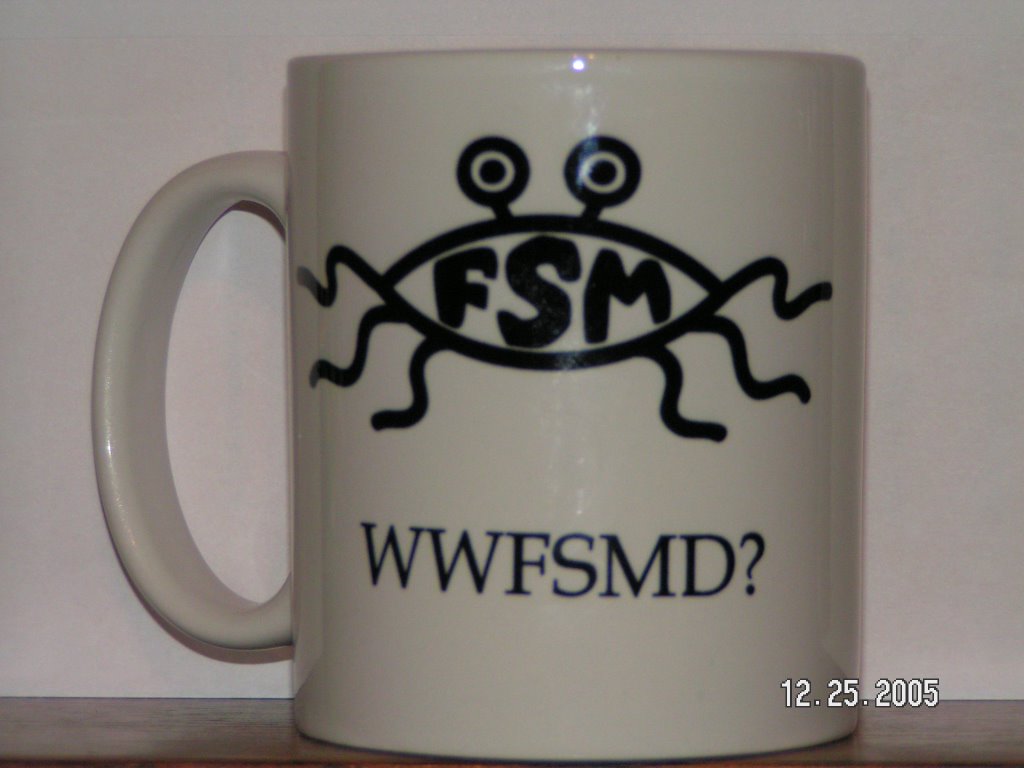
WWFSD?

So I'm watching an "X-Files" re-run, and they are showing pictures of burnt bodies and explaining that the fires were caused "without any apparent source of combustion." And I accept this statement, even as I ask myself: "But how do I know that isn't true?"

Well, because it isn't, of course. But why do I know that? How do I know a statement made on a TV show isn't true, while I know a statement made on a TV news show is true? What process, in other words, am I automatically going through to accept one, and suspend disbelief about the other?

Call it the "Galaxy Quest" question.

We go through a process of discernment, of suspension of disbelief, of ascertaining which statement is credible, which is not; but what is that process, exactly, and how do we automatically switch from fiction to non-fiction? How do we keep the two apart, without accepting everything or disbelieving anything? Keep that in mind; it's a question similar to what's going on at the annual meeting of the American Academy of Religion this year:


When some of the world's leading religious scholars gather in San Diego this weekend, pasta will be on the intellectual menu. They'll be talking about a satirical pseudo-deity called the Flying Spaghetti Monster, whose growing pop culture fame gets laughs but also raises serious questions about the essence of religion.
Which really isn't as absurd as it sounds. First, please note, these are religious scholars, not (necessarily) theologians. And the question of "What constitutes 'religion'" is a very live one in such circles.

The title: "Evolutionary Controversy and a Side of Pasta: The Flying Spaghetti Monster and the Subversive Function of Religious Parody."

"For a lot of people they're just sort of fun responses to religion, or fun responses to organized religion. But I think it raises real questions about how people approach religion in their lives," said Samuel Snyder, one of the three Florida graduate students who will give talks at the meeting next Monday along with Alyssa Beall of Syracuse University.
You might assume from this that AAR meetings are riotous and ribald affairs. But, per their website, they are usually concerned with topics like: "Studies of World Religions in Mainland China, Hong Kong, and Taiwan" or "Interdisciplinary, Theoretical, and Ideological Implications of the AAR and SBL Split"; or "Chinese Scholarship on the Dunhuang Manuscripts: New Perspectives on Buddhism" or even "Spectacles of Crucifixion" (yes, I'm picking the geekiest examples I can find). So to say this topic is slightly aberrant is probably not to go too far afield. You could also say it proves Ecclesiastes right: there is nothing new under the sun.

The presenters' titles seem almost a parody themselves of academic jargon. Snyder will speak about "Holy Pasta and Authentic Sauce: The Flying Spaghetti Monster's Messy Implications for Theorizing Religion," while Gavin Van Horn's presentation is titled "Noodling around with Religion: Carnival Play, Monstrous Humor, and the Noodly Master."

Using a framework developed by literary critic Mikhail Bakhtin, Van Horn promises in his abstract to explore how, "in a carnivalesque fashion, the Flying Spaghetti Monster elevates the low (the bodily, the material, the inorganic) to bring down the high (the sacred, the religiously dogmatic, the culturally authoritative)."
Today we call it scholarship; in the Middle Ages, they called it the "Feast of Fools." Much of the antics of that occassion (memorably recreated in The Hunchback of Notre Dame) were aimed precisely at elevating the low and bringing down the high. As I've said before, we could use a bit more of that in modern society.

We could also use a bit more reflection on what we know, and how we are so sure we know it. But maybe that's a dangerous question to ask....

In other news...

Scanning the reports of Site Meter obsessively, as I am wont to do (Google loves me, this I know/For Site Meter tells me so), I noticed a curious uptick in the number of visitors finding this place because they were searching for information on "Advent." Which is laudable, but also a kind of interesting statement about how we've structured our society. In brief, I blame consumerism.

Maybe it isn't that, actually. Took the Golden Child shopping for a coat she wanted, the other day. It was the last day of the sale, and I was worried there'd be nothing left. Silly me; they had plenty. Of course, it was a winter coat she wanted, and the temperatures have been flirting with 90 F all week, so why I thought people would do something as sensible as buy a winter coat when it was on sale, well....let's say I learned my lesson! Almost no one, of course, was enticed by the sale price; they weren't paying attention because they didn't need a coat. By today, however, with temperatures flirting with 70 (this is considered "cold" on the Gulf Coast), I'm sure the coats will be selling briskly; at the regular price.

We tend, in other words, to respond to stimuli, not to the calendar. But maybe that underscores my point, rather than undermines it. Because Xmas carols have been playing since the day after Hallowe'en in the stores I go into (mostly grocery stores), and Xmas goodies and decorations have been on display in every retail corner of this fair city since at least November 1, if not earlier. Consumerism depends on the anticipation of the season. Food Network (practically the only TV I watch, now that Jon Stewart is in re-runs) started getting us ready for Thanksgiving a week ago. Two days before Thanksgiving, they've already announced, they'll be getting us ready for Christmas. I guess the New Year's Dinners will be promoted around St. Nicholas Day, so we can get on to romantic Valentine's Day suppers by December 23rd.

There is a description of this kind of thing in the psychological literature, because I was "diagnosed" with it at one time. Essentially, I was advised, I was too busy living "in the future" to pay attention to the present. It was something of an escape mechanism for me, but it was also a cheat. It left the present hollow and my friends and family neglected as I busily built glass castles in the air which, of course, I could never move in to because I could never catch up with them; they were always "in the future." Hard to appreciate the present when you can't stop and look around at it.

And so I notice so many people so anxious (apparently; or just curious) to prepare for Advent before Advent has come, just as we must be ready for Thanksgiving so the meal is "perfect" and then be ready for Christmas so that day is "perfect," and then get ready for New Year's Eve so that party is "perfect," and....when do we ever just stop and enjoy the moment that is right before us? If we did that, of course, we might not buy all the things we need to make the future "perfect," though, and what would we do then?

If this is all starting to sound familiar, I suppose that is no accident. Advent itself is about preparation. I'll have more to say on that anon. And hopefully some new things to say about Advent throughout the season of same. But when we've reached the level of having to prepare for the preparation, well...that's getting a bit "meta-" even for me.

Advent is coming, but it is not yet. It is the season of what has come, and is coming, and what is not yet. A good place to start a new year. May we all be ready to begin, by then. In the meantime, let us live fully in the year that is ending, but not yet ended.