Monday, July 12, 2021

How Large?

Great Awakening large? Second Great Awakening large? Third? As large as the audiences for Jimmy Swaggart, Oral Roberts, the 700 Club, Jim and Tammye Faye Baker, Jerry Falwell and James Dobson?  As many as made Rick Warren a best-selling author?

Yeah, what happened to all those people?  Falwell was a king-maker (supposedly); Robertson was a GOP Presidential candidate (briefly); Warren actually moderated a debate between then Sen. Obama and then Sen. McCain.

Or maybe it's as many people as backed Lyndon LaRouche, who proclaimed the Queen of England the center of an international drug-smuggling conspiracy.  Or as many as the supporters of David Duke, who was never sufficiently ostracized from decent human society as I would have liked.  He did Trump one better; Duke damned near made the KKK a respectable topic of conversation.

Spiritual ecstasy?  Like that of Teresa of Avila?  Margery Kempe? St. John of the Cross?  Francis of Assisi? Aimee Semple McPherson?  The Shakers? The Pentecostalists?

American history is littered with stories of influential individuals caught up in "spiritual ecstasy" who amass thousands of followers.  Some form religious groups, like the Shakers.  Some are tent revivalists.  It's as American as apple pie, and about as dangerous to the fabric of society.  In some places it is the fabric of society. Oh, I know it's worse now because "Trump," but please: lighten up, Francis.  "Spiritual ecstasy" is what led to the Salem witch trials, which were less about religious experiences than about seizing power and property from the marginalized (almost all the women accused of witchcraft were widows or never married).  It was a small and shameful aspect of American history, but it also occurred almost in isolation.  It wasn't a contagion that spread across the land like a religious fervor.  We aren't really much for religious fervors in this country, despite the publicity of tent revival shows and TV hucksters (cable made them, in the '70's; and cable has destroyed them.  It didn't really take long, when you look back on it).  This new "spiritual ecstasy" is more than anything the blush on the cheek of a dying age.  I've read that pastors are concerned about their evangelical churches being hotbeds for Q conspiracy theories.  It sounds like a natural fit for me.  But I'm also convinced Q adherents are like your average church members:  they're perfectly content to see things done as they would have them done, and also perfectly content to let someone else do it.  In the church the people who complain most loudly and fiercely all aim their ire at the pastor, who should "do something about it!"  When it's pointed out they could help out rather than just complain, they only get angry.  If they get angry enough, they lash out: but only verbally.  And then the recriminations become so bitter the entire enterprise explodes into a round-robin of accusations and animosities that only serves to implode the organization they wanted to save by complaining about it in the first place.  But lift a finger for it?  That's what the pastor is for; or at least the church council.

That can happen in a church because a church is a voluntary organization and only the church judicatory is going to step in to try to right wrongs.  A government is not a voluntary institution, and one of the lessons of late 2020 is that the courts, in almost 60 cases, rejected the errant nonsense of claims of "fraud" which mostly weren't even that.  Government has powers to perpetuate itself that no church does.  It is quite a leap from "spiritual ecstasy" to outright anarchy, or even revolution.  Frankly, we were closer to the latter in the 1860's, and again in the 1960's, than we are today.  And there was more "spiritual ecstasy" in the late '40's and 1950's than there is today, when church attendance after the war soared to heights never before seen in America.  That's what made us think we've always attended church faithfully and always been good, conservative WASP's.  But if you pay close attention to Abraham Lincoln's invocations of the Almighty, he still the "greatest President" we've ever had, you'll find he is much closer to 18th century Deism than he is to 21st century evangelicalism. Our national spiritual ecstasy is waning again; those who think they will revive it, especially in the name of Trump, are going to find they are leading a parade which no one is following.

Yes, it's appalling that people at C-PAC think Trump is still President, or worse that he'll be reinstated once the "fraud" is revealed (and no, it doesn't work like that; it never has, it never will.  To the courts the remedy is the next election, not judicial interference at so base a level.).  But C-PAC has always been where the crazies gather; they need that to reassure themselves.  It's telling they need it twice already in 2021 alone.  Looked at that way, it's suddenly far less scary, and much more pathetic.  And does no one remember the small crowd of protestors who greeted President Kennedy on that fateful day in Dallas?  We've obsessed so over the mechanics of the assassination we've never looked at the social venue of it; which is not to blame people in Dallas for Lee Harvey Oswald, but at the same time protests against Presidents have always been with us.  At the time of his death Kennedy had been in office for almost 3 years, and yet what greater repudiation of the legitimacy of a President is there than assassination?  The closest we've come to that since was Reagan on the sidewalk before a guy who thought he was impressing Jodie Foster.

Spiritual awakenings can be disruptive and chaotic, and the powers-that-be often react against them.  Margery Kempe was not a nun or an anchorite, so her work was repudiated by the Church even as Julian's was approved.  Mass spiritual eruptions, of ecstasy, of theology and ecclesiology (the Pietist movement) are often too disruptive for the current order, but in retrospect we see them as a benefit, even a necessity.  That isn't to say all spiritual "eruptions" are an unalloyed good; but they happen.  Will this one truly lead to an American theocracy?  Well, honestly, if Pat Robertson and Jerry Falwell couldn't do it (and Lord knows they tried), I don't see it happenening under the banner of Trump as Q Messiah.

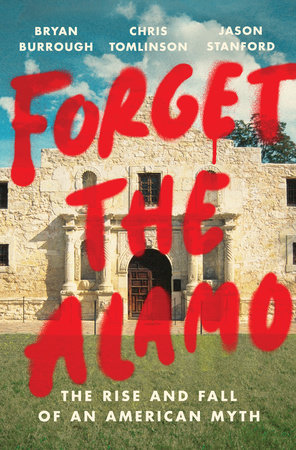
The Texas Revolution Was NOT About Slavery!


Except when it was.

SEC. 9. All persons of color who were slaves for life previous to their emigration to Texas, and who are now held in bondage, shall remain in the like state of servitude, provide the said slave shall be the bona fide property of the person so holding said slave as aforesaid. Congress shall pass no laws to prohibit emigrants from the United States of America from bringing their slaves into the Republic with them, and holding them by the same tenure by which such slaves were held in the United States; nor shall Congress have power to emancipate slaves; nor shall any slave-holder be allowed to emancipate his or her slave or slaves, without the consent of Congress, unless he or she shall send his or her slave or slaves without the limits of the Republic. No free person of African descent, either in whole or in part, shall be permitted to reside permanently in the Republic, without the consent of Congress, and the importation or admission of Africans or negroes into this Republic, excepting from the United States of America, is forever prohibited, and declared to be piracy.

"Congress," by the way, refers to the Texas legislative body, not the one in D.C.

SEC. 10. All persons, (Africans, the descendants of Africans, and Indians excepted,) who were residing in Texas on the day of the Declaration of Independence, shall be considered citizens of the Republic, and entitled to all the privileges of such. All citizens now living in Texas, who have not received their portion of land, in like manner as colonists, shall be entitled to their land in the following proportion and manner: Every head of a family shall be entitled to one league and labor of land, and every single man of the age of seventeen and upwards, shall be entitled to the third part of one league of land. All citizens who may have, previously to the adoption of this Constitution, received their league of land as heads of families, and their quarter of a league of land as single persons, shall receive such additional quantity as will make the quantity of land received by them equal to one league and "labor" and one-third of a league, unless by bargain, sale, or exchange, they have transferred, or may henceforth transfer their right to said land, or a portion thereof, to some other citizen of the Republic; and in such case the person to whom such right shall have been transferred, shall be entitled to the same, as fully and amply as the person making the transfer might or could have been. No alien shall hold land in Texas, except by titles emanating directly from the Government of this Republic. But if any citizen of this Republic should die intestate or otherwise, his children or heirs shall inherit his estate, and aliens shall have a reasonable time to take possession of and dispose of the same, in a manner hereafter to be pointed out by law. Orphan children, whose parents were entitled to land under the colonization law of Mexico, and who now reside in the Republic, shall be entitled to all the rights of which their parents were possessed at the time of their death. The citizens of the Republic shall not be compelled to reside on the land, but shall have their lines plainly marked.

Settlers in Texas had gone to great lengths to hide their slaves as slaves, ususally using contracts of indenture to claim the slaves were indentured servants in order to skirt Mexican law.  The minute they could, they made sure that would never be necessary again.

These provisions continued into the Constitution of 1845:

ARTICLE VIII.
Slaves.

SEC. 1. The legislature shall have no power to pass laws for the emancipation of slaves without the consent of their owners, nor without paying their owners, previous to such emancipation, a full equivalent in money for the slaves so emancipated. They shall have no power to prevent emigrants to this State from bringing with them such persons as are deemed slaves by the laws of any of the United States, so long as any person of the same age or description shall be continued in slavery by the laws of this State: Provided, That such slave be the bona fide property of such emigrants: Provided, also, That laws shall be passed to inhibit the introduction into this State of slaves who have committed high crimes in other States or Territories. They shall have the right to pass laws to permit the owners of slaves to emancipate them, saving the rights of creditors, and preventing them from becoming a public charge. They shall have full power to pass laws which will oblige the owners of slaves to treat them with humanity; to provide for their necessary food and clothing; to abstain from all injuries to them, extending to life or limb; and, in case of their neglect or refusal to comply with the directions of such laws, to have such slave or slaves taken from such owner and sold for the benefit of such owner or owners. They may pass laws to prevent slaves from being brought into this State as merchandise only.

SEC. 2. In the prosecution of slaves for crimes of a higher grade than petit larceny, the legislature shall have no power to deprive them of an impartial trial by a petit jury.

SEC. 3. Any person who shall maliciously dismember, or deprive a slave of life, shall suffer such punishment as would be inflicted in case the like offence had been committed upon a free white person, and on the like proof, except in case of insurrection by such slave.

Much of that language continued in the Constitution of 1861, with this interesting addition:

["SEC. 6. The Legislature shall have power to pass laws which will oblige the owners of slaves to treat them with humanity."]

1866 brought the change of "slave" to "freedmen":

ARTICLE VIII.

FREEDMEN.

SECTION 1. African slavery, as it heretofore existed, having been terminated within this State, by the Government of the United States, by force of arms, and its re-establishment being prohibited, by the amendment to the Constitution of the United States, it is declared that neither slavery nor involuntary servitude, except as a punishment for crime, whereof the party shall have been duly convicted, shall exist in this State; and Africans and their descendants, shall be protected in their rights of person and property by appropriate legislation; they shall have the right to contract and be contracted with; to sue and be sued; to acquire, hold and transmit property; and all criminal prosecutions against them, shall be conducted in the same manner as prosecutions, for like offences, against the white race, and they shall be subject to like penalties.

SEC. 2. Africans and their descendants shall not be prohibited, on account of their color or race, from testifying orally, as witnesses, in any case, civil or criminal, involving the right of, injury to, or crime against any of them in person or property, under the same rules of evidence that may be applicable to the white race; the credibility of their testimony to be determined by the court or jury hearing the same; and the Legislature shall have power to authorize them to testify as witnesses in all other cases, under such regulations as may be prescribed, as to facts hereafter occurring. 

The Constitution of 1869 dropped all references to slavery, including instead an article on "immigration." 

The Constitution of 1876 is the current constitution of the state of Texas.  It has no specific articles referencing either slavery or immigration.  But after independence from Mexico Texas had 6 constitutions.  3 of them specifically referenced slavery; the fourth made it clear the removal of such provisions was due to the recent unpleasantness between the states.  It couldn't reappear after that, so it quietly faded away in the fifth and sixth iterations.

Which makes it pretty clear slavery was a central concern of the governed and their government from independence until, roughly, Juneteenth.  It also makes it clear that, had it not been for the 13th and 14th Amendments, the article on Freedmen in the 1866 constitution probably would not have been written, much less passed.  Everyone talks about the "Bill of Rights" or the 1st or 2nd Amendments; it's clear to me the most consequential amendments were the 13th and 14th.  And the 15th is never going to get its day, because we simply aren't going to let the "radical" politics of the late 19th century hold that much sway over us.  We abolished slavery, didn't we?  What more do they want?

We certainly can't interrupt the Heroic Anglo Narrative of Texas with anything like the simple truth now, can we?

Former Land Commissioner Jerry Patterson, said he has doubts about several claims the authors make. The Texas General Land Office that he once ran has jurisdiction over the Alamo site in San Antonio.

But instead of supporting the event's cancelation, Patterson said he was looking forward to the authors facing tough questions about their sourcing and accuracy. 

"It would have been better if they had been asked hard, specific questions and been forced to answer them. And in that case, they should have been allowed to be at the Bullock," Patterson said.

I really wish Jerry Patterson had gotten that chance.  I'll wager he can't even tell you how many post-independence Constitutions Texas has; much less their content.

Pretend It Happened

At this point Abbott is just making shit up, because he really doesn't care:  Harris County is going down for going Democratic.

Abbott initially argued that Harris County, where many voting practices are being challenged by the proposed state legislation, simply did not have the authority to "create its own election system."

Except the state courts said they could "create their own election system."  What Abbott fears is other counties will find out out the water's fine, and jump into the pool.

Wallace shot back, asking why Abbott would oppose these measures if they increased voter turnout, as the Texas governor himself has said he is in favor of, noting that no evidence of widespread voter fraud was ever discovered in Harris County.

Abbott then stated that it is hard for counties to ensure proper monitoring of ballots.

"With regard to the drive-thru voting, listen this violates the fundamentals of what — the way that voting integrity has always been achieved and that is the sanctity of the ballot box," the governor said.

"If you do drive-thru voting, are you going to have people in the car with you?" he asked. "It could be somebody from your employer or somebody else they may have some coercive effect on the way that you would cast your ballot, which is contrary to you going into the ballot box, alone and no one there watching over your shoulder."

The proposed law will allow poll watchers freedom to stand over your shoulder and be sure you vote "correctly."  I'm an old white guy:  they won't be standing over my shoulder.  I'll be invisible to them.  It's the Blacks, browns, and Asians they'll be checking on.  Besides, the real problem is that drive-thru voting is too damned convenient!

Abbott also said bumper stickers that express political beliefs would violate state laws that bar electioneering at polling places because voters might see them when they're in the drive-thru. 

Because when I'm bumper to bumper in a line to vote through my car window, what I'm checking is the bumper stickers on the car ahead of me.

As I say, Abbott doesn't care what his "reasons" sound like.  He just wants the law passed so the mouth-breathers in the GOP primaries will vote for him.  This is the same racist politics as my childhood; the fear of black people (and brown, and Asian) is just not expressed as plainly.  At this point I want Huffines (who says illegals are "getting our money", or West, who says our tax system is "Marxist,") to win the primary, just so we can replay Claytie and the Lady.  For those of you unfamiliar, Clayton Williams was such a boob West Texas rancher even Texas rejected him in favor of the Governor Miz Anne.  We could use that lightning strike one more time around here.

It’s July, 2011, And What Do We Know?

Hillary Clinton is still at risk. Trump has not stopped making things up about the election. Wait, what? Any minute now.  
The only newsworthy thing he said. The rest is just piffle.

Why I Hate Claims About "Destroying The Country"

It's an empty phrase to begin with, an utterance without content. But it's a cheap shibboleth everyone is using now to claim their opponents are destroying the country/democracy/life as we know it, and therefore are unfit for human society or any civilized consideration.

If I tell you that you sound like Mike Lindell, will you stop?  Please?

How Did I Miss THIS Anniversary?

Another of those topics on which everything you know is wrong. To begin with, it was a "friendly trial":

In the hope of reversing three decades of declining population, Dayton's town fathers saw in the ACLU's search for a biology teacher to test the legality of the Tennessee law a golden opportunity to put Dayton back on the map. That its high school biology teacher was ill and incapacitated posed no problem; the football coach and general science teacher, John Scopes (who had been drafted to complete the biology course) would do. In the actual trial, Scopes testified that as substitute teacher in the second half of the course he had learned more biology from his students than they had learned from him, for at least they had had six weeks of instruction from someone who knew something about the subject.

The town fathers' strategy exceeded their wildest hopes. Over two hundred reporters alone poured into Dayton, and the trial turned out to be one of the first in America to recieve international coverage. (Smith 106)

Second, William Jennings Bryan was not a Bible thumping fundamentalist who hated science:  he hated the social consequence of Darwinism, often separated from Darwin (falsely) as "Social Darwinism":

Bryan was first and foremost a passionate humanitarian. He was an irrepressible evangelist for social reform, and social Darwinism (which would soon be discredited) was then in its heyday. Bryan had seen the survival-of-the-fittest theory used to defend the robber barons in America, and in Germany to justify the brutal militarism that led to World War I. This had led him to the belief that 'the Darwinian theory represents man as reaching his present perfection by the operation of the law of hate, the merciless law by which the strong crowd out and kill off the weak." (Smith, 107) 

Turns out Bryan wasn't wrong about that.  And according to Karen Armstrong, there all our troubles began:

“Before the Scopes ‘monkey’ trial—when the secular press ridiculed the fundamentalists and said they had no place in the modern agenda—fundamentalist Christians had been literal in their interpretation of scripture but creation science was the preserve of a few eccentrics. After the Scopes trial, they became militantly literal and creation science became the flagship of their movement. Before the Scopes trial, fundamentalists had often been on the left of the political spectrum and had been willing to work alongside socialists and liberal Christians in the new slums of the industrializing North American cities. After the Scopes trial, they swung to the far right, where they remained. They felt humiliated by the media attack. It was very nasty. There was a sense of loss of prestige, and, above all, a sense of fear.” 

Happy anniversary! 

C-PAC Is Where All the LunkHeads Go To...

Lunk heads. Meanwhile, NOT at C-PAC: I can understand paying attention to Louie Gohmert; he's still an office-holder (even if he has the brains of a paper clip). But the former guy is nobody anymore. And he's still an idiot. I think it's safe to ignore him. He's rewritten his entire presidency; why would you expect him to stop on January 5th? Besides, he can say he was Marie of Romania if he wants. Who the fuck cares? This strikes me as much more important: That's not "re-writing history." That's denying reality. Then again, politicians have done both since time immemorial. I don't expect Abbott to lose his office over this. Although maybe something will come of this: Oh, who am I kidding?

Sunday, July 11, 2021

Richard Branson Rode A Plane Into Space

For the record, Branson went only 53 miles up. "Space" starts at 50 miles up.

All the young reporters on MSNBC and NBC are giddy with the prospect of watching Branson's plane get taken up that high and land shortly thereafter without power.  They are old enough to have grown up when "Space Camp" was a thing of their childhood, and when their 4 year old children (they tell all of this on the air) can be excited by this event.

And I feel incredibly old.  I don't remember Robert White (I was 7 at the time), but I remember Alan Shepherd's suborbital flight, and then John Glenn's circumnavigation of the globe in space.

So pardon me if I'm not that thrilled with billionaires trying to set up commercial space flights that will....go up and come back down soon?  At the cost of $250,000 per ticket; but with more flights that price will come down!  

Alan Shephard rode the Freedom 7 capsule 161.5 miles into space; and it was still a "suborbital" flight. I have no idea how high Jeff Bezos plans to go. But it's all been done before, and by better men. The commercial possibilities of this seem to me to fall somewhere between the Concorde and the DeLorean.

Sunday Mornin' Goin' Down

White evangelical support for Donald Trump wasn't about partisanship -- it was about animus toward minorities 
No shit, Sherlock.  What was your first clue?
No one should have been surprised by evangelical Trump support, and that the American public has done such a poor job of grappling with the issue is a sad commentary on the fundamental weakness of American civil society.
Maybe when we finally grapple with racism in America, and economic inequality baked into the system by law, oh, and climate change, we can finally get around to pet problems like American fundamentalist Christianity.  Which, frankly, was a political force for maybe 30 years, and is fading fast from the political scene.

I think we'll survive that, as a nation and a culture.  The other three?  Somehow I find them far more serious.

That goes for Valerie Tarico, too.  Work out the demons of your childhood in private.  What you experienced as Christianity is not the Christianity of the world, or even many of us in America, or even all of us in the South.  Find a support group, read some works of real scholarship like, say, Bultmann or Brueggeman, and quit whining to the rest of us about what still bothers you.  You need therapy, not a publisher.

Rolling Down Like Waters


 I honestly hadn't heard of this before stumbling on the AmCon (that's such an appropriate acronym!) article, so I'm grateful for the background information:

In the reporting about Francis not issuing an official apology for the recently discovered bodies around Canadian residential schools - a lot of which were administered by religious denominations, including the RCatholic church - mostly they haven't noted that him not doing so was because the Canadian Conference of Bishops are divided on issuing an apology and having Francis go to Canada to deliver it. One of his major initiatives was to restart the devolution of decision making out of the Vatican and into national conferences and dioceses - which, considering how many of the bishops were JPII right-wing hacks and almost as bad appointed under Benedict XVI has its downsides along with a few up sides. 

It's remarkable how much of that late-classical-medieval theology has been problematic in the way these white-supermacists are taking advantage of. I was just reading some of the early debates in the First Congress surrounding slavery and, though with a decidedly Federalist-secularist (you could almost say Mammonist) accent, they are saying similar things in support of keeping up the slave trade. 

One of the things that was most eye-opening for me was reading the Pauline letters without taking that later theological thinking for granted, they're a totally different thing if you do that. Augustine is one of those I blame for a lot, perhaps it's because I haven't read Anslem at all. I find Gregory of Nyssa and Issac of Syria more congenial and, to my thinking, closer to scripture. Though there's a lot in Orthodox theology that's seriously messed up too. I do find that the closer to the Scriptures you get the less messed up it is, though lots of it is still confusing and unclear.

But I'm more interested in the theological issues, which I'll get to in a moment; after noting the Holy Roman Empire used to do this, following on a practice established by monarchs centuries before, and proving in some ways the Roman Church is still a medieval institution:

Maybe I should mention that a lot of the Canadian bishops opposition is based on the enormous debt that JPII's visit to Canada left them with, something like 34 million dollars and that the various scandals of that time decimated the support of the churches. JPII was not a very good Pope in a lot of ways. 

The Holy Roman Emperor never had a fixed abode; just empty castles around the Empire.  He took his furnishings and staff with him, filled up the next castle, then expected the city to provide for his needs.  Monarchs had done this before, on royal visits, but the HRE made it the central fact of his existence on earth.  I immediately thought of that when I read this about the debt JPII left to the churches in Canada.  I'm not sure the HRE ever did that much for the empire (which was never really an empire; and he was never really an emperor), either.*

But I digress....

My re-assessment of Paul began with Krister Stendahl. His book Paul Among Jews and Gentiles was not new when I was in seminary, but it was the first bomb to go off in our collective heads as we were forced to reconsider the "Paul" we all thought we knew (and almost every "Paul" you think you know is wrong). When I try now to recreate that struggle, I can’t. I’m fully on the other side of it now. But it was like wrestling with an angel; I remember that.  It was when I began to break free of all the ideas of salvation I'd grown up with.

Let me let Stendahl (a Lutheran bishop and Biblical scholar) put Paul in historical (which is to say also ecclesiological) context:

For Paul had not arrived at his view of the Law [Stendahl is concerned with Romans 7:19] by testing and pondering its effect upon his conscience; it was his grappling with the question about the place of the Gentiles in the Church and in the plan of God, with the problem Jews/Gentiles or Jewish Christians/Gentile Christians, which had driven him to that interpretation of the Law which was to beome his in a unique way.....

Yet it was not until Augustine that the Pauline thought about the Law and Justification was applied in a consistent and grand style to a more general and human problem....His Confessions is the first great document in the history of the introspective conscience. The Augustinian line leads into the Middle Ages and reaches its climax in the penitential struggle of an Augustinian monk, Martin Luther, and his interpretation of Paul. (Stendahl, pp. 84-85)

If it doesn't yet seem clear that everything you know is wrong, let me quote myself:

Recognizing this can have a very upsetting effect on one's assumptions about individual actions and the concept of corporate responsibility. Is it even possible to think of oneself as an individual, and yet not think of oneself in terms of an introspective conscience? Stendahl's thesis is that it is not only possible, but that it is precisely how Paul saw himself and the world, and so when he says "Miserable sinner that I am!," it is not a cri de couer or a mea culpa such as we, in a post-Augustinian world, imagine it. No more so than Paul would automatically interpret the act of the prostitute in Luke's anointing story as an outward display of an inward act of conscience. That kind of introspection, which we think so fundamental to "human nature," is not so fundamental at all. It is the result of human thought, of philosophy; of the efforts of a saint of the church. 

So there's nothing wrong with reading Paul through an Augustinian lens, as that can apply the Law and Justification in a consistent and grand style to a more general and human problem.  But let's face it, it can also lead to a distinctly evil soteriology (and to do that you have to also abandon Augustine.  Give the man his due, he is a saint, you know, and one of the most influential and important thinkers in Western culture.)  if we are going to understand what scriptures and the church fathers are teaching us, we have to listen to what they are saying, not to what we think they are saying. To combat the latter, we have to regard the former with new eyes (or go more deeply into Augustine, who is abused either way by the failure to take him more seriously).  What I'm getting at is Stendhahl's central thesis:

"In the history of Western Christianity--and hence, to a large extent, in the history of Western culture--the Apostle Paul has been hailed as a hero of the introspective conscience." He makes his first critical point by questioning "the often tacit assumption that man remains basically the same through the ages." "[B]oth the historian," Stendahl notes, "and the theologian, both the psychologist and the average reader of the Bible, are well advised to assess how this hypothesis of contemporaneity affects their thinking, and their interpretation of ancient writings."

To begin to strip away Augustine from Paul allows you to read Paul anew; but I wouldn't confuse it with a "truer" picture of Paul's writings.  It's different, but the "true" Paul is beyond our grasp.  Take that as po-mo or as midrash, you still reach the same conclusion. Still, it directs our notions of "salvation" away from products of personal introspection (on one hand "How do I feel about myself?" and on the other "How does this save those heathen souls from perdition?") and toward a salvation that encompasses people, not ideas (I may have a soul; but I'm quite certain I have friends and family).

Let me drop in a long quote here:

For I have the desire to do what is good, but I cannot carry it out. For what I do is not the good I want to do; no, the evil I do not want to do—this I keep on doing. Now if I do what I do not want to do, it is no longer I who do it, but it is sin living in me that does it.

So I find this law at work: When I want to do good, evil is right there with me. For in my inner being I delight in God's law; but I see another law at work in the members of my body, waging war against the law of my mind and making me a prisoner of the law of sin at work within my members. What a wretched man I am! Who will rescue me from this body of death?

Romans 7:18b-24

The interpretation of that passage seems so obvious to us now. But it is an interpretation that would make no sense to Paul's original audience, or to almost any audience prior to Augustine. Which is damned hard to imagine, but there's that problem of anachronism again. Let me just quote from Stendahl again:

...it is exactly at this point that Western interpreters have found the common denominator between Paul and the experience of man, since Paul's statements about 'justification by faith' have been hailed as the answer to the problem which faces the ruthlessly honest man in his practice of introspection. Especially in Protestant Christianity--which, however, at this point has its roots in Augustine and in the piety of the Middle Ages--the Pauline awareness of sin has been interpeted in the light of Luther's struggle with his conscience. But it is exactly at that point that we can discern the most dramatic difference between Luther and Paul, between the 16th and the 1st century.... 

Now, to put Paul in his proper context, as a 1st century Jew interpreting the law and the gospel for a Gentile audience, what do we need to understand?

It is pointed out that for the Jew the Law did not require a static or pedantic perfectionism but supposed a covenant relationship in which there was room for forgiveness and repentance and where God applied the Measure of Grace. Hence Paul would have been wrong in ruling out the Law on the basis that Israel could not achieve the perfect obedience which the Law required.

Stendahl's interpetation of Paul turns on Phil. 3:6: "I was blameless as to righteousness-of the Law, that is," and he points out that Romans 2-3 "deals with something very different."

The actual transgressions in Israel--as a people, not in each and every individual--show that the Jews are not better than the Gentiles, in spite of circumcision and the proud possession of the Law. The "advantage" of the Jesus is that they have been entrusted with the Words of God and this advantage cannot be revoked by their disobedience (Rom. 3:1ff.), but for the rest they have no edge on salvation. The Law has not helped. They stand before God as guilty as the Gentiles, and even more so (2:9). All this is said in the light of the new avenue of salvation, which has been opened in Christ, an avenue which is equally open to Jews and Gentiles, since it is not based on the Law, in which every distinction between the two rests....The only metanoia (repentance/conversion) and the only grace which counts is the one now available in Messiah Jesus. Once this has been seen, it appears that Paul's references to the impossibility of fulfilling the Law is part of a theological and theoretical scriptural argument about the relation between Jews and Gentiles.

You'll notice, if you're still paying attention, that we are no closer to answering the question "What is 'salvation'?" But to move to an answer, we first have to move away from the concept that sin was universalized by the cross, and that Paul was the theologian who first established that truth for us.

Clear as mud, right?  Start with the passage from Romans, one often cited for the proposition of the "divided conscience" (or, in more modern parlance, the question:  when you talk to yourself, who are you talking to?  And who's doing the talking?) I'm not sure Paul is as concerned with fulfilling the law as we assume.  I think the Law was guidance, not restrictions.  Jesus says he has come to fulfill the Law; but he also says the Law was made for people, not people for the law.  The Law is supposed to be a benefit, not a reason to punish. A guide; not a maze. I read Paul as trying to explain why the Law seemingly makes him miserable, when it is supposed to offer him liberation (i.e., guidance; liberation from error and uncertainty as to outcome, not the freedom to do as you damned well please).  He's not trying to excuse or abandon the Law; he's trying to explain its place in providing the gospel message he is now preaching.

The "justification by faith" Stendahl refers to comes in Romans 8:

Therefore, there is now no condemnation for those who are in Christ Jesus, 2 because through Christ Jesus the law of the Spirit who gives life has set you[a] free from the law of sin and death. 3 For what the law was powerless to do because it was weakened by the flesh,[b] God did by sending his own Son in the likeness of sinful flesh to be a sin offering.[c] And so he condemned sin in the flesh, 4 in order that the righteous requirement of the law might be fully met in us, who do not live according to the flesh but according to the Spirit.

And also in Romans 2.  Since Stendahl refers to Romans 2 and 3; those are worth quoting here, too:

You, therefore, have no excuse, you who pass judgment on someone else, for at whatever point you judge another, you are condemning yourself, because you who pass judgment do the same things. 2 Now we know that God’s judgment against those who do such things is based on truth. 3 So when you, a mere human being, pass judgment on them and yet do the same things, do you think you will escape God’s judgment? 4 Or do you show contempt for the riches of his kindness, forbearance and patience, not realizing that God’s kindness is intended to lead you to repentance?

5 But because of your stubbornness and your unrepentant heart, you are storing up wrath against yourself for the day of God’s wrath, when his righteous judgment will be revealed. 6 God “will repay each person according to what they have done.”[a] 7 To those who by persistence in doing good seek glory, honor and immortality, he will give eternal life. 8 But for those who are self-seeking and who reject the truth and follow evil, there will be wrath and anger. 9 There will be trouble and distress for every human being who does evil: first for the Jew, then for the Gentile; 10 but glory, honor and peace for everyone who does good: first for the Jew, then for the Gentile. 11 For God does not show favoritism.

12 All who sin apart from the law will also perish apart from the law, and all who sin under the law will be judged by the law. 13 For it is not those who hear the law who are righteous in God’s sight, but it is those who obey the law who will be declared righteous. 14 (Indeed, when Gentiles, who do not have the law, do by nature things required by the law, they are a law for themselves, even though they do not have the law. 15 They show that the requirements of the law are written on their hearts, their consciences also bearing witness, and their thoughts sometimes accusing them and at other times even defending them.) 16 This will take place on the day when God judges people’s secrets through Jesus Christ, as my gospel declares.

Chapter 3 takes us into very deep waters indeed:

What advantage, then, is there in being a Jew, or what value is there in circumcision? 2 Much in every way! First of all, the Jews have been entrusted with the very words of God.

3 What if some were unfaithful? Will their unfaithfulness nullify God’s faithfulness? 4 Not at all! Let God be true, and every human being a liar. As it is written:

“So that you may be proved right when you speak

    and prevail when you judge.”

5 But if our unrighteousness brings out God’s righteousness more clearly, what shall we say? That God is unjust in bringing his wrath on us? (I am using a human argument.) 6 Certainly not! If that were so, how could God judge the world? 7 Someone might argue, “If my falsehood enhances God’s truthfulness and so increases his glory, why am I still condemned as a sinner?” 8 Why not say—as some slanderously claim that we say—“Let us do evil that good may result”? Their condemnation is just!

9 What shall we conclude then? Do we have any advantage? Not at all! For we have already made the charge that Jews and Gentiles alike are all under the power of sin. 10 As it is written:

“There is no one righteous, not even one;

11     there is no one who understands;

    there is no one who seeks God.

12 All have turned away,

    they have together become worthless;

there is no one who does good,

    not even one.”

13 “Their throats are open graves;

    their tongues practice deceit.”

“The poison of vipers is on their lips.”

14     “Their mouths are full of cursing and bitterness.”

15 “Their feet are swift to shed blood;

16     ruin and misery mark their ways,

17 and the way of peace they do not know.”

18     “There is no fear of God before their eyes.”

19 Now we know that whatever the law says, it says to those who are under the law, so that every mouth may be silenced and the whole world held accountable to God. 20 Therefore no one will be declared righteous in God’s sight by the works of the law; rather, through the law we become conscious of our sin.

21 But now apart from the law the righteousness of God has been made known, to which the Law and the Prophets testify. 22 This righteousness is given through faith in Jesus Christ to all who believe. There is no difference between Jew and Gentile, 23 for all have sinned and fall short of the glory of God, 24 and all are justified freely by his grace through the redemption that came by Christ Jesus. 25 God presented Christ as a sacrifice of atonement,[i] through the shedding of his blood—to be received by faith. He did this to demonstrate his righteousness, because in his forbearance he had left the sins committed beforehand unpunished— 26 he did it to demonstrate his righteousness at the present time, so as to be just and the one who justifies those who have faith in Jesus.

27 Where, then, is boasting? It is excluded. Because of what law? The law that requires works? No, because of the law that requires faith. 28 For we maintain that a person is justified by faith apart from the works of the law. 29 Or is God the God of Jews only? Is he not the God of Gentiles too? Yes, of Gentiles too, 30 since there is only one God, who will justify the circumcised by faith and the uncircumcised through that same faith. 31 Do we, then, nullify the law by this faith? Not at all! Rather, we uphold the law.

I want to stop to point out that Paul's use of "atonement" there is not Anselm's from 3 centuries later.  The source I'm using includes this footnote: "The Greek for sacrifice of atonement refers to the atonement cover on the ark of the covenant (see Lev. 16:15,16)."  So don't get your theological feet tangled; there is enough undergrowth here to hack our way through already.

We could discuss what "power of sin" Paul is talking about.  It's not the one the tent revivalists and Bible-thumpers shout about.  It's not the cause of human mortality ("the wages of sin" are death, but that's because not following God's rules doesn't lead to life, only to despair.  Sin pays in death; God pays in life.), or the failure to cross every "t" and dot every "iota."*** And if you pay attention to Paul's use of "righteousness," and keep in mind "righteousness" and "justice" are inseparable, and "faith" means "trust," not "blind allegiance and acceptance," then you begin to read Paul with new appreciation.  But I'm not here to teach you to read Paul the way I do, or the "right" way.  Note, for example, verses 19 and 20:  the Law doesn't make us righteous; but neither does it condemn.  The law reveals, and we become conscious, in the Law, of our mistakes.  But if the Law is meant to guide you in life, and without the Law you have no guide, then how do you know what you are doing wrong?  So if the Law makes you aware of your "sin," it it is simply making you aware of what you do wrong; so that you can do right.  The Law is neither cudgel nor burden; it is an aid.**

Rather then spend too much time in exegesis of the text (do that for yourselves, like good little Protestants), I want to drop in a few more words from Stendahl that are extremely relevant to the starting point of this discussion, and to the diversion in to Romans:

Nobody can come to grips with the drama of history unless he recognizes that most of the evil in this world is done by people who do it for good purposes. Evil is not that popular. If one gathered together a lot of people and said, "Let us be evil together," it would not go over very well. Thanks be to God!....

Thus the question is not to balance judgment and mercy. Whenever one reads the Bible or theology, what I would call the "who-is-who" question always arises. Who speaks to whom and for whom? The mighty message of God was often heard in a wrong way because one listened in on the wrong message. There are many examples of this. Jesus did say, "Man does not live by bread alone," but he never said that to a hungry person. When he was faced with hungry persons he fed them--4000 or 5000. And he mass produced  wine in Cana just to prevent the wedding feast from turning into a fiasco. It was to Satan that he said "Man does not live by bread alone," speaking for and to himself. The church, however, often quoted Jesus in the wrong direction--to the hungry, in defense of the well-fed.

Who speaks to whom? For whom is judgment mercy? That is the question, and unless one understands it, even the most glorious dialectical understanding of theology becomes not only counterproductive but evil. (Stendahl, p. 105-06)

I will tell you know that I have preached this message; and it is not a popular one. As Stendahl points out, "reconciliation" is a beautiful word. "Yet here in the United States we have been poignantly taught that reconciliation may be a word abused by the comfortable and for the "haves." He goes on:

Of course, for him who has and for him who is comfortable, reconciliation is very attractive--the sooner the better, so that we give up as little as possible. That is what reconciliation has come to mean, in stark contrast to the Christian tradition's sign of reconciliation, the cross where Christ gave all in order that reconciliation might be had. Judgment and mercy. We must resist all homogenizing, neutralizing, dialecticizing and balancing acts with these terms. There is little mercy except the chance of repentance for us who sit in judgment; but when judgment comes upon us, there is much mercy for the oppressed.

I will pause here to say that’s a lesson Declan Leary clearly needs to learn. And another topic:

Stendahl also offers this interesting note on repentance, from Mark 5:23-24: "So, if you are offering your gift at the altar, and there remember that your brother has something against you, leave your gift there before the altar and go; first be reconciled to your brother, and then come and offer your gift. As Stendahl notes:

...it is not that you have something against your brother--the Westerner tends to read it that way. The Westerner, perhaps, does not even feel guilty before God (whom he encounters in a beautiful I-Thou relationship) if the other person has something against him. He would say: that is his business. But if he, as a product of Western culture, has negative feelings toward his brother, he will feel responsible and anxious to clean it up. Jesus has it the other way around, in good extrovert fashion: ...and (you) remember that your brother or sister has something against you. That has to be cleaned up first. Repentance means action in response to the pain of others.

Krister Stendahl, Paul Among Jews and Gentiles (Philadelphia: Fortress Press 1976), pp. 98-104) 

And again, back to the subject of the nature of God's grace and God's salvation:

Few are those who are willing to give, but the true believers are those who rejoice when God takes away that which they thought of as theirs, and gives to whomever he wants.

Consider what this means. Judgment and mercy are not balanced over against each other in a scheme in which a last judgment is tempered and adjusted by God's grace, or Christ, or the blood, or the cross, or the intercession of the saints. That is not the way it is. Mercy, salvation, liberation are all part of God's judgment. God's judgment brings mercy to those who need mercy. Judgment is justice for those who hunger and thirst after it, those deprived of it....It is important to revive and revitalize the biblical meaning of judgment (krisis) as that establishment of justice which by necessity means mercy for the wronged and loss for those who have too much.

I would venture to put it this way:  salvation is not for you, it is for them.  Your concern should, therefore, be for them.  Not their spiritual state, but their mental/physical/social state here and now (which is how we think of it today; not how Paul thought of it in 1st century Rome.  We separate them; Paul would aggregate them.).  Two last quotes to make my point; first, to introduce James Barr:

It is similarly felt however that Hebrew thought saw man as a person within a totality, while Greek thought tended to see him as an individual, i.e., in essence as one separated from others, and then to form collectivities by grouping individuals together. The conflict of individual and collectivity thus arises from the Greek tradition. But Hebrew life was lived in a social totality of religion and justice.

James Barr, The Semantics of Biblical Language, (Philadelpia: Trinity Press International 1991), pp. 10-13)

Barr is not endorsing that variant of the false Whorf-Sapir hypothesis, and neither am I.  I wouldn't say the Hebrews and 1st century Jews actually thought fundamentally differently than the Greeks.  I would say rather that they assumed differently.  And we do, too.

And then back to close with Stendahl:

The English language is a "docetic" language, as we learned theologians say. It has an unusual ability of dividing up words into that which is more spiritual and that which is less spiritual, so that one distinguishes between "justice" and "righteousness".... This phenomenon is worth noting. It is one of the peculiar ways in which language exerts great power over our thought habits and patterns of speech. So also with righteousness and justice: they are the one and only justitia.

(Is English docetic because of the grammar of English?  Or because of Anglo-Saxon thought formed in part by Augustine?  There is an interesting difference in the Christianity of Julian of Norwich and the Christianity of the unknown author of the "Dream of the Rood."  But not necessarily a fundamental one.) So when justice rolls down like waters...so does righteousness.  Miserable sinner that I am, who is to save me from this body of....thought?

Well, I'm less miserable this way than in trying to persuade myself native children were abused (separated from their parents, forced to abandon their language and culture, forced to never see their families again) for their own greater glory.  That is sin, indeed.  If you can't see the Law highlights your sin there, even Paul can't reach you.


*The practice isn't unusual.  When the then head of the UCC visited my church on it's 150th anniversary, the church paid for his trip.  Then again, the trip didn't cost the churches in Texas $34 million.

**Is the Law, then, universally applicable? No; as Paul says , the Law was given to the Jews, and among other things Jews  have never insisted the world keep kosher or sustain the covenant of Abraham. Universality is again the stumbling block, and there are always two choices: to make the message a threat and a punishment, or to make it Isaiah’s city on the hill to which all the nations want to come.


***yes, I know, iotas don't have dots.

We Don’t Need No Education

Boebert is a high school dropout who got her GED after the GOP told her to. As for Boebert being elected to Congress, for every AOC or Sheldon Whitehouse there’s a Ted Cruz or MTG or Madison Cawthorn or Louie Gohmert or Mo Brooks.

It’s a representative government.

Still, the GOP seems determined to run itself out of office. Never get in the way of a man hitting himself in the face.

"Yay! So Many Of Us Are Going To Needlessly Suffer Or Die!"

Take that, libs!

I’m reminded of the quote that the Constitution is not a mutual suicidal pact. But the GOP is?

A Minority-Majority Country

As I say, the problem with that phrase is so obviousl I think it's disappeared from the national discourse. But that's what this story means: white evangelicals don't like being left out. Funny, nobody noticed them for decades, and even when Falwell was alive and "The 700 Club" was a big thing, even Pat Robertson coulnd't win the GOP nomination and nobody really gave the whole crew serious consideration. Until Trump; and now, after four years, suddenly we're done for because that minority of whites can't have their way anymore? They're "taking America with them"? Seriously? Hyperbole much?

I just heard that the DOJ has allocated $6 million to buy computer storage space for all the internet traffic, text messages, e-mails, etc., that it has related to the 1/6 insurrection.  That's digital evidence alone.  Over 500 people face criminal charges, and none of them are getting a walk because "Trump made me do it!" or "I was just a tourist!"  From where I sit, that's how the system works.  If there's a failure, it's all in the GOP: they refuse to take any responsibility for the insurrection, or to allow any responsibility to even be investigating 

The only thing the disappointed white evangelicals are taking with them is the party of Lincoln.  Then again, that's now the party of McConnell, Trump, Gaetz, MTG, Madison Cawthorn, Dan Crenshaw, Ted Cruz, Mo Brooks, Kevin McCarthy....you get the idea.  As we learned in November, that ain't America.  Not by a long shot.  White evangelicals can drag all those people down to hell, and good riddance to them.  The rest of us will be just fine, thank you.

Honestly, if you think this is a sign the End is near, you need to get out of whatever bubble you live in and find out how damnably contentious American democracy has been from the git-go.  This isn't even the anti-war and civil rights struggles of the '60's, much less the political violence of the '70's.  Jeebus, read some history.  No, read a LOT of history.  The world wasn't born ten minutes before you started paying attention.

Know I Know My ABC's

A) Joining would mean you are part of a defined, affected class, and the lawyers don't want to put the work in on that aspect of their suit. It takes years, lots of effort, and they know their suit is bogus.  This is a blunt statement they aren't going to waste time prosecuting the suit they just filed, and never intended to.

B) see A-2.

C) Yes, there should be sanctions for this kind of thing. As this is even more blatant than the one in MI (?: or was it WI? Or MN? Who remembers?) that has Powell and Woods and others being dragged before an angry Federal judge, the same thing could happen here.   Correction:  should happen here.  The courts have an obligation to shut down lawsuits meant solely as fund-raising operations.  This is a gross abuse of the process and the system.*  The evidence for that in this case, as I said, really couldn't be any clearer.

D) But will it?  Depends on the Florida judge.  Entirely.  Do not BEGIN to think that C=F-Sanctions for Trump's new lawyers.  There is no commutative principle at work here.  Not even an associative one.  There aren't nearly enough principles involved here at all.

*Well, that's my argument, anyway.  Doesn't mean the courts would agree with me.

ETTD

Meanwhile, justice tries to balance badly affected scales:

Saturday, July 10, 2021

I Could Spend The Next Four Years…

...playing “Try to imagine the former guy doing this.”

It would almost be worthwhile.

“This Outrage Shall Not Stand!”

Except it will. This one’s so inside baseball I hadn’t heard of it. I mean, compared to CRT and vaccines being forced down our throats, this is hardly worth noticing. Besides: sauce for the goose, guys: And now the fired Commissioner says he won’t go. He says he will log into work as usual on Monday, from his home.  I think he'll find his passwords no longer work.  And no competent lawyer will touch his grievance with a club.  The incompetent ones that do will simply be taking his money.

Now, about eliminating the filibuster...

I Can Remember When....

We were all supposed to worry about these "audits" spreading, and PA was clearly next!

"Okay, so this push for an audit comes after your state already completed two other legal audits," host Whitfield began. "Do you believe that there will be a third?"

"No, there won't be a third," the Lt Gov. shot back. "It's already been shut down and I want your viewers to understand: this is just one wingnut with Microsoft Word and stationery -- there's nothing more to it."

"It's not going to go anywhere, it has no legitimacy, it never had any legitimacy," he elaborated. "This is simply an attempt by him [Mastriano] to endear himself to Donald Trump to get that rose, so to speak, in his run for governor and get his endorsement. This is not going anywhere."

"It would be no different if you were standing on a street corner with a sandwich board yelling that 'the end is near' or something," he continued. "Just one guy with some stationery isn't going to amount to anything and, again, the Department of State has already shut that down and no audit is going to be occurring in Pennsylvania."

Again, the 24/7 news cycle:  first your freakout before someone else does and beats you to it (that's now called a "scoop!").  Then, days later, somebody points out that's never going to happen and was never going to happen, but by then the sky is falling in some other part of the country, so who's paying attention to old news?  "Old" here being "not newer than the last 12 hours."

I'll retire to Bedlam....

Mixed Metaphors: An Object Lesson

 "That's the kind of sacrifice that we have to think about and I ask you, are you willing to fight for America? Are you willing to fight for America? Well, the choice is simple: This is how you fight for America. This is what America needs you to do, and you as members of CPAC being here today, you're the corps. You're the ones that have to be the Energizer Bunny."

Brave Americans freezing in Valley Forge are the Engergizer Bunny?

Yeah, we're in grave danger..... 

Or You Could Just Not Answer The Door 🚪

“America: Love It Or Leave It”

Wake me when we get there again.

As for the “discussion,” all I see is the usual grab bag of “topics.” I mean, when you’re going to discuss “polarization, gay rights, and Christianity,” which is a worldwide major religion, not an American political phenomenon, well… you know it’s gonna be in-depth and insightful.

That First Step Is A Lulu!*

*Bugs Bunny reference; appropriate to what follows.

So, step 1: “The Wizard of Oz,” without the bucket of water. How Pelosi is “melted” is not explained, but better still is the Black caucus finally losing thrall to the Democrats and rushing over to their oppressors, Er, white saviors; once they see the light. Sure; that’s all that’s needed.

This is the first and crucial correction: once the Blacks realize their future is with the whites who want the Blacks to stop promoting equity and equality, the balance of power will be placed in the hands of the right people and nature will finally begin healing.

And then the Senate will remove POTUS and VPOTUS because…the Democrats lose the Senate majority? Oh, wait, I’m sorry, they think “Citizen Donald J. Trump”can impeach and remove them from office by fiat. Once Pelosi is “melted” and the Blacks ally themselves to their true “masters” then Trump will become Speaker of the House and our long national nightmare will be over. It will be over because Trump will be our God Emperor and we won’t need the Constitution or the rule of law. No  articles of impeachment, no Senate trial, just : “You’re fired!” And then, of course, being third in line under a Constitution that has been ignored thus far but suddenly is enforceable again..,

Why didn’t Pelosi ever do that? It’s so easy!

I also forgot that they have to “correct the official record.” Thus isn’t high school; there is no “permanent record.” As of 1/6/21, Joe Biden is President by an irrevocable (and ministerial) act of Congress. There is no “official record “ other than that, and it cannot be “corrected “ or changed. But anyway…

The cherry on the cake is that everything Biden did is revoked, again by Trumpian fiat and just to erase the nightmare.

These are children. Not even particularly dangerous children. They expect this to happen the way children expect Daddy to chase away the monsters under the bed. They expect this fantasy to happen for them. All they really want to do is watch.

These are the fantasies of children who can’t face reality. And that group of children includes Trump.


"There's No Voter Suppression In Texas!"

Ah, don't you believe it:

When Hervis Rogers went viral on social media for being the last person in line at Texas Southern University to cast a vote at 1 a.m. on Super Tuesday, he was applauded as a tenacious, civic-minded man who worked hard to exercise his right to vote.

Now, Rogers is being prosecuted by Texas Attorney General Ken Paxton's office for allegedly voting illegally.

Rogers was arrested and sentenced to 25 years in prison for burglary and intent to commit theft in 1995. 

He was out on parole May 20, 2004, and his parole was set to end June 13, 2020.

Rogers was one of millions of people in America without the right to vote, due to laws prohibiting people on parole from participating in elections in many states across the country, including Texas.

Rogers was arrested on Wednesday in the South Acres neighborhood in Houston and he voted in Harris County, but the AG's office is prosecuting the case in Montgomery County. Rogers is charged with two counts of illegal voting. His bail is set at $100,000.

Yes, Super Tuesday. In 2020. And why Montgomery County? Because Harris County is deep blue, and neighboring Montgomery County, isn't.  Forum shopping, in other words.  Whether that can be successfully challenged is honestly an open subject.  That this prosecution shouldn't happen, is not an open subject.  It shouldn't.  Period.

Then again, Mr. Rogers was presumptively voting in the Democratic primary; which, as far as Mr. Paxton is concerned, should be illegal anyway.

Under a bill approved in 2007 by both the Texas House and Texas Senate, the Texas Department of Criminal Justice would have been required to notify people released from custody about their eligibility to vote. However, former Gov. Rick Perry vetoed that bill.

I mean, then what's the point of the law, amirite?

A similar bill filed this week by State Rep. John Bucy would require the state to give people convicted of felonies more information about their eligibility to vote.

I give this new bill about as much chance as the old bill.

And Paxton? Well, he’s in Dallas this weekend, at C-PAC. Coincidence? I think not.

Nature Beggars The Imagination

All The News That Fits

Funny. Not funny.

Friday, July 09, 2021

"They're targeting children! With...HEALTH INFORMATION!"

No, I am not making that up:

Shutting down teen-centered vaccination programs came weeks after Republican Tennessee State Rep. Scott Cepicky held a public hearing in which he attacked the department for making fliers encouraging "impressionable" teens to get vaccinated.

"The Department of Health is targeting our youth," Cepicky said at the time. "When you have advertisements like this, with a young girl with a patch on her arm all smiling, we know how impressionable our young people are."

No word on what impression "long covid" and "deaths of friends and family" make on "our young people."  Or just prolonged hospitalization on a respirator, wondering if you're going to live or die, when a vaccine would have saved you all that suffering, if not the suffering of your friends and family.  I'm beginning to think these people really are monsters.

And when you think it can't get any stupider:

"The failure to provide accurate public health information including the efficacy of vaccines, and the accessibility of them to people across the country," Psaki said, "is literally killing people, so maybe they should consider that."

Her remarks came in response to a reporter specifically citing South Carolina Republican Governor Henry McMaster, who has called for a ban on any attempt to go door-to-door to deliver coronavirus vaccine information.

"There's still pushback about the President's comments about going door-to-door to encourage vaccinations. The South Carolina governor said today that 'enticing, coercing, intimidating, mandating, or pressuring anyone to take a vaccine was bad policy that will deteriorate the public trust and confidence in the state's efforts,' and Governor McMaster said he's going to 'prohibit the state health agency from using the administration's targeted tactics.' Can you respond to the governor and explain what it is that is being done and what is not being done in this outreach."

Psaki went further, explaining President Biden's plan to deliver information on vaccines by going door-to-door.

"I would say that what this is, and what is it is not – this is not federal employees going door-to-door. This is grassroots volunteers, this is members of the clergy, these are volunteers who believe that people across the country, especially in low-vaccinated areas should have accurate information, should have information about where they can get vaccinated, where they can save their own lives and their neighbors lives and their family members lives, that's exactly what this is, it's something that's been going on since April, and it's something where we've seen an impact in states where there are lower vaccination rates. So it is something we will continue to, to work with local groups to do, and it's a disservice to the country and to the people who may lose their lives, who may lose family members, to provide inaccurate disinformation at a moment where we're still fighting a pandemic."

Oh, no, we're not done yet:
So grassroots volunteers, members of the clergy, neighbors and friends across the country, want to take your Bibles and your guns?  Because what, Biden is a Catholic?  Or because he's a socialist? All that's missing are the black helicopters and the secret tunnels connecting all the abandoned Wal-Marts (whatever happened to those, anyway?  Like Japanese soldiers on abandoned islands, are they still waiting for the signal that will now never come?)

The meek may inherit the earth, but the criminally stupid are making sure there aren't enough of us around to care.

"Brian Kemp is wearing a shirt with his name on it"

Forget the fact Gov. Kemp has to have his name stitched on his shirts, and read they chyron.

My vaccine card has a CDC logo on it.  I presume the record of my vaccination is not just on that card, because both times I checked in to get my shots and a nice person with a computer was involved.  Same with my wife, who got hers at a "drive-through" clinic.  We both registered ahead of time to schedule appointments.  I just assume all of that information is stored.

Which means the "government" "knows" (insofar as a record is knowledge.  I don't think anything recorded is "knowledge" unless a person accesses it) I've been vaccinated.  Then again, just to attend public schools, I had a vaccination record that the "government" (what else does "Public schools" mean in America?) had that information, too.  Somehow my freedom was not impeded and socialism did not rise like a dark miasma to cover the land in despair and cultish thought control.


But many residents and visitors to the area simply don't care, and some health experts suspect some Donald Trump supporters are refusing to get vaccinated to undermine President Joe Biden's goals.

"If COVID didn't get me the first time, I doubt I'll get it now," said one Ozarks resident, who asked for anonymity for fear of professional retaliation. "We believe in freedom in the Ozarks."

Are we equally free to refuse to spend "blood and treasure" (how many hospital employees will you expose to the D variant?) when you get sick and need treatment?  Can we be as selfish and uncaring about others as you obviously are?  Or do you not presume it works that way?  If Kristofferson was right and "Freedom's just another word for nothin' left to lose," then maybe we should join your cult of selfishness and decide we have the freedom to let you die in a ditch.

Or we could just throw random words at the problem:
Say it often enough and one of those has gotta stick, right? Although I'm pretty sure it works that way in his district.  Ken Paxton has been a blithering idiot and an embarassment to the state of Texas for two terms now, and he's running for a third one.  The lady in the radio story I heard today said Paxton was "conservative," and that's all she needed to know about him to back his re-election.  Words don't mean anything; only labels do.

It really is a wonder tall trees ain't layin' down.