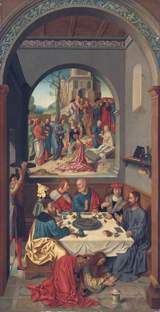
Tuesday, March 30, 2021

"You'd Have To Ask The Local School District"

Plyler v. Doe, 1982.  That's where this starts: an uncontroversial Supreme Court decision that the 14th Amendment (equal protection of the law) does not allow states to discriminate between citizens and non-citizens when it comes to providing education to children.  I always remember that case because "Plyler" was Jim Plyler, superintendent of schools where I grew up.  I was out of that school district 9 years when that ruling came down, but I went to school with his children, and knew him outside his role as the superintendent.

And yes, the case stands, among other things, for the principle that this is not Rome, and we don't deny certain privileges (other than voting, basically) to non-citizens just because they are not citizens.  Citizens are not a more legally privileged class than non-citizens, which is the unstated assumption behind that stupid question.  Equal protection under the law, is equal protection under the law.  Still a difficult concept for xenophobia and racists, and those who think they aren’t, but still worry about how “non-citizens” are getting “privileges.”

The other stupid part of that question being:  education is a matter for the states, except where state law  conflicts with the Constitution (Plyler v. Doe).  If the schools in San Diego want to provide in-person education to undocumented children (who obviously don't have access to computers and the internet, at least on a regular basis), what's the problem?  People are trying to be decent to other people?  That's a scandal at FoxNews? Or are only white American citizens really "people"?

Jen Psaki is a gem, and a consummate professional.  Me, I'd have the White House Briefing Room rigged with ejector seats by now, and would use that power freely.

Tuesday of Holy Week 2021

Picking up on the anointing at Bethany, Matthew follows Mark very closely.  (This is the Q hypothesis in action; Matthew and Luke have passages taken almost verbatim from Mark.  It's also part of the reason Mark is considered the oldest of the canonical gospels.)

And so when Jesus had concluded his discourse, he told his disciples "You know in two days Passover comes, and the son of Adam will be turned over to be crucified."

Then the ranking priests and elders of the people gathered in the courtyard of the high priest, whose names was Caiaphas, and they conspired to seize Jesus by trickery and kill him.  Their slogan was "Not during the festival, so there won't be a riot among the people."

While Jesus was in Bethany at the home of Simon the leper, a woman who had an alabaster jar of very expensive myrrh came up to him and poured it over his head whil he was reclining (at table).  When they saw this, the disciples were annoyed, and said, "What good purpose is served by this waste?  After all, she could have sold it for a good price and given (the money) to the poor."

But Jesus saw through (their complaint) and said to them, "Why are you bothering this woman?  After all, she has done me a courtesy.  Remember, there will always be poor around; but I won't always be around.  After all, by pouring this myrrh on my body she has made me ready for burial.  So help me, wherever this good news is announced in all the world, what she has done will be told in memory of her."

Matthew 26:1-13, SV

We'll start at the top, this time, and work our way down.  Little details about 1st century life in Palestine are important here; and not peculiar to this story, just to how times have changed.  So Jesus is reclining at table.  We think of chairs and tablecloths, or seats at least, and a long table raised to a position comfortable for seated diners, as in DaVinci's famous painting.  But that's a Renaissance table, not a first century one.  The Roman style, which is to say the common style, would be to sit on the floor, and lay on one's side, almost.  You would prop yourself on an elbow, or some cushions.  This is how the diners are seated in Plato's Symposium.  Chairs as we have them today were unknown and, like purple cloth, owned only by the richest.  Most people sat like we imagine traditional Japanese diners sit; on the floor, but not with legs crossed.  The legs would be out to one side.  That's a small detail that will mean a great deal tomorrow, when we get to Luke's version.

Now, the myrrh.  I've wondered, without any way to establish it, if Matthew decided myrrh was an appropriate gift for the Christchild because Mark mentions it first in his gospel, and associates it (as it would have been in Jesus' time) with death.  Myrrh is expensive (worth 300 denarii, Mark says.  My references tell me a laborer could hope to make 1 denari a day.  You do the math.).  It was used for burial by those who could afford it.  Dom Crossan argues the body of Jesus of Nazareth was dumped in a shallow grave, the repository of political criminals.  It's more likely true than the gospel accounts of tombs and rich benefactors (Joseph of Arimethea), for reasons I'll come to now.

Both Mark and Matthew make more of the priests and scribes (or Pharisees) than Luke does.  Why?  Because Mark and Matthew are self-hating Jews (yes, the term is an anachronism in 1st century Palestine; but go with it)?  Not likely.  More likely is that they dare not blame Rome for the death of Jesus.  After all, look what happened to Jesus. It's very likely Peter denied Jesus three times, to escape being crucified along with him.  That threat still existed in the 9th decade of the 1st century, when Matthew likely penned his gospel.  You can even see hints of the transition between Mark's version (circa 70 C.E.) and Matthew's (circa 85 C.E.).  Mark says the "chief priests and scribes" are looking for an excuse to arrest Jesus.  Matthew elaborates further, naming Caiaphas and putting him in a palace (the rich v. the poor is not a theme confined to Luke's gospel only).  This is the first time Caiphas is named in the gospels, and it probably comes from "Q," since Luke names him, too.  But Luke references Caiphas in his nativity stories:

In the fifteenth year of the rule of Emperor Tiberius, when Pontius Pilate was governor of Judea, Herod tetrarch of Galilee, his brother Philip tetrarch of Iturea and Trachonitis, and Lysanias tetrarch of Abilene, during the high-priesthood of Annas and Caiphas, the word of God came to John, son of Zechariah, in the wildnerness.

I have to stop at point out what a Lukan passage that is.  Imagine it in a movie, with a narrator, and the camera starts in the palace in Rome, moves across the empire to the Governor's palace in Jerusalem, then to the palaces referenced after Pilate, to the home of the priests, and finally out, into the desert, the wilderness, to find John ben Zechariah.  It is not the powerful who are important here.  You are probably thinking I'm indulging my fancy too much and should stick to the point.  But my endgame is Luke, and this is part of my point.  But we'll get there.

John, by the way, mentions Caiphas five times.

Why Caiphas? Verisimilitude, maybe.  More likely, to establish responsibility, and make sure that responsibility falls on the almost powerless scribes and priests.  As Caiphas says in "Jesus Christ Superstar:"  "We have no law/to put a man to death!"  The Romans did, however, and they weren't afraid to use it.  Blaming the priests and scribes (and later, the Jews) was the safe move in the 1st century.   The centuries of anti-semitism it would lead to, were unimaginable at the time.  The death penalties of Rome, were quite imaginable, and justly feared. 

In other words, there is a lot of tension around the events of this story, both in the narrative and in the mere re-telling of it.  And that tension explodes in the narrative with the complaint about the expense of the myrrh.  So, from the standpoint of the narrative, let's ask:  why is that here?

In modern story telling, long stories are commonly divided into chapters.  In the Harry Potter novels (for a common cultural touchstone today),  each chapter is itself a complete story, and each story is part of the whole story of the novel.  And each novel, in turn, is part of a still larger story:  the battle against Voldemort, and how it finally concluded.  But each chapter is something of a short story:  it has a plot which introduces the conflict for that chapter, initiates the action of that chapter, and moves the tension or rising action of the chapter forward until there is some resolution of the conflict of that chapter.  That conflict may well lead to the next chapter, but each chapter ends with some conflict that is resolved and serves to advance the greater story of the novel, just as each novel advances the still greater story of the battle against the evil sorcerer.

The gospels are not products of modern story telling, but there are enough similiarities in story-telling across the millenia to recognize the forms.  Episodes in the gospel narrative of Matthew (or Mark), for example, move the overall story forward, while providing their own situations of conflict and resolution.  So the woman appears in the house of Simon the leper, and pours expensive myrrh on the head of Jesus.  Then what?  Then the conflict occurs; and some interpretations of what follows turn that act of generosity into a McGuffin; because the act itself almost disappears in the wake of Jesus' rebuke of his disciples.

A McGuffin, if you don't know, is a device that sets a plot in motion, but itself is inconsequential and even disappears once it has done its job.  Hitchcock loved McGuffins.  In "Psycho," the McGuffin is the money Janet Leigh's character steals from her employer.  It's the reason she drives to the Bates Motel, but you forget all about it after the shower scene, and it only reappears in the denouement, and that just to wrap up a loose end.  In "The Birds" a cage with two love birds prompts Tippi Hedrin to drive to the coastal village where the bird attacks take place, and even prompts the first seagull attack on her.  But, again, the cage disappears only to reappear at the climax of the film, and then disappears again.  The money, the caged birds, do their job for the plot, and that's all they're needed for.  When interpreters focus on Jesus saying "The poor will always be with you," the anointing itself becomes a McGuffin.  I've even heard that verse quoted with no context for it whatsoever.  Who quotes "Eli, eli, lama sabachtani?" without noting it is said on the cross?  Or quotes the Beatitudes and forgets they are part of the most famous sermon in Christendom?  But this verse is usually divorced entirely the anointing; or treated almost as a sentiment grafted onto what has just occurred.

So let's look at the lines as organic, as a part, of this story, not as a misplaced grafting.  The woman pours the myrrh, and the expense (and "waste") of this offends them.  Well, it would, wouldn't it?  That's a year's salary to these men.  You don't spend that all at once and, if you do, you don't spend it on the person who teaches poverty and asceticism and how God provides all you need.  Seems reasonable, right?

But are the disciples concerned with the poor?  Or with their image?  As Judas says to Jesus in "JCS," objecting to this same act by Mary Magdalene:  "It doesn't help us if you're inconsistent.  They only need a small excuse to put us all away."  Tim Rice catches the tension of the story in those lines, even if he embellishes the scene for his purposes.  And is it really so wrong that somebody do something nice for Jesus, especially considering the week he's about to have?  They may not know what's coming, but Matthew and Mark make it clear Jesus does.  And frankly the gift is not a new house or a private plane; it is a gift that is used once it is given, that is gone once it is delivered.  It is, as Matthew has Jesus say, "a courtesy."  Why shouldn't Jesus receive some courtesy, especially at the beginning of Holy Week?

His words underscore that his time is coming to an end, his life and ministry are almost through.  It won't be long until he is praying and weeping in Gethsemane while is disciples sleep.  No, the anointing is not one event, the objection of the disciples another awkwardly mashed into it.  This story is the prelude to Holy Week.  It is the foreshadowing of what's to come.  For Matthew's narrative it's even a connection back to the nativity that begins his gospel:  that myrrh that was a gift to a two year old, is now a courtesy and a prophecy at the other end of that child's life.

And still, we're left with the fact that this woman is unknown and unnamed.  What she has done is told, but not in memory of her.  Well, not in the modern sense, when name is everything, and is the source of fame, where the most famous have only one name:  Cher, Beyonce, Madonna.  Although "when you talk about Dylan, he thinks you're talking about Dylan Thomas" was a good joke in the late '60's, we all know there is only one "Dylan."  But who are Matthew, Mark, Luke, or John?  We don't know.  Perhaps they are the names of authors; perhaps they are only names certified by tradition.  We have animals as symbols for the four evangelists, but does that bring us any closer to remembering them?  Perhaps not in the way we mean now; but obviously we do remember them.  They are some of the most famous names in Western culture.  But knowing those names, do we remember them?

The woman with the jar gains a name; but only in John's gospel.  But then, we remember Thomas because of John's gospel, too.  It's probably worth noting that the three synoptics all list the 12 disciples by name; but in the story of the anointing, both Matthew and Mark mention only the whole, not the individuals.  And in Luke's version of the anointing, they play no role at all.

It Amazes Me

a) that “communism” is still a scare word.

b) “corporate communism”? Isn’t that an oxymoron? The antithesis of communism in the ‘50’s was the American corporation. Am I now a communist if I don’t want to go places where people gather? Because I don’t. Protecting customers and employees from disease strikes me as morally essential.

I’m in a hospital getting my second dose of vaccine, and everyone here is required to wear a mask and show ID. Is this corporate communism, or common sense health measures?

Honestly, every time I think our public discourse can’t get stupider...

Agree To Disagree

Because there's always another way of looking at it. I agree that repeating Trump’s statements is problematic. But here I am doing it anyway. Besides, it's almost newsworthy: Gotta say I have a hard time getting worked up about what Deborah Birx did or didn't do. Maybe she didn't "sound the alarm," but Trump's behavior was surely alarming enough. If his conjectures about bleach and UV light, his blithe denial of the seriousness of the pandemic, were not enough, what would be? I still haven't heard anything since November 3rd about how the pandemic was being handled before January 20th that really surprised me.

I don’t want to repeat and/or amplify everything Trump says; but without the trappings of power and the authority of the office, it becomes clearer and clearer what a buffoon Trump is, and always was. It’s more and more frightening how we managed to let this superannuated child into that position.  All the clamor of his “supporters” since then is simply to cover their own actions and preserve their own desire for power. And this desire to find a scapegoat maybe covers our own shame and anguish. We are, in the end, the sovereign. No matter who works in the White House, we are, in the end, responsible. Maybe that’s the fatal American attraction of the British royal family: who elected them?

It’s the ultimate escape from responsibility.

Why Is This Man Laughing?

Or do we laugh because the present is now disconnecting from the past? Disconnecting, not disconnected: And speaking of disconnected: What, it coulda been worse?

A Picture Is Worth....

Monday, March 29, 2021

The Crisis Next Time

For Holy Week 2021

Ancillary to the analysis of the anointing stories, some themes I think appropriate to those stories.

On what condition does goodness exist beyond all calculation? On the condition that goodness forget itself, that the movement be a movement of the gift that renounces itself, hence a movement of infinite love. Only infinite love can renounce itself and, in order to become finite, become incarnated in order to love the other, to love the other as a finite other. This gift of infinite love comes from someone and is addressed to someone; responsibility demands irreplaceable singularity.

Jacques Derrida, The Gift of Death, tr. David Wills (Chicago: University of Chicago Press, 1995), pp. 50-51.

These conflicts and disputes among you, where do they come from? Do they not come from your own cravings that are at war within you? You want something and do not have it, so you commit murder. And you covet something and cannot obtain it; so you engage in disputes and conflicts. You do not have because you do not ask. You ask and do not receive, because you ask wrongly, in order to spend what you get on your pleasures. Adulterers! Do you now know that friendship with the world is enmity with God? Therefore whoever wishes to be a friend of the world becomes an enemy of God. Or do you suppose that it is for nothing that the scripture says, "God yearns jealously for the spirit that he has made to dwell in us"? But he gives all the more grace; therefore it says, "God opposes the proud, but gives grace to the humble."

James 4:1-6

I am reading (Simone Weil's) essays as a part of my Lenten reading...She says that we "...must experience every day, both in the spirit and the flesh, the pains and humiliations of poverty...and further we must do something which is harder than enduring in poverty, we must renounce all compensations: in our contacts with the people around us we must sincerely practice the humility of a naturalized citizen in the country which has received us."

I keep reminding the young people who come to work with us that they are not naturalized citizens...They are not really poor. We are always foreigners to the poor. So we have to make up for it by "renouncing all compensations..."

Dorothy Day, from The Dorothy Day Book, p. 11.

I've Actually Quit A Job

I quit because the boss was such an asshole.

It was not a redemptive experience.  I was not lauded for my "conscience."  I was unemployed for a very long time.

I really wonder how many people who think Dr. Birx should have quit have, themselves, quit over a principle.  Damned few, I'll warrant.  Even fewer would do it twice.

"Don't do as I do; do as I say!"

Adding, because I'm getting really tired of this:
Says the man whose job is to complain about how other people do their jobs. Nice work, if you can get it.

Monday of Holy Week 2021


I could spend the week here:

Mary brought in a pound of expensive lotion and anointed Jesus' feet and wiped them with her hair.  And the house was filled with the lotion's fragrance.--John 12:3, SV.

So I've decided I will.

This story is one of three found across all four gospels.  Literally, three.  All four gospels have this story; then some version of Jesus "cleansing" the Temple (John relegates it to two verses in chapter 2; but then the interesting thing about John's gospel is that almost the entire story takes place during "Holy Week."  I'l try to come back to the significance of the "cleansing" story before the week is out.), and then some version of the Crucifixion (those stories have common elements, such as Peter's denial; but they don't all have the same elements. Oddly; they do all include the soldier's ear being but off at the arrest, but I'd argue that shows the influence of Luke on John's narrative, more than anything.  We'll come to that argument eventually.  For now, when I say this is one of three stories, I mean to underline it's importance, not to make an absolute statement.  But if I frame it as an absolute, you'll better get my overall point about it.)

I think it so significant I want to present it across the four gospels.  Which means we'll start with Mark's version first, on the well-established theory that Mark is the oldest of the four, and provides much of the material for Matthew and Luke.  The theory goes on, if you aren't familiar with it, to posit a "Q" document (for the German "quelle" or "source."  This is a 19th century scholarly theory, not a 21st century conspiracy theory) that both Matthew and Luke used for stories and sayings not in Mark; and then there's "Special Luke" and "Special Matthew," conjectured sources for material peculiar to those gospels, respectively.  I'll explain those as we go along, because they play into the interpretation of these stories, too.

You may notice I've left John's gospel out.  That's only because it's understood not to be one of the "synoptics."  Long before the Q theory was formulated, scholars of the scriptures knew there were strong similarities between Matthew, Mark, and Luke that marked them off from John.  Those three were dubbed the "synoptics," for "seen together."  John's gospel is different, beginning with the fact his story centers almost exclusively on Holy Week.  There is no baptism by John in John's gospel, no "Last Supper" is instituted.  In fact, John's "final meal" story sets up the "sacrament that wasn't," when Jesus washes the feet of his disciples, an act at once so humbling and intimate it's very difficult to enact in a church setting, for both the people taking their shoes off, and the person with the basin of water and the towel.  But I don't leave John's gospel out of my study; in fact, it's in some ways the linchpin to my theory about this story.  But we'll go in chronological order, so we'll start with Mark.

The Anointing at Bethany, as it is usually called, appears first in Mark's gospel during Holy Week (and yes, I know that term is an anachronism in speaking of the events of the gospel, but it's easier for us; we aren't Biblical scholars here).  It's in Mark 14:3-9.  But I'm going to start at the beginning of chapter 14, to put this in Mark's narrative context:

Now it was two days until Passover and the feast of Unleavened Bread.  And the ranking priests and the scholars were looking for some way to arrest him by trickery and kill him.  For their slogan was "Not during the festival, otherwise the people will riot."

When he was in Bethany at the house of Simon the leper, he was just reclining there, and a woman came in carrying an alabster jar of myrrh, of pure and expensive nard.  She broke the jar and poured (the myrrh) on his head.

Now some were annoyed (and thought) to themselves "What good purpose is served by this wast of myrrh?  For she coulid have sold the myrrh for more than three hundred silver coins and given (the money) to the poor.  And they were angry with her.

Then Jesus said, "Let her alone!  Whay are you bothering her?  She has done me a courtesy.  Remember, there will always be poor around, and whatever you want you can do for them, but I won't always be around.  She did what she could--she anticipates in anointing my body for burial.  So help me, wherever the good news is announced in all the world, what she has done will also be told in memory of her."

Mark 14:1-9, SV

Modern scholars have pointed out the irony of verse 9:  the woman who does this is not named in Marke's gospel, or Matthew's, or Luke's.  She is named in John's, but we'll get to that.  Her anonymity, and her presence, are things we have to pay attention to.  But there is a truth in v. 9; all four gospels do tell this story; just not necessarily "in memory of her."

Let's start with the unnamed woman's presence.  Matthew and Mark don't make much of women being among the men in Jesus' entourage; Luke mentions it even less, except, ironically, in his version of this anointing story.  It's an odd lacunae we accept as sound practice, although literally for centuries women in the company of men was taboo.  I had neighbors who were Muslim, and wonderful people (I do not in any way speak against them; I'm still sorry they moved away).  She was American by birth, but dressed in traditional Muslim attire; and would not answer her own door if I knocked on it.  I barely even spoke to her outside, but she never made me feel threatening or like she was ashamed.  I have known church members whose memories went back to Sunday services where men sat on one side of the church, women and children on the other.  So we're not talking about the Middle Ages or the days of the Roman Empire to say that in Jesus' time, even wives did not enter the room when their husbands had guests.  To do so would be the greatest shame, and mark the woman (of course) as a prostitute.  The former Vice President reportedly did not want to be in the room alone with another woman, particularly without his wife present.  We find that odd behavior; much of human history would find it normal.  (And when I was in ministry, I was warned many times never to be alone in my office with a woman, especially with the door closed or no other people in the building.  Times have changed?)  We need to understand that in order to study this story and understand both this woman's actions, and the reactions to it.

As I said, the gospel writers don't make much of this, but arguably that more reflects the "bohemian" nature (as we would say today) of Jesus' entourage.  The gospel writers accept that as part of Jesus' radical challenge to society.  We have made it so anodyne that, even as we upheld the distinctions between the sexes and "protected" the "fairer sex" by exclusions and separations from males, we ignored the radical nature of the life of Jesus in the gospels.  Just because it's presented as normal in the gospels, in other words, doesn't mean that it was normal in 1st century Palestine.

And before you think it must have changed radically in Paul's day:  first, Paul's letters predate even the earliest of the canonical gospels by decades.  Second, Paul's churches were "house churches."  They were literally the family of one house, including relatives and slaves.  The most radical thing about Paul's teachings to them was that slaves and free were all on common footing before God and as believers in Christ.  He wasn't that radical about men and women being together (although he did have women who traveled and preached, with him).  Wealth and status had much to do with it, too.  Luke relates, in Acts, the story of Lydia, a "dealer in purple cloth."  Purple was exclusively the color of royalty.  Lydia was a person of high status, then, and great wealth.  As Fitzgerald told Hemingway, the rich are different; and it's not just because they have more money.  Wealthy women were at much less risk of being considered prostitutes than poor women.

There is also the matter that prostitutes were more likely women without husbands, or who had lost their husbands and had no access to society, no means to make money other than by prostitution.  But we'll come back to that; we're straying a bit far from our source story.

Moving back up into Mark, I would note that the idea this woman is a prostitute, and the tradition that Mary of Magdalene was a prostitute, are connected to this story (in Luke's version, but we'll get there).  My mind always echoes with "Jesus Christ Superstar" during Holy Week, and I hear Judas snearing at Jesus when I think about this story:

It seems to me a strange thing, mystifying,
Why a man like you would waste your time
On women of her kind!

Yes, I can understand that she amuses,
But to let her kiss you, stroke your hair,
Is hardly in your line.

It's not that I object to her profession!
But she doesn't fit in well, with what you teach and say.
It doesn't help us if you're inconsistent!
They only need a small excuse, to put us all away.
In the opera it's a moment of tension between Judas and Jesus, the first instance we see since Judas' opening song, that the relationship between them is rocky, and getting rockier.   But it also plays on the tradition that this woman was a prostitute.  And yet there' s no indication of that at all in this story.

Probably the biggest issue today with this passage is the reference to the poor being always with us.  I don't know how many times I've heard that quoted, wholly out of context, to justify doing nothing for the poor, rather than doing something for them because, after all, we can't exactly pour myrrh over Jesus any more, can we?  Suffice to say Jesus' remarks are specific to the event described here; but they show up in three of the four gospels, and find an echo in the fourth (Luke's, in this case).  So they need to be noted for our purposes.

We have only two points left, now:  time, and place.  Mark sets this story in the home of Simon, the leper. Maybe that excuses the presence of women.  Simon has been healed by Jesus, but "leprosy" was not necessarily the disease we know today.  The term was not so specific in Mark's day, and it denoted not just illness, but an outcast social status.  Even today a "leper" can be a social stigma as much as a medical diagnosis.  Indeed, the word "leper" is eschewed much as the term "Mongoloid" is no longer used to describe the genetic condition now called "Down's Syndrome."  "Leper" carries such disapproving connotations it can't be used because it connotes a pariah status.  That's much closer to the use of the word in the gospel's than to victims of Hansen's disease.  It may be no wonder, then, that women move freely among men in Jesus' group.  They're already in the house of a leper; how much lower than they descend?

And then there's the time:  two days before the feast of the Passover.  We can't overstate, or understand the events of the Crucifixion stories, if we don't recognize how significant Passover was to the children of Abraham under the rule of the Romans in the holy city of Jerusalem.  Rome was very tolerant of religion in the Empire, but even Rome got nervous about Passover in Jerusalem.  Pilate's palace stood right next to the Temple; "on top of it," we might say today. From the high walls of the palace Roman soldiers could look down into the courtyard, the outer precincts of the Temple, to keep an eye on things during Passover. This is one reason the "cleansing of the Temple" stories are so important to the gospel narratives of the Crucifixion.  But Passover itself was the great festival, feast, and remembrance of the events that had created the Hebrew (not yet Jewish, but soon) nation.  That remembrance was a challenge to Roman sovereignty, and a religious event unlike any other on the Hebrew calendar.  It brought throngs to Jerusalem, reminded them of their place before the God of Abraham, of their release from the captivity of Egypt in the city now captured by Rome; and generally just threatened to light a powder keg among the people gathered there.  So Pilate was on edge for seditious or even treasonous behavior.  It's no accident Rome stepped in to crucify the man from Nazareth during the observances of Passover.  But we'll return to that.  For now it's important to keep in mind three of these four anointing stories take place in the days before the celebration of Passover, the events that broke the power of another ruler over the children of Abraham.

We'll come back to this with Matthew's version.  But it doesn't differ that much from Mark's, so we won't have as much new ground to cover.  Still, each version deserves it's own attention, and we will give them that.
 

If You Dance With The Devil...

...you have to pay the piper.

I’m A Little Surprised...

Georgia hasn’t repealed that law and declared the investigators, prosecutors, and grand jury members “enemies of the people.”

Or at least passed a new law making it illegal to investigate Donald Trump for any reason whatsoever.

Sunday, March 28, 2021

The Point Of “Voter ID”

...is not to prevent fraud or even be in line with other countries. It’s to restrict voting. Because these laws are never accompanied by programs to provide photo ID to all registered voters. Nor to provide ID for people who want to register to vote.

Details, details...

If There’s A Natural Disaster In South Carolina

Lindsey will be in Washington. Or flying over in a helicopter with the President. Or demanding the police protect him first.

Did you see those gangs of hooligans rampaging through the wreckage in Alabama? Neither did I.

Media Matters

This is where that started: Watch the video to the end, you'll see where this started: Going back a step: Maybe because we're tired of everything being a "crisis"? Yeah, we're probably a little sensitive to that. Wonder why? Yeah, I can't imagine, either.

Deep Thoughts

Aren’t we all?

CANCELED!!!

Or: So was it live? Or was it taped? Did he promise to go look at the wall he didn’t finish? Was it live when they cut off mid-rant, or was it Memorex? I ask because his party admits he didn’t: Anyway, isn’t this cancel culture? Or no?

Saturday, March 27, 2021

This Is Your Brain On GOP

So apparently CBP doesn't get in the river, so the intrepid Senators had to rely on...Texas Highway Patrol? The junior Senator from Alabama was also there. The ear-worm is just lagniappe.  You’re welcome.

“My Predecessor—O God, I Miss Him!”—-President Joe Biden

Yeah, we don't either.

And if that doesn’t convince you:

The "Texas Miracle" Is A Shell Game (Part Infinity)

Why is it a shell game, you ask? Follow the bouncing ball:

The Nebraska cavalry has been working the Texas Legislature for a week and a half, according to The Texas Tribune’s Cassandra Pollock and Erin Douglas. The company’s proposal is for a Texas Emergency Power Reserve that would build 10 new natural gas-fueled power plants in the state. Those would be idle unless they were needed for times of peak demand — or when other electrical generation failed, as some did last month.

It’s a slick presentation, complete with a poll and a slide deck that found Texans would pay $3 more every month to “significantly lower their risk of losing power during a winter storm.” As proposed, the new plants would be up and running by winter 2023.

There's the solution, and it sounds like a good one.  $3 a month extra?  Except for the poor among us, what's the problem? (Let's set aside the absolute lack of social justice in Texas for the moment.)  The price tag here, by the way, in round numbers, is $8.3 billion.

Those would be fixed bills, paid each month by customers for the assurance that outages would be less frequent and less severe. That would pay the cost of building the plants. The cost of fuel when the plants are turned on would be passed through to consumers. 

Just to be clear, because it gets less clear in a moment.  That "fixed cost" is the cost to residential customers (some of whom, yes, can't afford it.  But those who can't are also more likely to be among the dead right now, from hypothermia.  Like I said:  Texas.  It's friendly; but it's heartless.)

Put simply, lawmakers and regulators have been more sensitive to the business sector’s complaints about price increases than about those from residential customers. You can see it in the average rates for Texas, compared with other states. According to the U.S. Energy Information Administration, Texas had the 10th-lowest average prices for electricity in the country in January 2021. But residential electric customers paid less in 22 other states. Just two states had lower prices for commercial and industrial electricity.

We’re 23rd for residential prices, third for commercial and for industrial prices. That’s where Texas is competitive, and it’s the root of the claim that prices here are low. They are — for business.

There's a reason Rick Perry is a rich man, although he's never held a non-government job in his adult life.  There's a reason Texas politicians brag about "bidness" in Texas, and about how un-regulated and free we are here.  They call it the Texas Miracle.  It ain't no such thing.  It's just a matter of shifting costs to someone else.  "Someone else" in this case pretty much means people, instead of business.  Things matter to Texas governance.  Ideas matter.  I saw a bumper sticker a few days ago:  "Ted Cruz.  Reliably conservative."  Something ilke that.  The driver of that car didn't care what Ted Cruz did or said.  Ted Cruz is "reliably" conservative.  That's all that matters.  People?  People are the goddamned problem!  Not me, and maybe not you; but them people over there!

So the Texas Miracle is a matter of being on the right side of the balance sheet.  As the article points out:

But the plan really lays out one of the reasons lawmakers balked at weather-proofing 10 years ago: It’s expensive. And it’s more expensive for commercial and industrial customers — the big plants known around the Legislature as the “heavy metals” — than for residential customers.

That also happens to be how the three sectors line up, in terms of lobbying power, at the Texas Capitol. The industrials and commercials don’t rule the roost, necessarily, but their constant presence and their sectors’ importance in economic development make them very persuasive.

I can already tell you how that's gonna shake out.  2 years ago people were up in arms about the way the state funds public education.  The Lege huffed and puffed and declared the problem solved; and everyone was satisfied.  Well, except the people who know the Lege didn't do jack shit to solve the problem.

History doesn't repeat itself; but it does rhyme.