Thursday, April 20, 2017

How many shovels does the DOJ have?

Has no one in the Trump Administration heard of the first rule of holes?

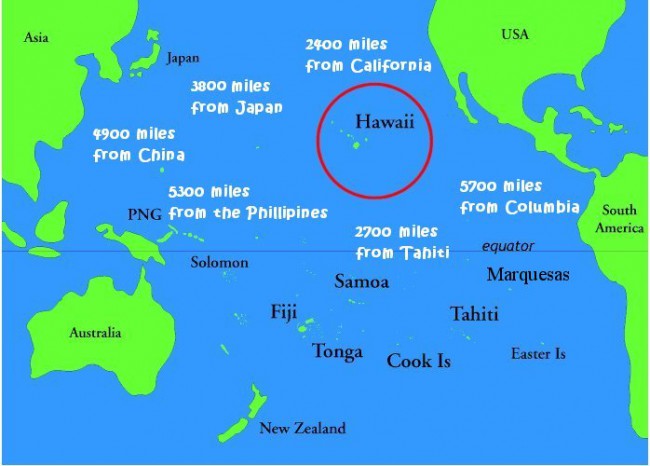
“Hawaii is, in fact, an island in the Pacific – a beautiful one where the Attorney General’s granddaughter was born,” Justice Department spokesman Ian Prior said in a statement. “The point, however, is that there is a problem when a flawed opinion by a single judge can block the President’s lawful exercise of authority to keep the entire country safe.”

Whether or not the judicial opinion is flawed, the very basis of judicial review is that one court can, in fact, block the President's exercise of authority when it is deemed unlawful.  There's a lot of special pleading and begging the question in that statement, but that's not the worst part of it.

The worst part is, it sounds like something Sean Spicer would say.  It's an ignorant defense of an ignorant statement that draws more attention to what a backwoods boob our current Attorney General is.

And every good lawyer knows the first rule of holes, so this doesn't say much for the people running the Justice Department.

Even Though Elvis Made a Movie There?

Does the appellate brief begin with
 "The lower court's ruling is invalid because it sits on an island in the Pacific"?

I'm old enough to remember Cokie Roberts chiding Barack Obama for going home to Hawaii for a vacation (IIRC), because it was too "exotic."

“We are confident that the President will prevail on appeal and particularly in the Supreme Court, if not the Ninth Circuit,” Sessions said in a Wednesday night interview on “The Mark Levin” radio show, first flagged by CNN’s KFILE. “So this is a huge matter. I really am amazed that a judge sitting on an island in the Pacific can issue an order that stops the President of the United States from what appears to be clearly his statutory and Constitutional power.”

And I do know of people who still confuse "New Mexico," the state between Texas and Arizona, with Mexico, the country, so that people who hale from New Mexico are considered foreigners.

Which I guess is some kind of comfort.  Validity depends on geography, or something.  I mean, no judge from the Old South would dare oppose the President's "statutory and Constitutional power," now, would he?

Adding:  that island in the Pacific has two U.S. Senators.  Who knew?


I was just kidding about the "death".....

"Words matter."  Didn't Rush Limbaugh used to say that?

This is why the POTUS shouldn't get history lessons from foreign leaders:

In an interview with the Wall Street Journal last week, Trump said Xi told him during a recent summit that “Korea actually used to be a part of China.” The comments sparked outrage in Seoul and became an issue in South Korea’s presidential race, prompting the foreign ministry to seek to verify what Xi actually said.

“It’s a clear fact acknowledged by the international community that, for thousands of years in history, Korea has never been part of China,” foreign ministry spokesman Cho June-hyuck said at a briefing in Seoul on Thursday.
The gob, she is smacked.  But, as I said, Trump loved hearing Xi read Trump's own words back to him about the missile strike on Syria as if they were Xi's original sentiments.  So this isn't surprising, so much as it is much, much worse.  And yes, there is a context, as Josh Marshall provides:

On Wednesday, after it was revealed that the carrier strike group was actually thousands of miles away and had been heading in the opposite direction, toward the Indian Ocean, South Koreans felt bewildered, cheated and manipulated by the United States, their country’s most important ally.

“Trump’s lie over the Carl Vinson,” read a headline on the website of the newspaper JoongAng Ilbo on Wednesday. “Xi Jinping and Putin must have had a good jeer over this one.”

“Like North Korea, which is often accused of displaying fake missiles during military parades, is the United States, too, now employing ‘bluffing’ as its North Korea policy?” the article asked.

“The 50 million South Koreans, as well as many common-sensical people around the world, cannot help but feel embarrassed and shocked,” said Youn Kwan-suk, spokesman of the main opposition Democratic Party, which is leading in voter surveys before the May 9 presidential election.

And yes, Trump really did say what he's reported to have said:

He then went into the history of China and Korea. Not North Korea, Korea. And you know, you’re talking about thousands of years …and many wars. And Korea actually used to be a part of China. And after listening for 10 minutes I realized that not — it’s not so easy. You know I felt pretty strongly that they have — that they had a tremendous power over China. I actually do think they do have an economic power, and they have certainly a border power to an extent, but they also — a lot of goods come in. But it’s not what you would think. It’s not what you would think. 
So here we are, making America Great Again, and putting America First.  And it's working out almost precisely as predicted; or at least as foreseen.

Old times there are not forgotten....


Maybe the $400 juicer is an object lesson in hubris:

Juicero is a juicing machine and service that secured about $120 million in funding from the likes of Google and other venture capitalists before it rolled out to 17 states this week. The pricey machine is built to squeeze the subscription-only Juicero bags of chopped fruit and veggies, which it reportedly “cold-presses” using four tons of force. Some have called the machine a Keurig for juice.

But there’s one teeny problem: It turns out you don’t need the machine. Bloomberg reports that recently, “some investors were surprised to discover a much cheaper alternative: You can squeeze the Juicero bags with your bare hands.” Hand-squeezing the bags for 90 seconds, they found, rendered almost as much juice as using the $400 machine for two minutes.
Or, as the article points out, you could just eat a piece of fruit.

We are told technology will change our world in profound and "disruptive" ways.  So it seemed reasonable to conclude that Donald Trump had "disrupted" American politics.  Like the $400 juicer nobody needed, however, it may be we don't need any theories of "disruption" or "fake news" on social media to explain Trump's success.  Turns out Trump won the "old old" vote:  "He won 53 percent of voters ages 65 and over, but only 37 percent of voters ages 29 and younger. Trump is the Twitter-using president, not the president chosen by Twitter’s users."  Put a bit more particularly:

The only age group that overwhelmingly voted for Trump were Catholics age 75 and older, who went for Trump 57% to 44%. The age groups roughly corresponding to Baby Boomers and Gen Xers split narrowly, with Boomers favoring Trump by two points (49% to 47%) and Xers favoring Clinton by two points (46% to 44%). But Millennial Catholics favored Clinton by a whopping 31% (59% to 28%), by far the largest split of any age group.

Not to put too fine a point on it, but the white Catholics who heavily favored Trump in 2016 are what the gerontologists call the “old old.” With life expectancy hovering around 81 for white females and 76 for white males, it doesn’t take a math wiz to figure out that many of these Trump voters won’t be around in 2020 and most will have gone to that great election booth in the sky by 2024.
Patricia Miller focusses on the religious categorization of voters, Ezra Klein focusses on their likelihood to use social media.  Either way, the basis is age, not communications technology or even religious belief.  The older people get, the more likely they were to vote for Trump.  But that's not even the issue:  the issue is age.

People are living longer and longer.  It may soon be normal for Boomers to reach retirement age and still be responsible for caring for their parents.  It is a glimpse of what Millenial surely have to look forward to.  These aging patterns are distorting society in ways the Baby Boom never did.  I've seen it in church congregations, where the average age is still my parent's generation (as it was when I was a child).  The effect is to squeeze out younger adults (one reason for the success of mega-churches.  You don't see a sea of grey heads in Joel Osteen's congregation on TV, or in any other TV and billboard-dependent pastor's church).  This is an issue the institutional church has to deal with, but one it is not equipped to deal with.  And I don't know what the answer would be, anyway

But it is now the elephant in the room in our politics.  Miller thinks Democrats just have to wait for these "old old" to die off, but that's the vulture theology of the undertaker:  sooner or later they all have to come to us, or in this case, in the long run we're all dead.  And an aging populace is going to be the elephant in the room in more ways than one.

What about the fact that Boomers are next in-line to become the "old old"?  And they went for Trump by 2 points; and it was enough, in context.

This situation is not going to magically reverse itself when my parent's generation finally shuffles off the stage.  At least Ezra Klein is more circumspect, and wiser in his insights:

Social media is new, it is transformative, and it is certainly changing American politics. But it’s not the only force at play, nor even the main one. And while it’s hard for news junkies (myself included) to remember, most people’s media feeds tilt more toward baby pictures, wedding announcements, and funny videos than political punditry. Those of us who follow lots of politicians and politicized news sources are outliers, and we shouldn’t extrapolate too much from our weird experience.

Whatever is tearing our politics apart is deeper and more universal than the digital filter bubbles that get so much attention — and it seems to be most powerful among the people least likely to get their news from social media.
That's a fault line that's going to be around for a long, long time.  Maybe we should consider the power of simply eating a piece of fruit, rather than spending millions to produce an expensive machine that doesn't do the job any better than human hands.  Rube Goldberg knew a thing or two about that, but maybe you have to be at least "old" to get that reference.

"Old School"


"You're my boy, Blue!"

That should be what I mean by the title.  If you still don't get it, just move on.  I have low tastes sometimes, best not to dwell on it.  But I'm putting something together here, gathering bits to twig and straw to build a kind of nest; I'm getting old, it seems the appropriate activity somehow.

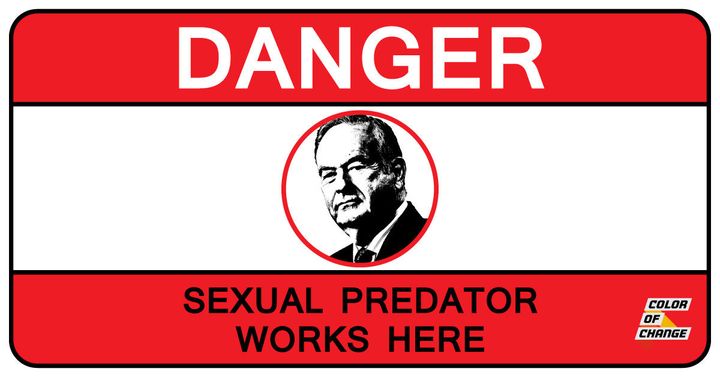
It turns out Trump won because of the "old old", not because of "fake news" being devoured by devotees of social media. That's crucial background as we observe the professional passing of Bill O'Reilly, a man news reports say was championed and defended by Rupert Murdoch, but finally forced out by Murdoch's sons.  That generation gap, as we Boomers used to say, is significant.

O'Reilly, it seems, stayed on the air because of old people:

The first was typical of the cultural conservatism of our age, and generally consisted of free-floating anger at any figure or institution that didn’t uphold what O’Reilly called “traditional values.” A college professor would call America a fascist country, or a retailer would announce that it would greet customers with “happy holidays” rather than “Merry Christmas.” O’Reilly would rant and rave; he would call for people to be fired; he would bemoan that America was becoming less religious and less white. (One of his many silly books was called Culture Warrior; the latest is Old School.) Sure, Limbaugh and Hannity would occasionally focus on culture instead of politics, but for O’Reilly, it was what fueled the show, and what really got him exercised. (Much was made of his Levittown upbringing and disdain for snobby elites.) Even better, he didn’t appear to be faking it in the way one often suspects of certain right-wing hosts. All of the details that have leaked out about O’Reilly—from the harassment claims to the violent way he behaved toward his ex-wife—strongly suggest that he was not playing a character when he fumed on the air.

But the aspect of The O’Reilly Factor that always shocked me was a different kind of resentment, which took the form of the anchor’s unrepentant solipsism. It’s simply impossible to overstate how much of each night’s show was consumed by O’Reilly’s own grievances. He skirmished with everyone from Matt Lauer to Rosie O’Donnell to Al Franken, and those fights would invariably become the topic of the day on his show. He spent countless hours talking about himself—usually as the victim of various conspiracies. (Frequently, George Soros was the conspiracy’s prime mover.) He would drone on about the New York Times and how it was out to make him look bad. It was endless, and it was exceptionally boring—to everyone except his legions of viewers and fans.
Grandpa Simpson without the charm, in other words.  And not coincidentally, perhaps the secret of Donald Trump's success:

I never really had a theory for how this supposed man of the people got away with talking about nothing but himself. Then Donald Trump came along. Here was another rich guy who built a following speaking up for the working man. Like O’Reilly he seemed entirely driven by resentment: at President Obama, at the media, at the people who doubted him. And like O’Reilly, he spoke almost entirely of himself. His stump speeches were shocking, in part, because they were rarely about anything other than Donald Trump. When I would see him talk to a bunch of working-class voters in the Midwest and appeal to them by describing his own battles with CNN, I was surprised. But not as surprised as I would have been if I hadn’t been watching O’Reilly all these years.
I was surprised, maybe because I never watched O'Reilly (really couldn't stand him, for reasons I'll get into below).  None of his schtick ever appealed to me, but it's practically the dictionary definition of "Cranky Old Man."  Trump is 70 (older than your humble host, but only by a few years, and those years begin to matter more and more as age turns adults into children again), and it's no real surprise he sounds like O'Reilly.  O'Reilly has always struck me as preternaturally old, especially in his FoxNews incarnation.  So what's going on is the aging of America, and the last gasp of the "old old" before they, in large enough numbers to matter to the body politic, shuffle off their mortal coils.  It's been building since FoxNews went on the air, and now it has reached its apotheosis in the man in the White House.

It's no surprise, by the way, that O'Reilly is being replaced with Tucker Carlson.  It's also doubtful Carlson will ever have the audience share O'Reilly did.  He's too young for the crowd that watched O'Reilly, but he's young, too; compared to O'Reilly, anyway.  He's more Nelson than Grandpa, too; but that's another story.

This seems to me to be a pretty good description of O'Reilly:

That was O’Reilly, though: a man who built an empire pretending to be something he wasn’t. He was a smug rage-volcano who spewed cant and bluster, who called his shtick common sense, and who yelled at dissenters until they backed down or changed the channel. For 20 years, he was the biggest bullshitter on television. *
It's also a pretty good description of Donald Trump; and the evidence is slowly mounting that Donald Trump's schtick is already wearing thin.  The Texas Lyceum says that Joaquin Castro polls ahead of Ted Cruz for the U.S. Senate already, albeit by a narrow margin.   It's too early to make much of such things, but then again, Joe Ossoff just won a 48% majority in a crowded field for a House seat that has been GOP since 1979. and his nearest GOP competitor only won 18% of the vote.  Joaquin Castro is known to some in Texas, but Ted Cruz is known to everybody.  And looking at Donald Trump in the White House, even Texans aren't so sure they want Ted Cruz back in the Senate (and hasn't he been subdued lately?  Wonder why that is, huh?)  Cruz appealed to the same cohort as Trump, even though Cruz is much younger than yours truly.  But Trump has sucked all the air out of that particular room, and he may well be damaging that brand as soundly as George W. did the Bush political name.

A lot of the country is looking around and deciding old people, the "old old" especially, really shouldn't be left in charge of things.  We have to clarify this isn't a 'never trust anyone over 30' movement; Bernie Sanders is older than Trump, but he stays remarkably popular.  He has his cranky side, his "old man" qualities, but he doesn't rely on them the way O'Reilly did and Trump does.  I think, quite seriously, Trump is running the Nation's Cranky Grandpa routine into the ground, and burying it.  Rupert Murdoch would haves stood behind O'Reilly, despite $13 million on payouts and more stories of harassment coming out daily; it was his sons, hardly Millenials themselves, who forced the issue.

Not all of the nation's "old old" are guilty of being Grandpa Simpson or Bill O'Reilly or rabid Trump supporters, of course.  We don't need to vilify any individual or group of individuals; but if the concept serves to rally more people younger than the most elderly of the elderly to get involved in politics and actually vote against the gerrymandered districts that are supposed to guarantee one-party success in perpetuity, then maybe the times they are a changin' after all.  Maybe the good thing about O'Reilly being forced out is that, like the special elections to come after Georgia, the public may be paying attention to the Cranky Old Man and realizing we don't want him in charge, that having a bullshitter in the White House is no way to run a country.  O'Reilly's fall may be the result of Trump's rise; but his fall also presages Trump's fate.

*If you really feel like chasing that down, read about O'Reilly and the "Paris Business Review."  It's a Trumpian example of the utility of pure fantasy.

Wednesday, April 19, 2017

Ummmm.....


This election was for the seat held by Newt Gingrich for years, and then by Tom Price.  Three counties were involved.  The Democrat, Joe Ossoff, won DeKalb county by 58.6%, Fulton county by 47.6%, and Cobb county by 41.3%.  He won the overall vote, in a field of 11 Republican candidates, 4 Democrats, and 2 independents.  He failed to win outright by 1.9%.  His opponent in the June runoff won only 19.8% of the vote.  The next nearest Democrat won only 500 votes; Ossoff won 92,390.  Handel won 37, 993.  Handel's best showing was in Fulton County, where she won 22.3% of the vote.  This is pretty much an unprecedented showing by a Democrat.

Keith Olbermann is right:  the President is getting crazier.


(and it's the official White House line:  Ossoff lost, because he didn't win outright.  And it's a HUGE loss!

“They were clear going into this election, they said their goal was to get over 50 percent. They came up short,” Spicer said during the daily press briefing when asked about the race. “I think this was a big loss for them. The bottom line is they went all-in on it. They said that they — their goal was to get over 50 percent. They came up short.”

In a district that's been a safe Republican seat since at least Newt Gingrich was in the House, and that Price abandoned precisely because it was "safe."  This gives "whistling past the graveyard" a whole new meaning.  Then again, Trump had bigger crowds at his inauguration than Obama ever did, right?)


Eastertide 2017: Notes Toward a Wider Theological Insight


If you are a non-believer, are you also a atheist?  All atheists are non-believers; but are all non-believers atheists?

The term is a slippery one.  In a theistic culture, where believing in a god is considered de rigeur, to openly not believe can get you branded as an atheist.  In modern usage, an atheist is a person who denounces others who believe in gods, and argues against belief and the people who hold them (although usually those arguments come up in a Western culture context, so the god referred to is the God of Abraham, who is also the God of Mohammed.  Seldom do Western atheists inveigh against Hinduism and its pantheon of gods, or, for different reasons, against Judaism.)  An atheist is usually associated with someone harshly critical of religion, like the late Madalyn Murray O'Hair or Christopher Hitchens, or the still alive but largely silent Richard Dawkins or Sam Harris.  They are the contemporary models for an atheist and a nonbeliever.  But doesn't that mean there are many non-believers indifferent to the question of whether the God of Abraham is real, or religion is reliable or detrimental?  All atheists are non-believers; but are all non-believers atheists?

I ask this question because of this study, purporting to show there are more atheists now in America than there ever have been; or, perhaps more accurately stated, there are more than allow themselves to admit to strangers they are atheists.  But are atheists merely people who don't believe in God?  Is that the threshold?

Of course, that's a cultural threshold.  Buddhists, as best I understand, don't believe in gods.  Are all Buddhists atheists?  What about Hindus, who recognize many gods?  Are non-Christians atheists?  Or non-Muslims?  Some members of both group think so; which definition is correct?

There’s something else to consider here: Our experience with religion can’t really be boiled down to one question — “Do you believe in God?”
Many of us have a complicated relationship with religion. There are plenty of people celebrating Easter and Passover this week not because they have devout faith, but because it’s a cultural tradition they cherish and identify with.

Pew regularly finds data that supports this multifaceted view. When people in their surveys say, “I believe in God,” Pew will often ask a follow-up question: “How certain are you?” And they find that not everyone is so sure.

About a quarter of the US population say they believe in God but are less than absolutely certain of it, Smith says.

The lesson: Belief in God doesn’t exist as a binary. Not everyone is certain about what they feel; many people have shades of gray. “There are gradations of belief,” Smith says. “It’s not that it’s wrong to ask ‘yes or no,’ but it’s not the whole story.”

And Gervais admits: His measure doesn’t capture the complex and contradictory feelings many people have about religion.
If you asked me if I believed in God, I might well say "No," just because I reject the premise of the question and the assumptions about the nature of "belief."  If you ask me if I have faith in God, I would say "Yes," and then you would probably be confused and think I was playing games or I was a closet atheist who wouldn't come out of the closet, or a "believer" who wanted to hide my "belief."  And that's just one way of stating the problem:  people do have complex and contradictory feelings, as well as thoughts, about religion.   And some of them only seem "complex" and "contradictory" because we have rather loose and vague ideas about what "faith" and "belief" mean, even though they are common enough English words.  This seems like an exercise in sophistry; but this is where the historic Christian creeds came from.

If you recite a creed in a profession of faith, the words of the creed say what you believe.  Reciting the creed already presumes a "belief in God," but when the creed says "I believe in one God, the Father Almighty, Creator of heaven and earth," it's not the same thing as saying "I believe in God."  At least not to people who believe in God, but don't accept the words of the creed as their own.  The modern question "Do you believe in God" is not necessarily answered by the first words of the creed.  If I answer the question with those words, I assume you understand what I mean by "Creator of heaven and earth."  But what I understand and what you understand are probably very different things, especially if you think my belief depends upon an anthropomorphic deity fashioning the earth (or the cosmos, if we start with the first story in Genesis) with something like "hands" and breathing divine breath directly into nostrils of a human shaped from clay, then later removing a rib from that human to fashion the first woman; and I don't mean anything like that at all.  What I mean might well get me branded an atheist by some Christians; and then where are we?

Complex and contradictory ideas and feelings about matters religious?  Have you ever been to a seminary?  At least there you wouldn't get arguments like the Dawkins Foundation posted a few years back concerning the liturgical season (or the holiday just past):

Last year, the Dawkins Foundation posted an Internet meme claiming that Easter is named after the Babylonian goddess Ishtar, which was dragged out again by contrarians who reposted it to remind everyone what Easter is “really” about. This secret history of Easter is a bit like the childhood myth that consuming Pop Rocks and Coke at the same time causes your stomach to explode: It doesn’t matter if it’s true, it’s fun to tell people because it makes you feel smart. These smug proclamations are not only irritating, they’re a disturbing index of our level of discourse about religion. Surrounding the Easter/Ishtar conspiracy theory is a toxic brew of anti-intellectualism, heresiological claims masquerading as historical ones, and simple sadism and incivility facilitated by new media.

"Last year," in that quote, would be 2015.  There are serious problems with the information in the Dawkins Foundation post, but the most important one is this:  "Easter" is an English word.  It isn't the word used in almost any other language where Easter is observed.  It's a word the Venerable Bede attributed to an otherwise unknown German goddess, claiming it was taken from a celebration of that goddess at the same time of year, and so the word "Easter" found its way into English (Bede relates this in the context of the ecclesiastical history of the English speaking people, so the point deserves emphasis).  But no scholar has ever been able to find any evidence of Bede's Germanic goddess.

"Easter" is an English word.  There is no direct connection between English history and Babylonian history that would connect Ishtar to Easter.  The claim that there is such a direct connection is absolute nonsense, a product of the absence of both reasoning and knowledge.

Now, are atheists the only people who are rational and knowledgeable because they reject any belief in any god?  Or are they simply Westerners who argue about people who profess Christianity or Islam (it's not done to question the religious bona fides of the other people of the Book, the Jews)?

The study itself returns me to my oft-cited-to-the-point-of-cliche statistic from early in the 20th century, when only 40% of Americans admitted to a stranger that they attended church regularly.  Maybe they didn't admit to being atheists, but then atheism was not yet connected to Aldous Huxley and Bertrand Russell, much less Madalyn Murray O'Hair or Richard Dawkins or Sam Harris or Christopher Hitchens.  Except for the last, of those contemporary three, whatever happened to them?  Evangelists for atheism, they seem to have fallen silent.  They were very public atheists, left their stamp on atheism; but did they define atheism?

All atheists are non-believers; but are all non-believers atheists?  If we are going to declare a rise in the percentage of the population that doesn't declare any belief, we not only have to define our terms, we have to set a baseline.  Are we becoming more atheistic?  Or simply less interested in categories of religious belief?  The latter seems truer about American culture:  the fundamental Protestantism that led to the creation of churches like the Congregational Methodists.  I saw a sign for such a church in deep East Texas recently, far back in the woods away from civilization.  I have no idea who they are, but suspect they didn't like the merger of the Methodists with the United Brethren, yielding the United Methodists. Or maybe they predate that merger. My father, who grew up a Methodist, used to say they were anything but "United."  There are Congregational congregations that never joined the UCC in its merger in 1957.  Fractioning and splitting and going your own way in matters religious is as American as violence and cherry pie.  Whenever we act like religious belief in America was once placid and unitary and as solid as a slab, we distort our history and imagine ourselves more special and unique than we really are.  Mark Twain would walk among us and wonder where the freethinkers went.  We take recent history as the history of the country; we are as anachronistic as buggy whip makers, yet we keep cranking out buggy whips convinced they are both useful, and that no one has ever done this before.  Unmoored in history, we imagine it all started with us.  Thomas Jefferson's "Bible" would get him labeled an atheist in some circles; the Deists among the "Founding Fathers" (they were not unitary either) would be "atheists" to many of the more concerned-with-your-creedal-statement religious "leaders" today.   The more relevant question than "more atheists than when?" might well be how many Christians are mere baptized pagans?  It may be that it is more socially acceptable to announce one's non-belief in Christianity (it is an act of courage to declare yourself a Muslim) than it presumably was in the 1950's (the time of the greatest rise in church attendance in American history), but "Even the pagans do as much, don't they?"  (Matthew 5:47b, SV).

The more interesting question is:  who is really a believer, and why?  Indeed, there might be value in considering who is pagan, and who is Christian, and what they can learn from each other:

Here at home, we are now faced with the prospect of modern Americans seeking to be honest and honorable pagans. If Johnson is right, we can draw a non-polemical conclusion that does not deny faith and truth claims, but places the most important differences in a religious and not secular context. American pagans and American Christians have much in common as we seek to live out our spiritual lives in well-being, and we accomplish nothing good by reducing paganism to immorality and superstition. Our Christian distinction will then lie in our core commitment to Jesus Christ, not in the superiority of our morality or spirituality or hierarchy. And if young pagans are now theologizing their traditions, we may soon have the opportunity to reconsider our own pagan-Christian relationship, not by way of polemic but through wider theological insight. (Emphasis added)

"And they'll know we are Christians by our love."  Not by our answers to poll questions.

Tuesday, April 18, 2017

"Have you seen the little piggies?"


This ad was the "game changer" that won Sen. Joni Ernst her place in the Senate.  So now how does Sen. Ernst "make 'em squeal"?

An audience member at a town hall in Wall Lake, Iowa, asked Ernst about Trump’s “weekends in Florida, costing us $3 million-plus in 100 days.”

“When you talked earlier about not a lot of money, deficits and everything, we’ve got to keep accountability,” he said.

“I agree with you,” Ernst said. “I do wish that he would spend more time in Washington, D.C.”

Ernst said she has “had the same concerns.”

“That is something I think that has been bothering not just me but some other members of our caucus,” she said.
The cost of these trips is in dispute; estimates range from $1 million per trip, to $3.6 million per trip.   Either way, Trump has spent far more than $3 million this year on trips to his estate alone.  I can't find any estimates that break out what Mar-a-lago charges the U.S. government for state visits (meals, housing, security, etc.), but no doubt the bill is larger than the bill already being paid to maintain the White House and a full-time kitchen staff who, apparently, has weekends off.  He has made 7 trips there since taking office.  He's been in office 12 weeks.

When does Sen. Ernst decide this is pork she has to cut, and not just something on her "if wishes were horses" list?

Eastertide 2017


I had ignored the White House Easter Egg Roll except for noting it apparently wasn't well planned.  But it clearly isn't going to be ignored.....

Joshua Gone Barbados


This is a call for revolution from someone who won't be involved in the revolution.  This is a call for "let's you and him fight!"  This is the cowardice of the academic, one who won't take a pulpit or be called to lead a popular movement (the main reason Dr. King's succeeded, aside from calling the prophet that the SCLC did).

This is kinda funny, and kinda pathetic.  Starting with the bottom and working up:

What did you think of Pope Francis’ encyclical on the environment?

Pope Francis, I think, is an amazing figure in the sense that he’s providing, I think, a new narrative for the Catholic church. If you can do that with Roman Catholicism and you can do that from the position of the Vatican—I don’t know how successful he’ll be—I think that it can be done in a lot other places as well.

I am shocked that the Spirit gave the Church a pope that is this revolutionary at this moment. He’s not a revolutionary in the sense that I as a Protestant would pick as a revolutionary. But these are Catholics. This is the Vatican, so it’s a different kind of revolution. But I can recognize it when I see it. So whereas I would be tearing down the walls of the Sistine Chapel (No! I love the art in the Sistine Chapel; I wouldn’t tear that down) but I would be opening up the Vatican in all sorts of ways.

I would have women priests within five minutes.

In the encyclical, which I read pretty closely, he works to maintain that Creator-Creation distinction. He says at several junctions, “We cannot confuse these two things.” Those are the places where I went, “Darn it!” He came this close to a theological revolution in the Catholic church, and he backs off at the last minute.

God is with us: what difference does that make? It makes a huge difference. Maybe we’ll treat each other better. Maybe we’ll treat the planet better. That was the missed moment of that encyclical.

But that’s my revolution.
Yeah, that's it; it's your revolution, and no one else's.

Not to pick on Professor Butler Bass too harshly; two years later we now see what it looks like to have a revolutionary in power who wants to "deconstruct" institutions.  Trump declared China a currency manipulator, made it a tentpole of his campaign to have that declaration made official when he took office.  One meeting with the president of China, Trump finds out how complicated the situation in the Koreas is; and decides he can 'do business' with China, who is NOT a currency manipulator after all (it's only words, right?).  Steve Bannon sat on the National Security Council with no warrant except the President's say so (and a supine Congress that allowed the law to be flouted, yet again.  IOKIYAR!).  Now Bannon is off the NSC, and his role sharply diminished as the old hands at getting things done in government take over (on national security that's an improvement, slightly; in the AG's office it will prove a disaster).

Whither Trump's revolution?  Is he the most powerful man in the world, or not?  Repeal of the ACA won't even happen, much less its replacement.  Does anyone really think the tax code is going to be re-written this year?  Ever?

Darn it!  He came this close to a revolution in the government, and he backed off!  Or maybe he was never that close, and governments can't be revolutionized; or deinstitutionalized; or deconstructed.  Or changed radically (from the root) at all.  No more can institutions.

And while we're on the subject of changing institutions, Bass strikes at the branches, and ignores the root:  the root is people.  People in America like the way government works, by and large.  They intended to vote for divided government, Clinton in the White House, Republicans in the Congress; each controlling the excesses of the other.  The shock of finding out the best laid plans had gang agley shook them out of their torpor, but doesn't yet seem to have awakened the grass roots (special elections are not turning out the bastards; not yet, anyway).  But the people got what they wanted, except they didn't.  Be careful what you wish for.

So do you wish for revolution?  Then you want someone else involved in it, or you want to be the leader when the dust settles.  Bystanders to revolution are the worst cowards of all.  Light the torch and burn it all down, or scatter before the chaos unleashed by others; but you don't get to roast marshmallows at the bonfire of the vanities.

The Pope, Professor Bass says, whiffed a chance to start a theological revolution.  But the Pope doesn't run the Catholic church, he leads it.  He leads, but the Church has to follow.  Any pastor will tell you that much; any politician will, too (especially those attending raucous town halls just now).  The problem for the revolution is not the institutions, it's the people in them.  And the people in them are living longer and longer and longer.  It's the Generation Gap of the Boomers now writ into a rapidly aging society.   New analyses of the Presidential election indicate Trump won, not the crowd on social media absorbing all that Russian-directed "fake news," but the "old old":  people who watch FoxNews and listen to Rush Limbaugh, who don't spend their time on Facebook or Breitbart.   I heard a statistic yesterday (veracity not determined) that 114 teachers in the Texas Teacher Retirement System are over the age of 100.  That's an obvious issue for pension plans set up to pay people to live on retirement for 10, maybe 20 years.  We have churches that kowtow to the elderly because they must be respected; but one reason those churches are dying is that they don't respect their youth, their young people, their children's children.  Husbands can't tell wives what to do; parents can't tell children what to believe, or how to worship, or who to worship with.  In my last church, at the age of 45, I was one of the youngest people in the room.  Many in the congregation resented me simply because I was not of their generation; I was of their children's generation.  They wanted the old pastor back, the one as old as them; but he, like them, had retired.  They didn't resent me personally so much as the fact of me.  I was different, I thought differently, I saw the church's mission and purpose differently.

The problem with the church is people.  The problem with the church is age; not of the institution, but of the people in the pews.

No Pope can change that.  No revolution can change that.  Indeed, that's the revolution we're facing, and no one wants to talk about it because no one can claim to be leading it.  Revolutions that we can imagine ourselves leading are good; revolutions that happen because of changing circumstances no one person or institution can control, are the problems the preferred revolution are supposed to fix.  Except it doesn't work that way.  Consider the French Revolution, which improved France eventually, but only after the Reign of Terror; or the Russian Revolution, which really didn't improve Russia much at all; or the American Revolution, which has come to the present with Donald Trump in the White House, Paul Ryan the 3rd most powerful person in government, and Mitch McConnell running the Senate.  Maybe Chou En-Lai was right, and it's too soon to tell about any of these revolutions.

Ms. Bass is right when she comments on the nature of most churches:

We have these churches that have been proclaiming complete equality of all humankind—theologically—while when you look at the institutions themselves, it’s a different story. Just this summer there was a Pew survey on religious diversity in America and it was sad. It was just sad. There were only a few that were genuinely diverse as religions: Jehovah’s Witnesses, one Pentecostal group, Muslims, and everybody else was not very diverse.

You start asking those questions, and sometimes people will say, “Oh, well, we really try!” or “Our church is open to everybody.” What’s happened is that churches have failed to ask the really deep questions. The church has just never dealt well with race. To ask deep questions of churches regarding race is one of the surest ways to get yourself kicked out of a church meeting—it’s a really sure way to get a conversation shut down.

That raises the question of empire. In a very really sense, many churches have played the hand, over and over again, of a corporate culture that privileges rich, white people, a political culture that privileges rich, white people, and a military culture that uses poor people of color in order to keep rich, white people safe.

And we don’t want to look at that, or we don’t have the eyes to look at it. Because the institution has kept us locked in a place that wants us to justify our niceness, but has failed to ask us to address the questions of poverty and class and color that really do advance the privilege of white people at the expense of other people in our society.
But it's not a question of "empire."  Ask any pastor, she will tell you, it isn't an abstract question of empire; it's sociological question of who we want to associate with.  It's an existential question of personhood.  It's a personal question of who we want to sit next to in worship, at covered dish suppers, in council meetings.  "Niceness" is a gloss on all that, but it isn't about politeness, it's about acceptance.  And Protestants, especially, don't do acceptance very well.  If we don't accept you, you can leave, or we will.  Catholics have the universal Church; Protestants have their congregation.  And that congregation must be protected at all costs, against enemies both foreign and domestic.  I reflect on the call to personal risk related in Dr. King's famous jail letter.  He describes the process used to prepare marchers to march peacefully for civil rights.  They weren't asked to oppose "the privilege of white people," which certainly existed more blatantly then than now.  They weren't asked to oppose a political or corporate culture, which is what was driving the police to use dogs and water cannons.  They weren't asked to question "empire."  Here's what Dr. King put to them: "Are you able to accept blows without retaliating?" "Are you able to endure the ordeal of jail?"  You don't ask a church member to overcome empire and privilege and culture; you ask them to accept a stranger in their pew:  perhaps a black person, or an Asian, or a "Mexican."  Perhaps a gay, a lesbian, a transgender.  You ask a person, to accept another as a person.  That's what the church should do; and it's not revolutionary:  it's what Jesus told us to do.

Jesus told us to do a lot of things we don't want to do.

"Revolution" should be a tired trope by now.  The U.S. kicked off the idea of the virtues of revolt in the late 18th century, helping make the idea of "revolution" an attractive one in the 19th century.  As it played out, nothing really changed:  the U.S. didn't give up slavery until the "revolt" of the Southern states (which revolt failed).  The French didn't give up their monarchy entirely, not for a while (Proust still lived in a time of peers, although they had about as much influence as peers in England do today, a century after Proust).  Russia went on being Russia, and has gone back to being Russia.  The "Industrial Revolution" just upended the source of wealth; it didn't make the first last and the last first, or the first of all last and servant of all.  The "Silicon Valley" revolution has done nothing more radical than change the hands on the reins.  Whose getting rich from Uber:  the drivers, or the people who run Uber?  Is Google sharing the wealth, or gathering it?  Do we really want a revolution?  Or do we want a change of heart?

Do we want, in other words, to join the Church of Belonging?  Or the Church of Meaning and Belonging?  Aye, there's the rub.....


The REAL North Korean Problem


And what does one have to do with the other? 
“But, you know, they’ve been talking with this gentleman for a long time,” Trump said. “You read Clinton’s book, he said, ‘Oh, we made such a great peace deal,’ and it was a joke. You look at different things over the years with President Obama. Everybody has been outplayed, they’ve all been outplayed by this gentleman. And we’ll see what happens. But I just don’t telegraph my moves.”

Kim Il-Sung was Supreme Leader of North Korea until July 8, 1994.  Kim Jong-Il was Supreme Leader of North Korea from July 8, 1994, to December 17, 2011.  Kim Jong-Un has been Supreme Leader of North Korea since December 17, 2011.

Bill Clinton was President of the United States from January, 1993 to January, 2000.  Barack Obama was President of the United States from January 2009 to January 2017.

Which "gentleman" is Trump talking about?

Monday, April 17, 2017

Of Cabbages and Kings

BBC World Service reported today that no democratically elected leader had called Recep Tayyip Erdogan to congratulate him on winning a referendum giving him even more power.  The only congratulations, they noted, had come from "dictators and kings."

About twenty minutes later they reported that Turkish media was reporting Trump had called Erdogan to congratulate him.

Apparently it's true.

Maybe somebody in the White House can establish a rule:  the POTUS can use his phone for Twitter, or he can use the real phone in the Oval Office to call national leaders.  But he can't do both; and either one has to be carried out under strict oversight.

Other countries to offer their congratulations to Erdogan included Qatar, Azerbeijan, Saudi Arabia and Sudan, Turkish state media said.

I mean, really.....

Easter Monday 2017


Sunday Morning
BY WALLACE STEVENS

      I

Complacencies of the peignoir, and late
Coffee and oranges in a sunny chair,
And the green freedom of a cockatoo
Upon a rug mingle to dissipate
The holy hush of ancient sacrifice.
She dreams a little, and she feels the dark
Encroachment of that old catastrophe,
As a calm darkens among water-lights.
The pungent oranges and bright, green wings
Seem things in some procession of the dead,
Winding across wide water, without sound.
The day is like wide water, without sound,
Stilled for the passing of her dreaming feet
Over the seas, to silent Palestine,
Dominion of the blood and sepulchre.


       II

Why should she give her bounty to the dead?
What is divinity if it can come
Only in silent shadows and in dreams?
Shall she not find in comforts of the sun,
In pungent fruit and bright, green wings, or else
In any balm or beauty of the earth,
Things to be cherished like the thought of heaven?
Divinity must live within herself:
Passions of rain, or moods in falling snow;
Grievings in loneliness, or unsubdued
Elations when the forest blooms; gusty
Emotions on wet roads on autumn nights;
All pleasures and all pains, remembering
The bough of summer and the winter branch.
These are the measures destined for her soul.


       VIII

She hears, upon that water without sound,
A voice that cries, “The tomb in Palestine
Is not the porch of spirits lingering.
It is the grave of Jesus, where he lay.”
We live in an old chaos of the sun,
Or old dependency of day and night,
Or island solitude, unsponsored, free,
Of that wide water, inescapable.
Deer walk upon our mountains, and the quail
Whistle about us their spontaneous cries;
Sweet berries ripen in the wilderness;
And, in the isolation of the sky,
At evening, casual flocks of pigeons make
Ambiguous undulations as they sink,
Downward to darkness, on extended wings.

Stevens makes his case by denying the reality of the resurrection.  Fair enough; the gospel writers were concerned to prove Jesus was dead and the Jesus seen after his death was also the Jesus who died.  Mark, in the original, only has the disciples running, afraid, from the empty tomb.  An angel tells them not to be afraid, but they are anyway.  Matthew keeps Mark's angel, but Jesus appears to the disciples and has some final instructions for them, even as Matthew includes a scene of the elders (scribes and priests, in the usual telling) conspiring to spread a rumor that the disciples stole the body and claimed a resurrection.   Probably that tale went around at the time; Matthew is trying to reverse its effect.  Luke has the women and the angel, and then the road to Emmaus, and then Jesus meets his disciples and ascends into heaven, a story Luke liked so much he repeated it as the beginning of the Acts of the Apostles.  In John, Jesus appears behind closed doors, but Thomas touches the wounds in his hands, and later Jesus grills fish for Peter and eats some himself.  He is not a ghost, John wants to insist; but neither is he a zombie.

Stevens gets that much right; the tomb in Palestine is the grave of Jesus, where he lay; but not where he lies anymore.  The conclusions he draws sound clever, but they aren't that clever.  They are his conclusions, and he is welcome to them; but oddly, such conclusions aren't nearly as persuasive as the resurrection stories.  Maybe the world he praises in his poem is good enough for him; but that isn't a gospel anyone has taken up after him.   Which is not an apologia of Christianity, just an observation.

The gospel stories themselves tell disparate tales of the resurrection of Jesus of Nazareth.  He gets more human as time passes (from Mark's almost ghost story ending to Luke's road to Emmaus to John's Jesus squatting by a fire roasting and then eating fish).  He's never a ghost, but he disappears at Emmaus, and enters a locked room among the disciples; so he's never flesh-and-blood, either.  It's interesting that those tales are still persuasive to so many people in this "modern age."  "Deer walk upon our mountains, and the quail/Whistle about us their spontaneous cries," too; but still the tomb in Palestine is not the porch of spirits lingering, and if the dominion of the blood and sepulcher is not among us always, not right in the midst of those casual flocks of pigeons, then they are not being observed by human eyes; and what a sad loss that would be.

No skin off Stevens' nose to notice; just a starting point for a meditation.  If the culture is so saturated with the story that poets can take it as their starting point, we can take their poetry as the starting point for our own observations.  I have pulled a few stanzas from Stevens' longer poem for my own purposes; but that's left out is just a paen to a "spiritual" view of the world that is peculiar to Stevens' observations of nature.  It is an oddly inhuman world, except for the men in a ring chanting to the sun, and the woman in her peignoir imagining all this.  People, in Stevens' vision, exist only to venerate nature; their purpose is only to be aware of nature (consciousness) and to praise it for its existence.  It's not only a bloodless (as in "uninspiring") vision, it's a de-humanized one.  The women in her peignoir is alone on Sunday morning, with only a cockatoo for company; and she seems to like it that way.  Human beings are messy, demanding, uncooperative, contrary, balky, obstreperous; all the things her vision of nature are not.  Stevens doesn't offer an alternative to his dry husk version of Christianity, because he doesn't offer anything for human beings.  He reduces religion to dancing naked in the sun with other people whose attention is turned away from humanity, and to appreciating the fact that birds sing.  Nature exists to be appreciated, human beings exist to appreciate it:  that is the sum total of Stevens' argument.  It's not exactly "The child is father to the man," or even wishing to be a pagan suckled on a creed outworn.

The resurrection story bristles with people.  Women go to the tomb, are told by an angel why it is empty, run away terrified or to tell the story to others.  Jesus meets a group of comparative strangers (none are identified as one of the 12 apostles, now 11) on the road to Emmaus.  A crowd gathers in a locked room where Thomas, who appears for the first time, has to touch the risen Jesus' hands.  Still later Jesus grills fish to feed his friends.  Matthew's Jesus gives his disciples final instructions for how to live in the world as his evangelists; Luke's Jesus gathers his disciples and then rejoins them, as the Holy Spirit, on the day of Pentecost, sending them out into the world speaking every language known in the region.  The resurrection is directed back at us, not toward the glory of God.  We worship in order to serve each other, not to praise the sun for shining (as if the sun cares).  Christianity is meant to lead us to care for each other, not to fit some strange aesthetic concerning the presence of nature.  For Stevens, nature is the ultimate reality; for Christians, other people are.  But other people are real insofar as they are exactly that:  other people.  What else does "love your enemy" mean, except to love them even though they are your enemy?  It may be pleasant for a New Englander to imagine being naked in the sun on an early morning in summer, but to a Texan that's just a recipe for suffering.  Does Stevens advocating loving the sun despite the heat of a Texas summer?

Writing this, I came across this:

I will end with a long quote from Bertrand Russell's Last Philosophical Testament.

Let us consider two theories of the good.  One says, like Christianity, Kant, and democracy:  whatever the good may be, any one man's enjoyment of it has the same value as any other man's.  The other says:  there is a certain sub-class of mankind – white men, Germans, gentiles, or what not – who we good or evil alone counts in an estimation of ends;  other men are only to be considered as means.  I shall suppose that A takes the first view, and B the second.  What can either say to convict the other of error?  I can only imagine arguments that would be strictly irrelevant.  A might say:  If you ignore the interests of a large part of mankind, they will rebel and murder you.  B might say:  The portion of mankind that I favour is so much superior to the rest in skill and courage that it is sure to rule in any case, so why not frankly acknowledged the true state of affairs?  Each of these is an argument as to means, not as to ends.  When such arguments are swept away, there remains, so far as I can see, nothing to be said except for each party to express moral disapproval of the other.  Those who reject this conclusion advance no argument against it except it is unpleasant.

The question arises:  What am I to mean when I say that this or that is good as an end?  To make the argument definite,  let us take pleasure as the thing to be discussed.  If one man affirms and other denies that pleasure is good per se, what is the difference between them?  My contention is tha the two men differ as to what they desire, but not as to what they assert since they assert nothing.  I maintain that neither asserts anything except… 

He goes on like that for a while more before he says:

I do not think that an ethical judgement merely expresses a desire;  I agree with Kant that it must have an element of universality.  I should interpret “A is good” as “Would that all men desired A”…..

Russell makes the same error Stevens makes:  he reduces ethics (or Christianity, in Stevens' poem) to a utilitarian concept, and then searches for a model more suited to his predilections.  The vision of both men is a vision of accord achieved through a denial of the complexity of humanity.  Stevens wipes away everything about human beings that isn't in accord with his narrator and her late coffee rumination; Russell reduces the question to an either/or.  But the vision of the Hebrew prophets, the vision of the God of Abraham, is an inclusive vision attractive precisely because it is available, but not required; it is offered, not demanded:

"Come for water, all who are thirsty;
though you have no money, come, buy grain and eat;
come, buy wine and milk,
not for money, not for a price.
Why spend your money for what is not food,
your earnings on what fails to satisfy?
Listen to me and you will fare well,
you will enjoy the fat of the land."--Isaish 55:1-2, REB)

2:1 The word that Isaiah son of Amoz saw concerning Judah and Jerusalem.

2:2 In days to come the mountain of the Lord's house shall be established as the highest of the mountains, and shall be raised above the hills; all the nations shall stream to it.

2:3 Many peoples shall come and say, "Come, let us go up to the mountain of the LORD, to the house of the God of Jacob; that he may teach us his ways and that we may walk in his paths." For out of Zion shall go forth instruction, and the word of the LORD from Jerusalem.

2:4 He shall judge between the nations, and shall arbitrate for many peoples; they shall beat their swords into plowshares, and their spears into pruning hooks; nation shall not lift up sword against nation, neither shall they learn war any more.

2:5 O house of Jacob, come, let us walk in the light of the LORD!

Isaiah 2:1-5

The invitation to the mountain is open to all.  The reason to go to the mountain is to learn; not to be compelled, not to be ruled, not to be conformed to a rule you must accept.  The people coming to the holy mountain don't say "We have no choice," they say:  "Come, let us go to the mountain of the LORD....that [God] may teach us [God's] ways and that we may walk in [God's] paths."  This is a vision so far beyond Russell's "Would that all men desired A...." I don't think he could ever see it; it's premise is so different from the Aristotelian premise Russell sticks with that he can never get here from there.  In the vision of Isaiah people will desire what God has to offer, because they see it in the world; but it isn't a vision that depends on all people desiring it.  Isaiah is shrewd, and knows human nature; "many people" will be enough, "all people" would be, frankly, a form of slavery.

Stevens thinks the good is to acknowledge only the reality of the natural world, and to deny the value of anything else, including other human beings.  But the vision of the prophets just before and just after the Exile, was of a life lived so much as an example of what human life could and should be, that it would be like a mountain rising above all else, a mountain people would want to come to, and learn this way of living from.

Like the resurrection it is aimed, not at God, but back at us.  It is what God is doing for us in this world, and the world we can live in; if we only would.

Sunday, April 16, 2017

Easter 2017

The Easter Vigil is an ancient service of the church, predating the Christ Mass (which became "Christmas") by centuries.  It was a vigil service, meant for Holy Saturday, a preparation for the resurrection.  Its four part form reflect the importance of the service and the importance of Easter Sunday.  It has been preserved by Protestants as well as Catholics, with whom it originated.  What follows is a description of such a service, an impression of it, if used for worship on Easter Sunday morning, used for the spectacle as well as to recover the sense of Good Friday (which many people skip over) and to give the Vigil its due. 

This service divides into four services:  a service of light; a service of the word; a service of water; a service of the eucharist.  The form I used is drawn from the United Church of Christ Book of Worship which, in good Reformed tradition, places as much emphasis on the Word as on the Bread and Wine (so the Word precedes the renewal of baptism vows in the service of Water, and comes before the service of Bread and Wine, or the eucharist).  

Each part is meant to recall the salvation history set out in the scriptures.  The Service of Light centers around the lighting of the Paschal Candle and the Easter Proclamation, that recalls the salvation history.  The service of the Word involves four lessons from the Hebrew Scriptures:  Genesis 1:1-2:3, and verses from Psalm 33 or 46; Genesis 22:1-18, and Psalm 16; Exodus 14:15-51 and the Song of Moses, Exodus 15:1-10; and Isaiah 55:1-11, and the First Song of Isaiah, Isaiah 12:2-6.

The lessons from the New Testament is Romans 6:3-11, and Psalm 114 or 118, preferably sung; and the gospel lesson for the lectionary year.  This year, Matthew 28:1-10.

The Service of Water includes a renewal of Baptismal vows; and the vigil concludes with a service of the Eucharist.


It should start in a darkened room.  Not a dark room, just a darkened one.  No lights but what comes in the windows, and those preferably stained glass.  "Stained" is the right term here; the right metaphor.  Stained glass straining the light that wants to get in.  Not yet; we are not yet ready for the light.

A darkened room; and a large room, not a small one.  Not huge, but large, with a high ceiling; and with people.  Not crowds, unless you like crowds.  As many as you think necessary; as many as should be there.  The first Easter was a solitary affair, but they ran to get others, so you shouldn't be alone, but neither do you need the whole world in attendance.

Now, song.  Mournful song.  "Were you there when they crucified my Lord?" is appropriate, because too many of those there will have skipped Good Friday; and who can blame them?  Death comes to us all, why should we be in haste to remember the death of our God?  And if we don't recognize it as that, more shame on us.  But if we do not care to come, year after year, to acknowledge it, let that be in our hearts.  Song, preferably sung only by one, and light.  A candle.  A huge candle, perhaps four feet tall; but a single flame.  A single candle.  And that's all the light.  Were you there?

If you have an orchestra, this would be a good time for the opening of Bach's Easter Oratorio.  Only strings can emulate light in song, only Bach can put sunlight into music with such joy.  But an organ will do, and a hymn, if no small orchestra is available.  It doesn't matter.  The joy is all that matters.  Joy and more song and now lights and flowers, the lilies everyone associates with Easter, and the cloths on the altar, on the pulpit, on the lectern:  the beautiful pure white ecclesial cloths of Easter.  Bring those out now.  And sing, and rejoice, and listen to the word, from the beginning to now, the lessons and the word, and celebrate the waters of life and baptism, the waters separated from the firmament as the earth is separated from the rain-bearing heavens.  With the community, remember your baptism, renew your sacramental vows; vows made to the community of believer as well as to God.  Then join in the eucharist, the thanksgiving, the celebration, shared on this day of all days.  And go out in joy and triumph, sure over the victory of life over death, joy over sorrow, rejoicing over mourning.


Saturday, April 15, 2017

Evening of Holy Saturday 2017


Now some women were observing this from a distance, among whom were Mary of Magdala, and Mary the mother of James the younger and Joses, and Salome. (These women) had regularly followed and assisted him when he was in Galilee, along with many other women who had come up to Jerusalem in his company.
In the canonical gospels it is consistently the women who pay attention to the body of Jesus. They appear in the Gospel of Mark for the first time, here; but they are two of many, we are told. The irony is not lost on Matthew, who records the days before Jesus' death this way:

Verily I say unto you, Wheresoever this gospel shall be preached in the whole world, there shall also this, that this woman hath done, be told for a memorial of her.
And yet to this day, we don't know who she was. Most memorials are like that, though. We see the statue but have no idea who the person was, or what they did. Or we hear the stories, yet misunderstand them or lose their meaning over time. The crucifixion stories are especially subjects of this problem.

And when it had already grown dark, since it was preparation day (the day of the Sabbath), Joseph of Arimethea, a respected council member, who was himself anticipating God's imperial rule, appeared on the scene, and dared to go to Pilate to request the body of Jesus. And Pilate was surprised that he had died so soon. He summoned the Roman officer and asked him whether he had been dead for long. And when he had been briefed by the Roman officer, he granted the body to Joseph. And he bought a shroud and took him down and wrapped him in the shroud, and placed him in a tomb that had been cut out of rock, and rolled a stone up against the opening of the tomb.
The writer of Mark's gospel is especially concerned to allay stories that Jesus of Nazareth was not dead, and so never rose from the dead. Skepticism abounded, then as now, to such a claim. Joseph of Arimethea is a wealthy follower of Jesus, another unknown person in Mark's gospel until this point. He appears in order to make the burial in a tomb of a Nazarene peasant executed for sedition, for threatening the Pax Romana, credible. Dom Crossan argues it is more likely such a criminal was removed from the crucifix when dead, and tossed in a shallow pit, to be devoured by dogs and carrion eaters. It is not, on the other hand, impossible that a person notable enough to leave such a following behind, would be notable enough in his lifetime to have rich followers who would wish to honor their teacher in death.

But Crossan's version helps us strip away from of the patina of the story after 2000 years, to see it as less an inevitabilty leading to Easter morning, and more as a finality ended before Holy Saturday.

Versions are important here. One version of the Easter story relates it to Ishtar and Sumeria, "[i]n the Sumerian tradition, in which much of the Bible is rooted."  The Gospels, however, are also rooted in Greek traditions, no surprise as they are written in Greek, not in a Semitic tongue like Aramaic or Hebrew. Stories of resurrection of heroes are not unknown in Greek literature; they reflect the special favor of the hero by the gods. Paul's account of the resurrection (which, aside from the eucharist, is all Paul ever tells about the life of Jesus of Nazareth) reflect this understanding of the resurrection. Is the story related to that of Dumuzi and Ishtar? Frankly, that one sounds more like Persephone than Jesus of Nazareth, especially as the "descent into hell" and the "harrowing of hell" are not mentioned in the gospels at all, and come much later in Christian doctrine. But again, versions and interpretations highlight the humanity of the stories. These are myths, perhaps, but "a myth traditionally is not just a false tale. Rather, it is a story that, at least at one point in time, had a very powerful spiritual resonance. The story of death and resurrection is one such story." Restoring the power to that story is ever the task of the body of believers.

And Mary of Magdala and Mary the mother of Joses noted where he had been laid to rest.
It is a woman who anoints Jesus in Matthew, in Luke, and in John. And in all four stories, it is women who come to the tomb first. Women care for the dead as if they were living; or, more importantly, as if death really meant something.

2000 years later, it still does, and still should. We gather to worship and pray at the tomb of a crucified god.

Job 14:1-14

14:1 "A mortal, born of woman, few of days and full of trouble,

14:2 comes up like a flower and withers, flees like a shadow and does not last.

14:3 Do you fix your eyes on such a one? Do you bring me into judgment with you?

14:4 Who can bring a clean thing out of an unclean? No one can.

14:5 Since their days are determined, and the number of their months is known to you, and you have appointed the bounds that they cannot pass,

14:6 look away from them, and desist, that they may enjoy, like laborers, their days.

14:7 "For there is hope for a tree, if it is cut down, that it will sprout again, and that its shoots will not cease.

14:8 Though its root grows old in the earth, and its stump dies in the ground,

14:9 yet at the scent of water it will bud and put forth branches like a young plant.

14:10 But mortals die, and are laid low; humans expire, and where are they?

14:11 As waters fail from a lake, and a river wastes away and dries up,

14:12 so mortals lie down and do not rise again; until the heavens are no more, they will not awake or be roused out of their sleep.

14:13 Oh that you would hide me in Sheol, that you would conceal me until your wrath is past, that you would appoint me a set time, and remember me!

14:14 If mortals die, will they live again? All the days of my service I would wait until my release should come.

Lamentations 3:1-9, 19-24

3:1 I am one who has seen affliction under the rod of God's wrath;

3:2 he has driven and brought me into darkness without any light;

3:3 against me alone he turns his hand, again and again, all day long.

3:4 He has made my flesh and my skin waste away, and broken my bones;

3:5 he has besieged and enveloped me with bitterness and tribulation;

3:6 he has made me sit in darkness like the dead of long ago.

3:7 He has walled me about so that I cannot escape; he has put heavy chains on me;

3:8 though I call and cry for help, he shuts out my prayer;

3:9 he has blocked my ways with hewn stones, he has made my paths crooked.

3:19 The thought of my affliction and my homelessness is wormwood and gall!

3:20 My soul continually thinks of it and is bowed down within me.

3:21 But this I call to mind, and therefore I have hope:

3:22 The steadfast love of the LORD never ceases, his mercies never come to an end;

3:23 they are new every morning; great is your faithfulness.

3:24 "The LORD is my portion," says my soul, "therefore I will hope in him."

Psalm 31:1-4, 15-16

31:1 In you, O LORD, I seek refuge; do not let me ever be put to shame; in your righteousness deliver me.

31:2 Incline your ear to me; rescue me speedily. Be a rock of refuge for me, a strong fortress to save me.

31:3 You are indeed my rock and my fortress; for your name's sake lead me and guide me,

31:4 take me out of the net that is hidden for me, for you are my refuge.

31:15 My times are in your hand; deliver me from the hand of my enemies and persecutors.

31:16 Let your face shine upon your servant; save me in your steadfast love.

Holy Saturday 2017


Now some women were observing this from a distance, among whom were Mary of Magdala, and Mary the mother of James the younger and Joses, and Salome. (These women) had regularly followed and assisted him when he was in Galilee, along with many other women who had come up to Jerusalem in his company.

And when it had already grown dark, since it was preparation day (the day of the Sabbath), Joseph of Arimethea, a respected council member, who was himself anticipating God's imperial rule, appeared on the scene, and dared to go to Pilate to request the body of Jesus. And Pilate was surprised that he had died so soon. He summoned the Roman officer and asked him whether he had been dead for long. And when he had been briefed by the Roman officer, he granted the body to Joseph. And he bought a shroud and took him down and wrapped him in the shroud, and placed him in a tomb that had been cut out of rock, and rolled a stone up against the opening of the tomb. And Mary of Magdala and Mary the mother of Joses noted where he had been laid to rest.

Mark 15:40-47, SV

Holy Saturday 2017


The silence of Good Friday deserves to be broken only by music like this.

Holy Saturday 2017

Friday, April 14, 2017

Good Friday: A Meditation for 2017

I wrote this two years ago for Good Friday, and decided to re-post it this year.  Appropriate to the day, no art for this post; again.
There persists in corners of the internet those who think they are "wise" because they "know" there is no evidence for the existence of Jesus of Nazareth, and therefore Christianity itself is simply a sham.  Partly because it is Good Friday, I want to address this contention.*

First, Biblical scholars by and large agree there was a Joshua (Greek:  "Jesus") who lived in Nazareth in the 1st century, and preached in the countryside, and was crucified, dead and buried.  It isn't really a controversial point; even the infamous Quest of the Historical Jesus (which almost no one has read, these days) concluded that there was  Jesus of Nazareth alive at the time specified, and saying pretty much what he supposedly said.

That's not much of an argument, though, and even Biblical scholars don't spend much effort creating an airtight case for the matter.  It really isn't of much interest, there really isn't any sound reason to doubt it (given what we know of many personages of ancient times), so they move on.  Still, that's one response to those who insist Jesus was not "real."

Then there's the example of Socrates.  He lived in Athens, a literate culture at the time where many people apparently knew him.  He was well-known enough to make it into a play by Aristophanes; there's not much benefit to a story that mocks a person almost no one in the audience recognizes.  But otherwise, Socrates didn't leave much of a record.  Yes, there are the dialogues of Plato, but Socrates is a character in Plato's dialogues, not an historical figure whose every utterance Plato duly transcribed.  We know what Plato says Socrates said; we don't know what Socrates said.

And yet the thought, the ideas, attributed to Socrates form the foundation of Western culture and civilization.  You can't overstate the importance of Socrates; but we can't even be sure he is more than a fictional character, at least the Socrates of our knowledge.

Why does it matter that Jesus lived, if it doesn't matter that Socrates did?

The importance of both men is in what they said, much more than what they did.  Even from Plato's accounts Socrates just gadded about Athens, ignoring his wife and children, staying up all night drinking when he had the mind to, and generally pissing off Athens until they decided to put him to death, a sentence he almost dared them not to pass on him.  But it isn't his prodigious ability to drink that we admire in Socrates, or his ability to carry on a dialogue at the drop of a hat, or even his claim that the Delphic Oracle pronounced him the wisest man in Athens.

We remember what he said; or, more accurately, what Plato says Socrates said.  Which puts Socrates (it has been noticed before, this is nothing new) in the same place as Jesus.  In terms of what we know about them, and what we most pay attention to, it is what they said, not what they did, that matters.

Now you may point to the miracles attributed to Jesus, and say those matter.  But to whom?  The synoptics call those actions "acts of power."  John's gospel calls them "signs."  One displays the power of the individual; one seems to signify (literally sign-ify) something other than the act itself.  And whether or not you think the gospel writers recorded them faithfully and truthfully, is an act of faith itself.  You can, rather like Jefferson, read the words of Jesus and skip over the dunamin, the semeia.  You can set aside what he reportedly did, and focus on what he reportedly said.

Nothing, so far, requires proof that Jesus, or Socrates, for that matter, was an actual historical figure.  It is the words attributed to them, the ideas associated with them, that matter.  So why is it so important that Jesus have actually lived?

Maybe because Paul says that, if Jesus didn't die, then the resurrection is a nullity, and Christian faith a pointless endeavor.  A sound enough argument, but it applies only to believers.  If you believe Jesus' death has spiritual or even metaphysical implications for you, then the life and death of Jesus are important for reasons that have nothing to do with history.  If you only believe the words of Jesus are interesting, are perhaps no more valuable to you than the words of Heraclitus, or even Thales of Miletus, then what does it matter if Jesus actually said these things, or if some tradition somehow sprang up that attributed these words to a fictional character (a fantastical idea, actually, which presumes we are far superior to people of the 1st century, an arrogant and unsustainable presumption).  If the words matter, the life of the person doesn't.  And the words of Socrates matter much more than how he did, or didn't, treat Xanthippe.

So why does the life of Jesus matter so much?  Perhaps because the faith of so many Christians rests on the historical figure of Jesus, and presumably, without that history, Christian faith disappears?  Or would that be like the Grinch stealing Christmas?

You cannot convince the faithful that Jesus of Nazareth never lived, and isn't alive now.  If you do convince someone of that, they are no longer faithful (for better or worse).  But it only matters to the world if the reality of the theology mentioned by Paul, above, matters to the world.  As a minister of the gospel, I think it does matter; but that's a far cry from saying I think it should matter to everyone in the world and it's my responsibility to see that it does.  If you don't accept Paul's faith claim, you don't care if Jesus lived or didn't.  His death is not material to you.  His lack of existence is not material to you, either.

So if you insist on arguing that "Jesus of Nazareth never existed!," you are making a faith claim no different from those who insist "Jesus is Lord!" and all the earth must acknowledge it.  You are claiming that the death of Jesus does matter, but you must erase it so it can't matter, so you can be:  what?  Free?

Free from what?

I don't make this as some kind of sneaky evangelical claim meant to prove beyond cavil that my faith claim is the only permissible faith claim.  It matters not to me whether or not you think Jesus was ever alive.  What I don't understand is why it matters to much to you that I believe he was.  Because if he wasn't, what does that change?  A theological claim you reject anyway?

What's really bothering you about the reality of Jesus?*

*I stumbled across this, this morning.  It is a fine summation of the argument I'm referring to, so I add it as a footnote:


It is not an impossible situation. We can start with Jesus, and establish a careful reading of the New Testament shows he was not an actual person. Once that one has been cleared up, I think a lot of the others might just fall by the wayside.
The New Testament, of course, establishes no such thing, in either direction.  We can't escape Kierkegaard's argument about the existence of God:  if you don't accept such existence, it can't be proven; if you do, there's no need to.  I'm going to call this the "Grinch" argument from now on, since it presumes the entirety of Christianity falls if the historical Jesus is removed.  And because that argument (or is it a belief?) rests more on the need of the person making it, than on the needs of the persons who call themselves Christians.