Showing posts sorted by relevance for query maher. Sort by date Show all posts

Monday, October 06, 2008

The Wild Goose


Something about 9/11 made some people crazy. Or maybe this is just the American character, and we have always needed an "Other" to define ourselves against. First it was Britain, then it was Europe (we've always had a love/hate relationship with Europe). For most of the 19th century it was the natives who where here before us, when it wasn't the slaves we imported to serve us, or the immigrants who were making this country what it is (and isn't) today. Then in the mid-twentieth century it became the Nazis and Japanese (mostly the Japanese; as Paul Fussell pointed out, no American went into battle in World War II crying "Remember Poland!"). After the war, of course, it was the Commies; and when the USSR collapsed, we went in search of a new enemy, and found it (or it found us) on 9/11.

Interestingly, during the Cold War the problem with the enemy was that they were "godless." Now the problem is the enemy has religion. Apparently one condition is as bad as the other, where the US is concerned. Which brings me to "Religulous."

I haven't seen the movie, and I'm not really interested enough to try to. But it raises interesting questions, little related to religion (from what I gathered in the Fresh Air interview with Bill Maher and Larry Charles, there's little in the documentary related to religion, either), but directed more at the question of the relationship of documentaries to truth.

It was Harlan Ellison who first pointed out to me (the thought may not have been original with him) that people had already decided that if it was on TeeVee, it was real. He recounted an experience with Dan Blocker when "Bonanza" was on the air: a fan came up to Mr. Blocker and began berating "Hoss" for the state of the "Cartwright" home. She couldn't be convinced that "Family" was not real. It's a short step from that confusion to confusing what's on a TV screen with what's "more real." An experience is now "more authentic" if it gets on TV: the traffic accident, the disaster we just lived through, the political rally or appearance of a celebrity: if you see it on the news, even though you were there, it's authenticated. Even in left blogistan, when the topic du jour is mentioned, even in passing, by Keith Olbermann or on "Saturday Night Live," it vindicates our interest and validates our concerns. If it's on a screen, it's "true."

But that's the working assumption of documentaries: if they can get it on the screen, it's "real." If you can't get it on screen, conversely, it must not be real. Seeing has truly become believing; and believing has boiled down to simply what we accept as true. (In a clip from the film played on Fresh Air, Maher asks a U.S. Representative if he "believes" in evolution. I didn't realize scientific theories were the subject to acceptance on the basis of belief; but such is the nature of our public discourse.) Most of life, of course, is not visual. It's too complex to boil down to a narrative that fits within 90 minutes of narration and visuals and "live dialogue." Funny how transcripts of a meeting or public event, or even the reconstruction of them, is valid in print reports, research papers, or any historical archive; but a "re-creation" on film, even with actors, seems less "authentic" and is always suspect when used for a documentary. The documentary is based on a simple assumption: seeing is believing, and what is seen is true. But is it? Is that how we conduct our everyday lives?

Larry Charles made a telling statement in the Terri Gross interview: he said they tried to contact the Pope and the head of the Mormon church and other religious leaders (all Christian, interestingly, or Western. No mention of Orthodox leaders, Buddhist monks, Hindu priests, Taoists, etc.), but there were "layers" (his word) of people designed to keep such persons from contact with the public, or at least Messrs. Charles and Maher. I wondered how many people I'd have to go through to get in touch with Mr. Charles, or the head of the studio distributing his film, or the heads of the TV companies who have broadcast his work; or the President of the United States, or any head of government or any major corporation. It was, in other words, a pretty mindless and petty complaint, and revealed more about Mr. Charles than about the religious leaders he sought out.

Mr. Maher followed the theme, pointing out that they had no trouble getting American religious leaders (of some stripe; I've seen no mention of the leaders of any of the mainstream Christian denominations being in the film) or simply believers, to talk to them. Mr. Maher explained that religious people in America are "media whores" (again, his term). This sets up a curious and convenient paradox: those who don't want to be on camera with Mr. Maher for this documentary are insulated cowards who won't face the "common man;" those who do are "whores" willing to do anything for attention. Hmmmm.....

Mr. Maher and Mr. Charles both say they consider religion dangerous. We've had this discussion before, and it really isn't worth belaboring, especially because of this documentary. The question now is: can a documentary document that danger? Can a documentary show the "true" face of religion in human experience, such that its risks and benefits can be considered? In the interview, Mr. Maher echoes the sentiments of Mahatma Gandhi, that the basic teachings of Christianity: respect the powerless, not the powerful; care for the poor, not the wealthy, are radical teachings (they are also fundamentally Jewish, though Mr. Maher doesn't seem to realize that), are good, and it's a pity they aren't more widely adhered to by Christians. How that adds up to religion being dangerous is a bit unclear, but apparently Mr. Maher equates "religion" with "Christian fundamentalists" (and I freely admit I'm basing that on Mr. Maher's comments and the Fresh Air interview with Stephen Waldman), and by some extension, Islamic fundamentalism. I understand Mr. Maher focusses his attention on Christianity, though, and apparently nowhere in his documentary can he consider that violence in the name of Islam is prompted as much by the foreign policy of America and Europe as it is by religious impulse. It's understandable, though, that Mr. Maher would consider Christian fundamentalists, rather like Sam Harris does, as the "true Christians." After all, they make such good subjects for a documentary. You can get them on film saying and doing outrageous things, usually quite unapologetically.

And if you can get it on film, it must be true, right?

So how would you make a compelling documentary about spirituality? How would you film charity, forbearance, tolerance, kindness, humility, hospitality? How would you film the quotidian faith of the average believer? Could you film the religionless religion of Dietrich Bonhoeffer? The ultimate concern of Paul Tillich? The pragmatic Christianity of Reinhold Niebuhr? And if you couldn't, does that mean they are not real?

Could you film the faith of Kathleen Norris, or Annie Lamott? Is their faith, then, false? Canyou put on film the spirituality of a Buddhist monk in meditation, a whirling dervish in ecstasy, a Muslim at prayer, a Trappist monk keeping a vow of silence, an observant Jew keeping kosher or observing the requirements of Torah? Or do you just show us something that keeps us at arm's length, something we see without feeling experiencing spirituality? How do you film this without simply showing pictures of people, and what meaning do such pictures have? Are they as compelling as interviews with mockable figures whom you strive to make foolish? According to the Fresh Air website, Mr. Maher "pos[ed] undercover as a man seeking spiritual guidance from various religious groups." Is that how you discern and film spirituality? By deception?

I can show you the actions of a person, and tell you what those actions mean: but I have shown you spirituality? I can show you the actions of a generous, caring, kind-hearted atheist, and of a deeply spiritual person, a Dorothy Day, a Thomas Merton. On film, will they look any different? How does one film motivations, interests, beliefs? Have I captured the truth and put it on the screen? Can I show you, or do I have to tell you? And if I don't discern a difference myself, is there no difference there? Or am I just missing something? If I miss it, is that the truth? Or am I misleading myself? Is seeing always believing? Or does seeing depend on something other than my eyes?

But the question of the documentary is the question of our devotion to the screen as the arbiter of what is real: If I can't get it on film, is it not true? Is it not real?

Maher says he admires the teachings of Jesus about poverty and powerlessness and the poor. What if he had gone looking for that, instead? What if he had tried to capture those teachings in a documentary? What would that look like? And would that, then, be real to the rest of us?

Friday, September 27, 2013

I should be writing on the subway walls....

Shhhhhh!!!!!

Bill Maher is what happens when a comedian who is not Jon Stewart or Stephen Colbert tries to talk about politics.

Okay, with that out of the way, let me address this:

There are no admitted atheists serving in Congress, and in a recent interview, comedian Bill Maher said that while he wouldn't be the one to break that trend, the tide was shifting in the favor of nonbelievers.

“[Atheists are] out there, they’re thinking it, they’re just afraid to say it,” Maher said during an interview with TheWrap. “But that’s changing. It’ll be the new gay marriage.”

Maher's remark came in response to a question about whether he would ever consider seeking office. He called himself the "the last person who could ever win," citing his lack of faith as just one reason. Maher is a vocal atheist, and in 2008 he starred in "Religulous," a film that poked fun at a variety of organized religions and their beliefs.
Anybody remember that Richard Nixon was a Quaker?  That caused no little amount of sardonic comment in the late '60's and early '70's as his "secret plan to end the war" seemed to involve secretly bombing the bejeezus indiscriminately out of Southeast Asia.

Anybody remember LBJ going to church?  Maybe at Christmas or Easter, I guess.  Funny thing, I remember Reagan going to church; and GWBush; even Clinton and Obama.  Don't remember JFK going to Mass, though tout le monde was concerned he'd follow secret directives from the Holy See; but that was just the anti-RC fervor of a country steeped in Puritanical Protestantism.

Did Ike go to church?  Maybe, but I don't remember hearing about it.

The point is, lots of Presidents didn't make church a regular place of attendance.  I don't think the sainted Abe Lincoln was much of a public Christian.  Ronald Reagan was, though; or his handlers made sure he was perceived as one.  I think the whole "POTUS must gotta be a Christian!" started about that time.  Nobody much cared about Nixon's religious beliefs, and I doubt any of Falwell's crowd (they were around before Falwell, he wasn't sui generis) much considered Quakers equal to Christians.  Not real Christians, anyway.

I know, Maher focused on "religious belief," but we all know since the days of Ronnie and Falwell that "religious" = "Christian."  Muhammed Ali was excoriated for his non-Christian adoption of Islam (listen to the opening moments of that story and relive a past you won't believe is only 50 years gone; it sounds like something from before the invention of radio).  When politicians profess religious belief, they mean "Christian," or they don't mean "religion" at all.

At least since the '80's; and since anybody starting caring about whether or not politicians were good Christians.

Yes, we've been through this before;  informal religious tests in which politicians had to profess allegiance to the dominant strain of Christianity (usually Protestant) extant among the voters.  Then again, nobody seemed to much care about Jefferson's thoughts on religion (there was a brouhaha when he ran for office that would peel the skin of today's modern guardians of the public discourse) after he became POTUS.  I want to say Lincoln wasn't all that devoted to the frontier revivalist Christianity of mid 19th century America, but it did him no harm.

I'm pretty much spit-balling here, but while it's never been the norm to declare yourself an atheist in a run for public office, it's also never been the norm to declare yourself a minister without pulpit as a qualification for public office (the rare occasion of the elected Catholic priest being the exception that proves the rule, mind).  We have wobbled a bit between the two extremes, and while I'm spit-balling rather than playing professional historian, I think it's only since Reagan and Falwell that we've assumed all politicians must be "born again" and able to quote scripture in order to prove the rightness of cutting off government money to the poors (and I don't know when all political speeches had to begin to end with "God Bless America!", but can it stop now?  It's like that bit in "Miss Congeniality" where Sandra Bullock can't end her personal statement in the beauty pageant competition until she adds "And world peace!")

And now the cure is to let atheists be atheists?

Nothing against atheists, but Mr. Maher proves my earlier point:  atheists are people who want to sneer at theists.  They aren't "non-theists," which is probably the default position of more and more people (I meet them every day; I teach a lot of high school kids who've never been inside any kind of religious building or attended a worship service of any nature), they are "a-theists," which means, to the general public, they think you theists suck!

Here's the thing about being gay:  once people realized it didn't mean they had to be gay, too, they were cool with it.  Gays don't oppose heterosexuality; they just want their own sexuality.  Atheists, though, seem to want their view of theism to prevail: and that is to squash theism.  Maher's "Religulous" was a silly piece of tripe aimed at mocking and embarassing theists, primarily Christians.  He wasn't being "pro-atheist," he was being anti-theist.  Which, come to think of it, is one and the same thing.

How 'bout we just let things go back to the way they were in, oh, Jefferson's time?  (Well, he was badly excoriated.)  Okay, how about Lincoln's time?  Let's let public displays of worship fade away (as they should, as most Christians would (I think) agree).  Let's ignore public declarations of faith and look more to public actions (what difference did Kennedy's Catholicism make?  Arguably it had more impact on his brother.  Nixon's Quakerism was clearly a null set.  Reagan's piety didn't stem the flow of blood in Central America, which he either ignored or tacitly encouraged.).

I don't really care what the religious belief of an office holder is.  In fact, the ones that want to tell me are immediately suspect  (were Ted Cruz to announce his devotion to the Church of the Return to the Godliness of John Wayne and devotion to the One True Bible of King James, it wouldn't surprise me; and it would only slightly disgust me).  So I don't care that Bill Maher is an atheist, and I only ask one thing:

If you're gonna be like Bill Maher and yet run for office, good luck to you.  'Cause the only dicks I see winning public office are Republicans, and they still can't do it while denouncing religious belief.  If you want to take the baby step of just not talking about your non-beliefs, that would be a giant step in the right direction.

Friday, April 25, 2025

Bill Maher Discovers The Virtues Of Piety

 Well, piety of a sort;

Bill Maher sincerely believes you shouldn’t be insulting to six million dead Jews unless any of them believed anything or were sincere about anything or had any beliefs he didn’t like.

If you don’t know: Bill Maher had dinner with Trump and had nice things to say about Trump’s social skills and table manners.  Which led Larry David to pen a satirical op-ed for the NYT about “My Dinner With Adolf.” Which Mr. Maher did not take kindly to:

“First of all, it’s kind of insulting to six million dead Jews,” Maher told Piers Morgan in an interview on the set of Maher’s podcast. “It’s an argument you kind of lost just to start it. Look, maybe it’s not completely logically fair, but Hitler has really kind of got to stay in his own place. He is the GOAT of evil. We’re just going to have to leave it like that.”
Popehat still wins. Maybe you don’t lead with the “6 million dead Jews” card? Especially if you’ve spent decades building your own glass house. It’s a pretty sanctimonious redoubt for a guy who’s made a career of mocking the sacred.

Saturday, April 02, 2022

Backing Away Slowly

"I'm just saying, it was a bad night for liberal hypocrisy," Maher argued. "They looked bad."

"Because, here's the thing, whether they like it or not — it's not fair. But they kind of are a representation to a lot of America of the Democratic Party," Maher.

Maher described Democrats as "the toxic D."

"Why is the D so toxic? Because they look at the Oscars and it represents sort of like pandering, it represents sort of like — we aren't connected to everyday people. Every year, the winners, I mean, this year it was disability, gay, and race. Which, there should be movies made about these topics, they're important topics, but it looks like the Oscars only do those topics," Maher said.

The Oscars have always only done "topics."  Epics, weepy dramas, films with the "right" message (usually a soapy one, never a challenging one).  The expansion of "Best Picture" nominees didn't increase the range of possible winners; it just padded out the usual suspects.  Predicting "Best Picture" isn't like arranging a winning bracket in March; it's more like shooting fish in a barrel.

And does anybody really pay attention to the "politics" of the Oscars?  Oh, I know the right-wing fringe does, the ones who say teachers are "grooming" children for pedophiles.  But the rest of us?  If Oscar had a political stance, it would alienate some portion of the paying moviegoing audience.  Never gonna happen.

And who the hell associates the Oscars with the Democrats?  Except Republicans who hate all things "cultural" because the "culture wars" are actually a war on culture.

Maher thinks he's connected to "everyday people"?  Anybody who says they represent "everyday people" is to be avoided.  The truck drivers in Hagerstown insisted they represented "Everyday people."   People like this guy, I guess.

When somebody says they are "connected" to everyday people, back away slowly.

Friday, January 09, 2015

"Bill Maher: Religion is the Crystal Meth of the People"


I can't improve on Mr. Pierce's choice of title, or on the picture he used.  Still, for some reason I have this burning desire to correct others:

In English churches, state-selected priests would merely incant the liturgy. Upon hearing the words "Hoc" and "corpus" (in the "For this is my body" passage), newly literate and impatient artisans in the pews would mockingly whisper, "Hocus-pocus," finding a tough slang term for the religious obfuscation at which they were beginning to chafe. (Ed. Note: prior to reading this piece, I had no idea that was the origin of the term. History is so cool.)
Emphasis in original.  And n.b. to Mr. Pierce:  no.  Not at all.

"The notion that hocus pocus was a parody of the Latin words used in the Eucharist, rests merely on a conjecture thrown out by Tilotson."--The Oxford English Dictionary, "Hocus Pocus."

The late Mr. Hitchens was, at least on the subject of atheism, Bill Maher with a British accent.  Mr. Hitchens' attitude and knowledge were pure Oxonian (or impure, in the case of the latter topic), the grandfather to the Ivy League which Mr. Maher, as Mr. Pierce points out, so ably represents.

Maher's atheism comes down to little more than pure Ivy League snobbery -- he's smarter than you are, you superstitious git. His movie, Religulous, shows Bill being smarter that [sic] a collection of religious grotesques. His criticisms are obvious, his conclusions easy and glib. 
Replace Maher's name with Hitchens', and drop the movie reference; you don't have to alter anything else in that statement.

Hitchens was never less an intellectual snob than Maher, and never less condescending, especially when he was dead (sorry!) wrong.

OED also tells me "hocus pocus" dates from the 17th century, so it comes after Shakespeare, not from the reign of Henry VIII (as Hitchens' context would imply).

Honestly, what is it with atheists and ignorance?

Monday, March 17, 2014

Of doves and ravens


So now what Bill Maher says about the movie "Noah" is a thing; and he uses the movie (which, from the poster, looks silly to me.  Noah with a very sharp, vicious looking hand axe, looking all Russell Crowe as Gladiator ready to swing that thing at my head?  No thanks....) to malign the story from Genesis.  If I were smart I'd shrug and say,  "whatever," because a) I haven't seen the movie and I probably won't, and b) it's Bill Maher.

And mostly, I do.  Bill Maher's attacks on religion are even less sensible than Richard Dawkins', if such a thing is imaginable.  Still, it prompts me to reconsider the tale of the Flood and the Ark.

Not that I take any of it literally.  Even in my conservative (not radically so, but hardly theologically liberal) Presbyterian Sunday School upbringing, the story of Noah was never presented as an historical event.  Nobody ever made me believe the earth and all the fills it was covered with water for 40 days and 40 nights.  It always seemed more likely this was a "myth" in the way I was taught about myths:  stories invented to explain natural phenomena like lightning.  Although I've yet to hear a myth about what it rains, or doesn't; or why it snows; or doesn't.

And really, most myths we know anything about, including the so-called "Greek myths," have precious little to do with explanations of natural phenomena.  I can't remember any at the moment from Bulfinch; and Ovid was concerned with sex and lust, and except for something highly expurgated, like the story of Pygmalion (which I only heard about in connection with "My Fair Lady"), I never encountered those until I went looking as an adult.  Still I was raised to think myths were stories that couldn't possibly be true, and that people who used to believe them were just, well, unenlightened.

The shadow of the Enlightenment (which, as Dom Crossan mentions in his book on the Lord's Prayer, is a metaphor, not just a noun) is long.  So long, we imagine people before the Enlightenment were stupid and backwards, while we are wise and smart.  After all, we make things go.   But does anyone really think the original audience for Beowulf or Gilgamesh believed literally that Beowulf fought sea monsters for days, ripped the arm from the monster Grendel, stayed beneath a lake for hours while defeating Grendel's mother, and died slaying a dragon?  Was the story of Beowulf told to explain why dragon's hoard gold (it's where Tolkien got the idea)?  Is that anymore likely than that we think Martin Freeman is talking to a giant flying fire-breathing lizard who sounds suspiciously like Sherlock Holmes?

Or do we take Smaug as an entertaining fiction?  And does Bilbo's bravery and cleverness mirror the attributes the audience for Beowulf admired in their hero, whether he was real or just imagined?  We don't really think Superman is a alien from Krypton, that Tony Stark fashioned an Iron Man suit that could fly in the caves of Afghanistan, or that Bruce Banner didn't contract cancer from a radiation overdose but instead transformed against all known biological principles into a giant green man of impossible strength.  But we spend a lot of money watching movies about it all.  Are we really any different from the audience who first heard the exploits of Beowulf?  Or the tale of Noah?

So it doesn't matter if the story of Noah is supposed to be history or not (and, to settle the matter:  no, it's not.  Does it tell the story of the flooding of the basin that became the Mediterranean?  Maybe.  There are flood stories from that area of the world; perhaps they have basis in an experience; or perhaps cultures just liked the story and claimed it as their own.  What does it matter now?)?  No.  Far more interesting is what this story tells us about the nature of God, and there Mr. Maher is mickle in his wroth:

"What kind of tyrant punishes everyone just to get back at the few he's mad at? I mean, besides Chris Christie."

"Hey, God, you know you're kind of a dick when you're in a movie with Russell Crowe and you're the one with anger issues."

"You know conservatives are always going on about how Americans are losing their values and their morality, well maybe it's because you worship a guy who drowns babies."

"If we were a dog and God owned us, the cops would come and take us away."

Now you could say, after this, that after all the story of Noah is just a myth, nobody really takes it seriously, and so Maher's critiques of it are wildly misplaced.  But the story of Noah is as much a party of holy scripture as the Beatitudes or Micah's famous answer to his question "What does the Lord require of you?"  So we might as well take it seriously and put away our Jeffersonian scissors.  This is a confessional matter, not just a literary or textual one.

So, confessionally, why is this story here.  Because God is a cosmic murderer, a slaughterer of souls on the order of all the Hitlers and Stalins and Pol Pots combined times 1000?  Well, first, of course:  no.  As Job says (if memory serves),  the Lord gives and the Lord takes away, blessed be the name of the Lord.  If God can take back what God has given, then God cannot commit murder.  But should God take back the lives that God has given (and how many were alive at the time of the Flood?  Does the number matter?  Or not?)?

Aye, there's the rub.

The cut to the chase here (since I am not Dom Crossan defending a point with scholarly precision) is that the story of Noah underlines the fact that God is wholly Other to us.  God is not us; not just an extension of our desires, wants, needs, fears, lusts, capacities.  That divinity-as-superhuman is the pantheon of the Greek gods, or the Norse gods currently showing up at the cineplex and on TV in multiple tales.  The God of Abraham is the God who is not us; and as the Creator and giver of life, is uniquely positioned to take life away again.  So Maher's objection that the God of Abraham is "a guy who drowns babies" its just stupid on its face.  But that doesn't mean it isn't a sound critique:  how do we worship a God so wholly other to us as that?  If God is transcendent and yet not at all imminent, what does such a God have to do with us, or us with such a God?

I am not, here, about to go on a rant about Jesus making God immanent, and so dividing Christians from Jews.  I don't mean that at all.  When Christians make Jesus the immanent version of God, they usually make him a more comfortable God, too.  And that, as Fr. Martin observes, brings its own problems.  No, let's keep the tension alive.  The story of Noah demands no less of us.

So the story of Noah is not that God is a bastard; it is that apocalypse happens, and then what?  I take my cue for that from the poster for the movie, which notes (rightly, I think) that the situation of the Flood is an apocalyptic one.  But "apocalypse" doesn't mean catastrophe; it means "revelation."  So the story of the Flood is a revelation; but a revelation of what?

First, consider the position of the people telling this story.  If it arises from an historical event, it was certainly a catastrophic one.  In a world where disaster can come upon the world on the order of a major flood, a real landscape changing event, what does that say about the place of human beings in the universe?  That the universe is capricious, uncaring, and human life is no more important than the life of a bug?  Or that gods are in control, and there is a purpose behind the disaster?  One way lies naturalism, the indifferent universe.

“If there were no eternal consciousness in a man, if at the bottom of everything there were only a wild ferment, a power that twisting in dark passions produced everything great or inconsequential; if an unfathomable, insatiable emptiness lay hid beneath everything, what would life be but despair?”
Johannes de Silentio

Which is where Mr. Maher would prefer to be, although he clearly doesn't think his opinions lead to that; probably because he hasn't really considered the matter.  They are his opinions, they are right; 'nuff said!  But the rest of us prefer a slightly friendlier cosmos in which to dwell, so we ask:  if disaster strikes, why does it happen?  And one answer is:  because the god(s) is (are) in control.  If the god(s) is (are) in control, why does disaster happen?

The old, old question of theodicy.  So if the God of Abraham is just, and disaster strikes, disaster on a world-changing scale, there must be a reason, a connection between creation and the Creator.  That is the confession of Genesis 1 and 2:  that God is Creator, with a relationship to the Creation.  The confession of the entire Hebrew Scriptures (as well as the Christian gospels and letters) is that God is just, and will do justice in the world.  What could such a world-changing event as the Flood be, then, but an act of divine justice?  Divine because what else could it be: an indifferent universe as unconcerned with human life as a drought is to plants?

And that's better?

This is not an argument for the validity of the "religious" reasoning; it's more an explanation that we, in the West, since the "Enlightenment," divide "religion" from everything else, and while we now assume that is the default setting of humanity (and so atheists can claim their atheism is valid, and the rest of humanity across time and the globe is insane, and think their position reasonable on that basis alone), it isn't.  The Enlightenment, after all, is only 300 years on; human history goes so much further back than the last two millennia of Christianity even Christianity is a blip.  So this isn't an explanation in the post-Enligthenment sense; it is a confessional statement.  The story of Noah is, among other things, a story about the nature of God, and the nature of creation.  Creation is not chaotic, and God is not us.  The Creator gets to wipe the board when it seems wise to do so.  If that's what the story says, it doesn't also mean the story says "Go now, and understand fully."  It means "Go now and understand this is the nature of the God of Abraham, who is God and not you."  And the world is not chaos; and if that doesn't bring you comfort and security and the sense you are first among equals and every life is precious and should never, never die, then....

Well, then I can't help you.  Death is not to be celebrated; and yet we do it every day.  TV shows open with murders; characters die on screens large and small, as often as anyone cues up a movie or tunes in a TV drama or demands something via computer.  We don't celebrate death, but we make it an essential part of our entertainment.  And then we criticize people for worshipping God because God drowns babies?

There is a great line at the end of the third Matrix movie, when the Architect closes the film talking to the Oracle.  The Architect has agreed to free those humans who want to be free of the Matrix, who want to live in Zion.  The Oracle asks if she has his word; and he is insulted:  "What do you think I am?  Human?"  The Architect is not great and worthy of worship; nor is the Architect the Creator, the giver of life.  But the Architect is other; is not at all human.

The story of Noah is not a story for children.  It is also not a story summing up the divine nature of the Creator.  It is a story about God's otherness, and how that otherness is God's nature, too.  It is a story of God's transcendence; but of God's immanence and justice, too.  It is a story of God's relationship to the Creation.  Not the whole story, but an emblematic one, and, if taken seriously, a troubling one.  It is, indeed, a frightful thing to find oneself in the hands of the living God.  It always has been.  That is the apocalypse.

Monday, July 28, 2025

Bill Maher Bravely Blacksplains…

 …black life in America:

During a heated panel last month, "The View" co-host Alyssa Farah Griffin, a former Trump White House communications official, argued that conditions in Iran aren't comparable to life in the United States. Goldberg disagreed, insisting that Black Americans have similar fears about safety and discrimination. Goldberg suggested “it is the same” between the United States and Iran, and said “there’s no way I can make you understand it.”

Griffin pushed back, however, saying “The Iranian regime today is nothing compared to the United States.”

“Every day we are worried,” Goldberg shot back. “Do we have to be worried about our kids? Are our kids gonna get shot because they’re running through somebody’s neighborhood?”

Maher joined liberal podcaster Bryan Tyler Cohen in an interview that aired Monday to bash Goldberg over the comments.

"That is something that, again, is infuriating about the far left, I would say. Call them whatever they wanted. Not the woke, the stupid woke, like Whoopi Goldberg, love her, but when she said a couple weeks ago that being Black was the same as being a woman in Iran, it’s like, yeah, in 1920, but not today," Maher said, in comments flagged by Fox News.

He told Goldberg to flip on the Apple series "Tehran" to educate herself.

When Cohen tried to point to the Trump administration sending National Guard troops to Los Angeles, Maher wasn't having it.

"There's, you know, a military force  deployed in the city. And granted, you know–" Cohen began, as Maher cut in: "Not on the same level at all."
Bill’s experience as a black man in America has always set him apart from other white comedians. Equal only to his experience as a woman and a trans person. He is virtually Tireias, old black man with wrinkled dugs, who has foreseen it all.

Monday, September 28, 2015

It's an Outrage!

 Bill Maher:

On Friday night’s episode of “Real Time,” host Bill Maher continued to criticize liberal “ninnies” who think 14-year-old Ahmed Mohamed should be lionized for what the comedian characterized as “taking the back off something.”

Maher played a YouTube clip of someone opening up an alarm clock and placing it in a pencil case, and claimed that it looked both exactly like what Ahmed brought with him to school and exactly like a bomb. “This is like pouring milk on a bowl of Cheerios and claiming you invented cereal,” Maher said.
(It's on YouTube!  You can't argue with that!  Why, science can't even explain it!)

Keeps such good company:

Irving, Texas Mayor Beth Van Duyne said in a Thursday interview with local TV station KDFW that Mohamed’s family had been “non-responsive” to the city’s requests to release police and school records about the incident, which are sealed because he is a minor. She added that based on her conversations with police, she also believes Mohamed “was not forthcoming with information” about his homemade clock when he was arrested.

Because really, what we should be doing now is digging into the life of a 14 year old boy who got arrested by a police department which later admitted it had absolutely no reason to arrest him.  It's all his fault, we just need to defeat the conspiracy of liberal ninnies to prove it:

“I don't think there's any question that this latest event was PR stunt," Hanson said. "It was a staged event where someone convinced this kid to bring a device, that he didn't even build … they did that to create the exact scenario that played out. They wanted people to react and they wanted people to portray this kid as an innocent victim.”

Hanson there is Jim Hanson, compatriot of noted paranoiac Frank Gaffney.  So, yeah.....

And does this sound any better coming from a police union representative than it does from a TV comic?

A local police union official also suggested that Mohamed brought the homemade clock to school as a stunt in an interview with KDFW. Heath Wester, president of the Texas Municipal Patrolman's Association, told the news station that Mohamed brought a “hoax bomb” to class with the goal of disrupting the school.

“I think his intent was to see how far he could get with the device and to see what kind of alarmant he could get,” Wester said. “And as you can see now, he’s got what he asked for. He’s gotten that alarmant. He’s gotten that excitement or whatever he was trying to get. He got it.”*

So we have a paranoid mayor who thinks we should see the records on this minor so we can check the quality of the countertops in his kitchen or something, and a police union spokesman who wants to distract from the fact the police arrested a skinny 14 year old kid for packing a pencil case with some electronic components in it to school (have they looked in those kids' laptops?!  Pry 'em open now, they're almost bombs, too!).  And what they have in common with the lunkhead Gaffney associate and the putative comic is that they all know a "Mooslem" when they see one, and "Mooslems" are inherently dangerous, and even if they aren't, it's their fault for scaring us.

Idiots.

As Charlie Pierce says, these really are the mole people.

And, squeezing what was two posts into one, because they make the same point from slightly different directions:

This is what the guy in the "white beanie" said:

In this place which is symbolic of the American way, I would like to reflect with you on the right to religious freedom. It is a fundamental right which shapes the way we interact socially and personally with our neighbors whose religious views differ from our own. Religious freedom certainly means the right to worship God, individually and in community, as our consciences dictate. But religious liberty, by its nature, transcends places of worship and the private sphere of individuals and families. Our religious traditions remind us that, as human beings, we are called to acknowledge an Other, who reveals our relational identity in the face of every effort to impose a uniformity to which the egotism of the powerful, the conformism of the weak, or the ideology of the utopian would seek to impose on us.

Compare and contrast invites us to consider the words of Bill Maher, quoted above.  Or those of Richard Dawkins.  Or those of  Jeffrey Tayler (the link above being but one example).

Still trying to figure out what the New Atheists bring to the table, except childishness.   There's a lot of "conformism" in what they espouse, a strong attempt to "impose a uniformity" upon the rest of us, no different than that which Kim Davis would impose.   Time they all went back to the kid's table, where they belong.  They aren't grown up enough to sit with the adults yet.

*"Alarmant," by the way, is French.  I'm beginning to suspect Heath Wester's loyalties.....

Tuesday, June 24, 2014

The Wild Goose Chase


So Bill Maher talked to Jon Stewart last night (I was going to say "betrayed his stupidity again," but that would tip my hand too early).  I didn't catch it all (I seldom watch Jon's interviews), but I did tune in just in time to hear Maher lament that an avowed atheist can't win a public election in America (well, probably not for federal office, but in all of America?  I doubt it.) and that Atheists were the largest minority group in the country.

Well, I guess if you mean 2.4% of the population is the largest possible grouping of like-minded people in the country, you could be right.

I'm relying on that Pew post for my information here, because it seems the most credible source of information.  For one thing, as Pew notes:

Some adults who describe themselves as atheists also say they believe in God or a universal spirit, according to Pew Research Center surveys. At the same time, some people who identify with a religion (e.g., say they are Protestant, Catholic or Jewish) say they do not believe in God.
And dig into the numbers in that report:  no small number of self-identified atheists either believe in the existence of God, or consider spirituality to be harmonious with their atheism.  So we could first argue over definitions, before we get down to arguing over how many atheists there are.  Maybe we could start a "No true Scotsman" argument for atheists and see how that goes.  (There seems to be a lively example of this in the comments at Pew, but I didn't go to deeply into them there.)  But if we start whittling away "true atheists" from those who betray some acceptance of spirituality, the percentage of the population who are atheists is only going to go down.

On the other hand, they already have churches; why deny them the other pleasures of religious belief?

Maher likes to bring the stupid when it comes to discussions of religion, so this really didn't surprise me.  I am amused by his self-satisfied claim that Obama is "a drop-dead atheist."  Presumably that's based on the same discernment displayed by Sam Harris as to "true" and "false" Christians.  Either way, his claim about atheists being a large minority in America is as egregious an example of having your own facts as anything spouted in FauxNews.  I suppose the difference is, Maher is just a comedian, and "The Daily Show" is just a fake news show.

In the end, it really doesn't matter.  As with most issues of facts and figures, your first response should  always be to consider the source.

Thursday, January 08, 2015

In other news, Bill Maher does the work of Al Qaeda


“No, I’m not turning on them,” Maher continued. “I’m asking them to turn toward the truth, as I have been for quite a while. I’m the liberal in this debate. I’m for free speech. To be a liberal, you have to stand up for liberal principles. It’s not my fault that the part of the world that is most against liberal principles is the Muslim part of the world.”

Maher contended that most Muslims would not carry out such an attack, but claimed that “hundreds of millions of them” support attacks of this manner.
If you'll permit me to return to Juan Cole for a moment:

The only effective response to this manipulative strategy (as Grand Ayatollah Ali Sistani tried to tell the Iraqi Shiites a decade ago) is to resist the impulse to blame an entire group for the actions of a few and to refuse to carry out identity-politics reprisals.

Or, as Charb, the editor of "Charlie Hebdo," who was among those killed the other day, told the BBC in 2011 after the offices of the paper were attacked:

Mr Charbonnier, also known as Charb, said he did not see the attack on the magazine as the work of French Muslims, but of what he called "idiot extremists".

There is wisdom to be found in this story; but it won't be found in the blatherings of Bill Maher.

...and nobody is Bill Maher


Bill Maher answers the questions FoxNews raises:

"That's my question about these guys because if we know they were speaking unaccented French and they had, you know, ski masks on, do we even know what color they were," Bream said. "What the tone of their skin was. I mean what if they didn't look like typical bad guys?'

Maher's answer, of course:  ask if they are religious.

Because all religions "are stupid and dangerous."    Dangerous enough to make all religious believers bad guys.

See?  You don't have to see the tone of their skin, or even know what color they were!

And you know it's true, because Maher is "...the liberal in this debate."

Glad we could solve that problem for you.

Saturday, May 05, 2018

My Two Cents

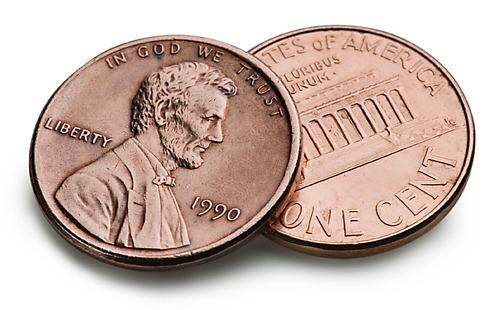
I'm pretty sure the copper is worth more than my opinions....

I should do this article more justice and read the whole thing and respond to it, but since when is this a just world?  Instead, I'm going to copy the bits TC posted at his blog, and add to what he says there.  Think of this, then, as an extended comment to that post.

First, the quotes:

More than 13 years ago, in a homily given at the conclave that would later elect him Pope Benedict XVI, Cardinal Joseph Ratzinger spoke of a growing “dictatorship of relativism that does not recognize anything as definitive and whose ultimate goal consists solely of one’s own ego and desires.” The urgent call for a return to truth-based religion, far from repelling the cardinals, distinguished Ratzinger as the frontrunner for papal office.

Ratzinger’s papal platform did not prove broadly appealing. The secular pundits of the last decade often ignored his warning as the scare tactic of a dogmatist unable to adjust to the benign pluralism of a world that had, in keeping with Kant’s rallying cry, “dared to think.” I doubt the pope emeritus has much energy nowadays to follow the many instructive ironies of the Trump era; but if he did, he might take just the tiniest bit of satisfaction in seeing not just the religious right but also the secular left denouncing a growing “dictatorship of relativism.” Ratzinger’s distinctive emphasis on freedom’s need for truth, in other words, may have come not too late but too early to find a bipartisan hearing in the United States.

It is here I will pause and just bring up the conclusion of TC's post, which I think is as sound as anything you'll read on the internet today:

For the record, I've noted any number of times that arch conservatives though they were, Benedict XVI and John Paul II were far more radical than just about any secularist leftist on the issues of economic justice, Pope Francis is far more radical on that and many other vitally important issues, certainly on environmental catastrophe.  I'll bet you that there is little to nothing more realistically radical that issues from the upcoming Left Forum than the various documents that have come from the Vatican in the last five years.

Take that idea to heart, that JPII and Benedict XVI were as radical on some points as Francis I, and you will finally be understanding things more clearly.  You certainly aren't going to get that from Bill Maher (who I saw interviewed last night on some program PBS aired.  Maher was sure to praise himself as "dangerous."  I think of Maher as being as dangerous as a butter knife, and about as sharp. But his comments get played on the internet, while Maher continues to confuse his ignorance of Catholic social justice teachings with wisdom).

Back to Pidal:

The irony in this evolution of U.S. culture, Andersen notes, is not that ivory-tower insanity failed to remain confined to the academy but that postmodernism took deepest root in the sector of society that is normally most suspicious of university elites. The new communication vectors of social media and talk radio, with their broad accessibility and immunity from peer review, accelerated the rightward movement of the belief that all reality is socially “constructed” to such an extent that “starting in the 1990s, America’s unhinged right became much larger and more influential than its unhinged left.”

As evidence of the right’s proclivity toward fantasy, Andersen recalls its many paranoia-based enthusiasms: fear of one-world government, gun-control fanaticism, seven-day creationism, climate-change skepticism and more. Perhaps the most insightful aspect of Andersen’s narrative is his conclusion that right and left extremes have now met: “Neither side has noticed, but large factions of the elite left and the populist right have been on the same team.”

Or, as Nietzsche supposedly said:  Those who pursue dragons too long become dragons themselves.  It's an old notion (I learned it in college, anyway), that opposing parties at their extremes are barely distinguishable from one another, which is one reason those extremes fight their "opposition" so fiercely.  Nobody fights against someone else as fiercely as those who seem to be most like us.  Just because it's not new, doesn't mean it isn't insightful, or even wisdom.

Before we go to the next quote, I'm reminded of a passage I read recently (somewhere on the intertubes, and I couldn't recover it now if I had to) that slightly (and almost slyly) blamed Michel Foucault for the creeping relativism of the American right.  Foucault, the argument went, championed the idea of knowledge held by the fringes of society being suppressed by the powers that be.  Basically, the victors write the story of history (again, there's nothing new under the sun).  This, of course, is the basis of feminist readings of the Bible, and of many readings that find the emphasis of Jesus of Nazareth on the poor and the outcast, rather than on saving souls from eternal damnation and upholding whatever social/political structure is in power.  Are these things right? Or wrong?  Truth remains, in some sense, maddeningly relative; or not.

Examples of the secular left’s re-enchantment with objective reality abound. Professor Mark Lilla of Columbia University was perhaps the first out of the gate with his interpretation of Hillary Clinton’s defeat as “the end of identity liberalism” in a New York Times article in November 2016. Obsession with diversity has produced, he laments, a “generation of liberals and progressives narcissistically unaware of conditions outside their self-defined group.” Donald J. Trump’s victory shows that this has ultimately “encouraged white, rural, religious Americans to think of themselves as a disadvantaged group whose identity is being threatened or ignored.” The way back for Democrats, accordingly, lies in recovering a rhetoric of the common good and a shared destiny. Though Lilla does not use the language of “natural” or “objective” morality, he presupposes their reality. For how can a good be common, or a destiny shared, unless it is somehow discernible by all reasonable people?

Here I have to quote TC again, because the problem with identifying a false location for judging truth as relative v. universal, is just where you decide "universal" lies:

Just as a start, when in post-war history didn't "white, rural, religious Americans" NOT think of themselves as a disadvantaged group "whose identity is being threatened or ignored."  Only someone who has never much looked at the history of the United States could make that claim that that's a reaction to the "identity politics" of the last several decades.  I'd wonder how Pidal didn't manage to notice such things as the populist movement of the late 19th and early 20th century, the white backlash that followed the all too brief Reconstruction period,  pretty much the rise of the formal Fundamentalism in Protestantism.

In the one place he mentions populism, it's today's populism,

Well whaddya know, Pidal does mention Foucault, and pretty much in the way that article I read mentions him:  wrongly, crudely, and dismissively:

But perhaps the most ambitious and far-reaching truth-based criticism of the Trump-era United States can be found in Kurt Andersen’s article for The Atlantic, “How America Lost its Mind,” in September 2017. Andersen combines Guthrie’s charges of fantasy with Lilla’s narrative of the rightward migration of the left’s intellectual extravagances. Yes, he concedes, the 1960s, the Eden of the baby-boomer liberals, were in many ways a retreat from reality into fantasy. In the 60s, the Esalen Institute (which even today identifies itself as a “world-wide network of seekers who look beyond dogma to explore deeper spiritual possibilities”) became a kind of epicenter for an endless variety of ecstatic, dionysiac mysticisms. Shamanic rituals, mescaline consumption, healing energies and tantric sex all combined to form the potent spiritual cocktail known as the New Age movement.

In Lilla’s telling this kind of magical thinking eventually found its academic expression in a mania for “deconstructionism.” Michel Foucault’s seminal argument in Folie et Déraison—that the difference between sanity and insanity rests entirely on social convention and that the very distinction serves only to legitimize hierarchies of domination—has set the research and teaching agendas of humanities professors ever since. Many students, even at Catholic universities, graduate more familiar with the principle that “all distinctions are violent” than with St. Paul’s vision of the church as a many-membered body.
Andersen is badly generalizing there (similar to what I heard Maher do on the PBS interview.  A story about a group of college students protesting an appearance by Jerry Seinfeld was turned into "everyone under the age of 25" and "on the left" is crazy.  Yeah, we talk like this all the time, ignoring the importance of facts and nuance.  The shooting at Kent State, for example, involved non-protesting students on the campus, and a small number of protesting students of the whole student body.  Yet to hear the story, the entire student body was in uproar, the campus near in flames, the National Guard the "thin blue line" of "law and order.")  Generalizations turn truth into crap, but we like crap better.  Andersen describes all Baby Boomers, or thinks he does, and in doing so ignores the "Jesus Freaks" who closed out that decade; people looking for something to believe in, and settling on yet another version of evangelical Christianity (which is as American as cherry pie).   Mark Lilla's reduction of Foucault's work is just flaming ignorant, as is the dismissal of "deconstruction" (which has nothing to do with Foucault, who argued publicly with Derrida, the creator of that philosophy).  The irony is that one of the most insightful religious thinkers of the 20th and 21st centuries was Jacques Derrida.  And need I say the idea that "all distinctions are violent" is not that far removed from:  Those who would be first of all must be last and servant of all.  Speaking, not coincidentally, of radical notions.  Then again, so is "Give Caesar what is Caesar's, and God what is God's."

I really don't think "po-mo" thinking has infected the hills and hollers of West Virginia; I think the problem is far more fundamental.  A reporter on NPR this morning spoke of talking to people at the NRA convention in Dallas.  He said he met one man who was convinced the "moral outrage" after Parkland shooting was "concocted and fake."  The reporter said he confronted the man with the stories of people he (the reporter) had interviewed after Parkland, and that their stories were true. The NRA attendee was amazed to hear this; the reporter concluded the man got his news from NRA-TV and Rush Limbaugh and FoxNews.  It doesn't take a course in Foucault to trace out that relativism.  FoxNews and Alex Jones and NRA-TV don't deal in relativism:  they insist they are telling the truth, and CBS/NBC/ABC/NPR/NYT/WaPo are the liars.  That kind of "populism" predates Foucault and deconstruction by centuries, if not millennia.

Clearly Pidel's stance is that where he stands, Truth stands with him, and what he considers true you shall as good assume to be true, because to do otherwise would be, well, just wrong:

Ratzinger’s prognosis perhaps proves especially apt in the United States, where the need to find constitutional support for abortion has led to some of the most fantastical jurisprudential reasoning in the history of the Supreme Court. The court reached the height of magical thinking with Planned Parenthood v. Casey (1992), which ruled that requiring spousal notification prior to abortion posed an “undue burden” on a woman’s freedom. “At the heart of liberty,” the plurality opinion reasoned, “is the right to define one’s own concept of existence, of meaning, of the universe, and of the mystery of human life.” If legal abortion was, as Andersen presumes, a triumph of the “reality-based left,” it was a pyrrhic one.

That's about as muddle-headed an understanding of Constitutional law as I've ever encountered.  If that's his definition of "magical thinking," we don't have anything else to discuss.  But why flex my intellect when I can rely on the words of a Jesuit to argue for me (as Charlie Pierce, says, you don't mess with the Society.)

By “dictatorship of relativism” I take Cardinal Ratzinger to mean a sociopolitical movement that refuses to recognize an ultimate objective reality called “the truth.” Although this is a coherent theoretical concept, the closer we get to the ground the more it seems that the battles being waged in the public square are not so much about whether ultimate truths exist, but which absolute “truths” will govern public affairs. In that sense, Pope Francis’ warnings about the dangers of ideology and “ideological colonization” appear more relevant.
In other words, it's not that FoxNews is arguing relativism, it's arguing about what the truth really is, and where it comes from.  Let me just quote from this article at some length, to get at the facts upon which the argument is built:

Meanwhile, just south of the Canadian border, in Vermont, Michael O’Loughlin reports that the state’s Catholic schools are prohibited from access to newly available public funds simply because they are religious schools. Professor Rick Garnett of the University of Notre Dame correctly characterizes the conflict: “It’s about whether a generally available and entirely ‘secular’ benefit should be withheld simply as a penalty” for a faith-based school.
...
And while the case in Vermont might appear to be a straightforward church-state question, it is more nefarious than that. True, many U.S. states prohibit public funds for parochial schools. Such prohibitions were enacted a century ago by Protestant legislators, chiefly to penalize rival Catholic schools. That much is clear from the historical record.   [Aaargh!  Relativism!  Yes?  No?]  But while that fight was at its heart about competing religious conceptions of the one, true God, the present fight in Vermont is about whether religion has any place in public life at all. Now the opponents of faith-based schools are saying, by implication, that there are truths, we hold them, and religion is not only not one of the avenues of approach to those truths, but an enemy of them.

What we have, then, is not a dictatorship of relativism in which there is no such thing as truth, but a far more dangerous dictatorship of positivism, that truth only exists independently of faith and is brought into existence through brute legal force. We are no longer considering, says Cathleen Kaveny, what we owe people who think differently. “Nobody’s asking that, and you reap what you sow.” 
There's relativism at work there, no?  Is the Vermont stance on funding religious schools truly about whether religion has any place in public life at all?  Are they shuttering churches, requiring them to agree to the dictates of the state?  I had a young German pastor in my church once, and she was disturbed by the presence of the national flag in the sanctuary, in fact next to the chancel.  In Germany interference with the Church was a remembered horror (it led to the exile of Karl Barth and the actions of Dietrich Bonhoeffer which led to his execution).  Is the action of the state of Vermont really equivalent in any way to that?  Are any other church related schools equally banned?  Is this really a matter of Protestants punishing Catholics, or is it just that Protestants have a different view about the role of government when it comes to religion?  (I know Protestants don't consider marriage a sacrament, or divorce a breach of that sacramental union, and they decided that centuries ago precisely to keep government out of church matters, and church out of government matters.)  Relativism is, dare I say it, in the eye of the beholder, no?  And the other thing in the eye of the beholder is that log that looks like a splinter in your brother's eye.

I don't mean to sound so glib about this, in the end; but this kind of analysis kind of invites that kind of response.  Not TC's, but that of Pidal and even of Fr. Malone.  I mean, if you're going to throw around accusations, remember the four fingers pointing back at you, ya know?

Saturday, September 21, 2024

A Reminder

The ratings challenged Bill Maher, on his increasingly boring show on HBO, is really having a hard time coping with TRUMP DERANGEMENT SYNDROME. He is a befuddled mess, sloppy and tired, and every conversation, with B and C list guests, seems to start with, or revert back to, ME! This week he had 'dumb as a rock' bimbo Stephanie Ruhle, from MSDNC, on the show, along with a Trump hating loser, Bret Stephens, who seemed totally confused and unsure of himself, very much like Maher himself," he wrote. 
He then went off in a different direction, writing, "Steven’s (sic) should find himself another line of work because I am driving the FAILING New York Times absolutely crazy, and it is very hard, perhaps impossible, for a writer to write well of me without suffering the wrath of the degenerate editors who, with a push from the top, have gone insane." 
"They apologized to their readers in 2016 for their complete and total MISS, and they’ll do it again in November. The FAILING New York Times is a badly run “newspaper” that has totally lost its way. Put it to sleep!" he added.
That Trump wanted the DOJ to prosecute SNL for making fun of him.

He hasn’t gotten any better since then.

Saturday, November 21, 2015

Candle Lighting Ceremonies


The sage Bill Maher speaks:

this idea that somehow we do share values, that all religions are alike, is bullshit. And we need to call it bullshit.”
Which, of course, is the very arrogance and bigotry (yes, Virginia, there can be religious bigotry) the international ecumenical movement was started to counter, in 1910.  But that can't be right, because the comments at Salon assure me that atheists know more about religion than the faithful do.  And yet nobody seems to know about the ecumenical movement and its efforts to roll back such bigotry and ignorance.

Maher, here, is siding with ISIS.  He's giving them all the reason they need to insist this is a religious war, a holy war, and that Christians think of Muslims as infidels.

And he's not too good on history, either:

Maher said that Cameron discussed forced marriages, female genital mutilation and Britain’s 11,000 cases of honor-based violence.
Only one of those three, FGM, has no history in Western Christian culture.  True, we have set aside "honor-based violence" (sometime after Burr got into a duel on American soil, or the Hatfields stopped trading bullets with the McCoys; then again, this is still not an unknown form of violence in our country), and we ended the practice of forced marriages (something still known in non-Muslim countries, too), but not because those practices were always at odds with Western, or Christian, or even liberal, values.

Ah, well; curse the darkness, or light a candle.  These things I do too much discuss, too much explain. 

Sunday, February 12, 2017

We should be aghast about the fact Stephen Miller is in the White House


This really deserves a little further attention:

George, it is a fact, and you will not deny it, that there are mass numbers of non-citizens in this country who are registered to vote. That is a scandal. We should stop the presses. And as a country we should be aghast about the fact that you have people who have no right to vote in this country, registered to vote, cancelling out the vote of lawful citizens of this country. That’s the story we should be talking about. And I’m prepared to go on any show, anywhere, anytime, and repeat it and say the president of the United States is correct 100 percent.
That's Stephen Miller, the White House National Policy Director, on ABCNews this morning.  No, he has no facts to support his claims, but "you will not deny it."  And who can argue with that?

No, seriously.

Three weeks in, this is where we are:

Appearing on “Real Time with Bill Maher,” Maher asked Franken what Republicans really say behind closed doors.

Franken joked: “Well, there's a range in what they'll say, and some will say that he's not right mentally. And some are harsher.”

“No, no. That's not fair. That was cheap,” he continued. “There are some who I guess don't talk to me.”

Franken then got a bit more serious.

“I haven't heard a lot of good things, and I've heard great concern about the president's temperament,” he said.

Maher responded: “That's very diplomatic of you.”

To which Franken said with a smile: “Not very, was it? I don't think this was diplomatic, but I'll take it.” 
I saw this same dynamic in 1973, when the Watergate scandal started to bite into Nixon's ankle.  It was the Saturday Night Massacre that finally convinced my father Nixon was up to something, and it wasn't the good of the country.  Congress agreed, and support for Nixon started going downhill rapidly after that.  But it took two years to overcome one of the greatest electoral college victories in history to get Nixon out, and even then he escaped both impeachment and any criminal liability for his actions.

Three weeks in, and, as Al Franken says about impeachment:

“Let me remind you again that Republicans are in the majority. So I think it'll be — it's months and months away.”
Yes, he's probably joking; but only about the timeline.

Sunday, February 22, 2015

A Voyage to the Land of the Houyhnhnms on the First Sunday of Lent


This is why you never argue with fools (something I need to learn over and over again, especially when "some one on the internet is wrong!"):

This is not a fatal flaw in the book, but speaks to its contested place as at once an academic survey as well as an intervention in an ongoing but oversimplified and disheartening “debate.” Armstrong wants to examine, in all its complexity, the relationship of religion and violence, and often does so with great success and insight. She also wants to exonerate “religion,” but that tends to muddy the waters of the first, and more important, goal of this book.
That is the concluding paragraph of a brief review of Karen Armstrong's new book, at Religion Dispatches.   It's a good review, I commend it to your reading.  The "debate" is the one raging among on-line atheists and neo-atheists like Richard Dawkins and Bill Maher about whether or not religion is the source of all evil in the world.  It is a pitifully uninformed debate carried out by people proud of their ignorance of the subject (Dawkins) or simply trying to get attention for their cable TV show (Maher).  This is typical of the debate, and if it sounds almost exactly like Rush Limbaugh excusing his racism or his disdain for "liberals," that's because the form of argument is exactly the same:

“Can’t we at least say there are a number of factors that are involved and the religion is certainly one of them? (Obama) presented this idea that, well, it’s poverty and education. It is poverty and education also — but why are they impoverished and uneducated? It’s mostly because of the religion.”
Religion is one of the problems; religion is mostly the problem.  And if you say Maher said religion is the main problem, or THE problem, his supporters will deny with their last breath that he said anything so blinkered and ignorant.  But religion is certainly a problem; in fact, it's mostly the problem.

Along with despotic governments, irresponsible Western leadership since at least the 19th century, and a rapidly changing world which has thrown everybody into what Alvin Toffler rather charmingly, now, called "future shock."

But mostly, the problem is religion:  because a comedian said so.

There is a relationship between violence and religion, and it does not good to ignore it.  I understand the Bhagavad Gita is presented as a vision that comes in the midst of an epic battle.  The Hebrew and Christian scriptures include many descriptions of violence, both real and imaginary, between Genesis and the Apocalypse to John. And the Koran admits violence as well as peace.  Quelle surprise?  Is human history bereft of violence where religious practices do not exist?  And where, pray tell, is that?

But to even ask that question is to engage in the debate; and I don't want to do that.  It is a pointless debate, going nowhere and meant to go nowhere; because it isn't a debate.  It is an accusation, an insult hurled out in hopes of getting a response to prove, "A-HA!  You see!  They ARE violent!  See how violently they respond?!"

Which was, of course, precisely why Dr. King trained his followers in non-violence.  Funny nobody ever brings up the Civil Rights movement in this context, or the liberation of India by Gandhi.  Dr. King's pastorate is ignored, and we are all told what Gandhi accomplished was only because the British were not Stalin.  Both dismissals are racists and hegemonic in their nature:  no one observes that the Russians are not the Indians (who suffered a great deal for their liberation, and who knows might have suffered more?  They proved no government can govern those who will not cooperate.), because the latter are not deemed European.  And any acknowledgment of the church and the SCLC (the Southern Christian Leadership Conference) in the Civil Rights movement is usually allowed only if you emphasize the community structure the black churches provided to the movement; the spirituality that undergirded that community cannot be acknowledged at all.

Gandhi's fight was spiritual; as was King's.  In the modern world especially, we can only understand the spiritual as the miraculous ("Heaven is real!"), and the miraculous we dismiss out of hand.  But that makes us weaker and simpler than the "medieval" peasants we deems ourselves so superior to.  The problem, for the world, with spiritual movements, is that they rest on humility, and the awesome power of powerlessness:  the one power that truly succeeds in this world.

Which is why the world knows it not; and doesn't want to.

Saturday, April 23, 2022

Bill Maher Is Neither A Political Guru, Nor Original


I don't really care about what Maher is saying.  If I could, I'd have posted a screengrab of that, rather than the commentary.  It's the logo I'm interested in:  "We gotta make the world safe from democracy."  It's a variation not on Wilson's original statement (though Maher undoubtedly thinks it is), but on Walt Kelly's:  "We gotta make democracy safe for the world!"

Kelly said it in the '50's.  In the midst of the McCarthy Era.  Granted, he was a little less pessimistic.  But I think he was a little more realistic, too.

"The Skin Of Our Teeth," by Thornton Wilder.  Maybe that play needs to be assigned reading for all 350 million Americans.  We're sure not gonna blah-blah and out-Cassandra the other blabbers our way out of this mess.  

Maybe education will do it.  Which, come to think of it, is why so many people are anti-education right now.

It's still the same old story, a fight for love and glory.  And power.  It's always been about power.  The shock among the pundit class that America was all about one for all and all for one until just recently, is the really silly and ahistorical part of all this.  Some white people are still shocked that Donald Trump won the office of President in the first place.    Dave Chappelle and Chris Rock weren't.


We still need to relearn our history, before we can proceed. Odds are we won't, and we'll proceed anyway. And be shocked, again, to find out this is not our beautiful house, and this is not our beautiful wife.

Same as it ever was.

Tuesday, January 25, 2022

Increasingly The Public Individual Response To Covid Is…

"I ain’t one o’ those 3600 Americans (or 860,000), so fuck all y’all, I’m done!”

You know, like Meat Loaf did. They’re all Meat Loaf now. Or just assholes like Bill Maher:
In Maher’s America, concerns for public health are paranoid when he’s tired of them.

860,000 of us got sick and died (and more everyday)? Well, shit, it ain’t him, is it? Thankfully, the rest of us are smarter than that.

Saturday, March 31, 2018

A Reminder

That the President of the United States has access to the finest intelligence gathering resources in the world, and to lawyers who can explain legal matters to him.


All I have is Google:

California Gov. Jerry Brown on Friday pardoned five ex-convicts facing deportation, including two whose families fled the Khmer Rouge regime in Cambodia four decades ago.

The pardons don't automatically stop deportation proceedings, but eliminate the state convictions federal authorities based their deportation decisions on. That gives the men's lawyers strong legal arguments before immigration judges to try to prevent the deportations.

"The pardon does provide enormous benefit to immigrants facing deportation," said Anoop Prasad, an immigration staff attorney at Asian Law Caucus.

....

Those pardoned Friday included Sokha Chhan and Phann Pheach, both of whom face deportation to Cambodia, a country ruled in the 1970s by the genocidal Khmer Rouge. Chhan was convicted of two counts of misdemeanor domestic violence in 2002 and served 364 days in jail.

Pheach was convicted of possessing drugs and obstructing a police officer in 2005 and served six months in jail. His wife said he is in federal custody.

Also pardoned was Daniel Maher, who was convicted in 1995 of kidnapping, robbery and being a felon in possession of a firearm and served five years in prison. Maher is facing deportation to China.

Chhan, Pheach and Maher hold permanent U.S. residency but had exhausted all legal avenues to fight deportation, making Brown's pardons for them their last hope to stay in the U.S., Prasad said.

"This is a life-changing, enormous event," he said.

Also pardoned while facing deportation were Daniel Mena and Francisco Acevedo Alaniz, but their home countries were not immediately known. Mena was convicted in 2003 of possessing illegal drugs. Alaniz served five months in prison for a 1997 auto theft conviction.

Brown on Friday also commuted the sentences of 14 others convicted of crimes.

The governor is a former Jesuit seminarian and traditionally issues pardons close to major Christian holidays. Easter falls on Sunday.

Yes, it does, doesn't it?

But he wasn't through:

For a guy who screams about "fake news!" he sure does rely on it a lot; and generate it, too.  First, where does he get that number?  Not from the USPS:

The $1.50 figure comes from a Wall Street Journal op-ed, which cited a Citigroup analysis that the Postal Service loses $1.46 on each package it delivers for Amazon. But a Fortune Magazine report found that such a subsidy is due to congressional action that limits the postal service's ability to compete with companies like FedEx.


 A Wall Street Journal op-ed in July 2017 by Josh Sandbulte, a money manager who closely watches the shipping industry, also suggested the Postal Service is probably effectively subsidizing Amazon and other online retailers.

Sandbulte’s claim is based on how the Postal Service sets its prices. USPS is not allowed to set prices so low that it loses money on delivering packages. (If it could, it could undercut competitors like FedEx or UPS.) But the formula for how it sets its prices was created by Congress in 2006, and doesn’t account for the fact that packages are a much bigger share of the USPS’s business than they used to be.

Sandbulte drew his conclusions based on a Citigroup analysis that suggested the average USPS parcel should cost about $1.46 more per package across the board than it does right now. (Sandbulte works for a firm that owns FedEx stock.)

That discount, if it exists, exists for all USPS customers. It’s just that Amazon sends a lot of packages.

Two other points about what is actually a complicated subjected (USPS finances, that is):  contracts between USPS and entities like Amazon (it isn't the only one) are not made public, by law.  And package shipments are actually a money-maker for USPS, who is losing money on first-class mail largely because of e-mail and on-line financial transactions (like paying your bills without using a stamp).  So is that Citigroup analysis even accurate?  Nobody really knows except USPS, and they aren't talking.

Oh, by the way:

The president's Saturday morning tweets came as his motorcade left his Mar-a-Lago estate, about 8:45 a.m, heading to his nearby golf course. The president is staying in Florida for the holiday weekend.
That would be his 73rd or 74th time on the links in the 14 months of his Presidency; but who's counting?