Wednesday, April 13, 2011

The Waters of Oblivion


The consistent thread through the Hebrew scriptures into the proclamation of the basileia tou theou is that humans must eschew and avoid political power, because power draws its source from the fear of scarcity.
Scarcity comes in many forms: scarcity of liberty; scarcity of money; scarcity of food and water; even scarcity of want:

The rise of the politics of fear begins in 1949 with two men whose radical ideas would inspire the attack of 9/11 and influence the neo-conservative movement that dominates Washington.

Both these men believed that modern liberal freedoms were eroding the bonds that held society together.

The two movements they inspired set out, in their different ways, to rescue their societies from this decay. But in an age of growing disillusion with politics, the neo-conservatives turned to fear in order to pursue their vision.

They would create a hidden network of evil run by the Soviet Union that only they could see.

The Islamists were faced by the refusal of the masses to follow their dream and began to turn to terror to force the people to "see the truth"'.


The neo-conservative movement, the one that spawned Paul Ryan as much as George W. Bush, has come to dominate by preaching a scarcity of want. Paul Ryan firmly believes those who have from private means are deserving, and those who have from public means are corrupted, are suffering from a scarcity of want, from a lack of need. If that is not a perversion of sense and civilization, what is it? If that is not demonic, what is it?

This is Puritanism perverted and grown mad on too much of nothing. Not the nothing of material deprivation, but the nothing of spiritual deprivation. Ayn Rand's "dystopia" (as NPR recently described it) is not a product of want and deprivation, but a product of infantilization, of growing up and find the world is not a mere extension of ego, that there are people besides you to account for. Rand's "Objectivism" is an unwillingness to face that reality: that you are not the center of existence. It is a child refusing to grow up; Peter Pan made real, and not a charming boy-child, but a distorted and disgusting adult, one who revels in her self-affirmed self-importance. Too much of nothing.

Paul Ryan is a devotee of Ayn Rand.

And why do I continue to harp on this? One example:

To call some of the provisions in this deal “budgetary” and others “policy riders” is a distinction without a difference. The budget is policy and policy is the budget. To take an example from my field of expertise: The deal likely reduces or even eliminates funding for One-Stop career centers. These are places that host many social service agencies and have the primary mission of connecting the unemployed to the workforce. (Total elimination appeared in HR 1, and a massive cut in the Senate amendment to HR 1.) This is a huge policy decision -- we have determined that we are not going to assist the unemployed at career centers. Where was the debate on this, not to mention the debates on the dozens of other effects of the deal?
Not only "where is the debate" but: "What are we doing?" Read the rest of the story at that link to find out. We are turning into Paul Ryan: deciding who is worthy, and who is not, and it's all based on some vague Ayn Randian idea that those who are worthy will survive, and those who are not should be discarded. And where is the debate on that?

And it all returns to too much of nothing. Not only are we fearful of it, or despairing of it (especially if we are the unemployed sitting at those computers asking "Can't I just apply for a job?", in which case your universe doesn't even include this post), we have become dependent on it. When everyone has nothing, only those who claim control of the nothing, who claim the right to dispense it and distribute it and control who gets the most of it, have something. And we have ceded that, we have given it away, we have thrust it upon them. A sordid boon! It is not the world that is too much with us, it is the nothing that the world offers. When we decide that nothing is all there is, we doom ourselves to despair and helplessness and fear.

Say hello to Valerie, say hello to Marion.

Want has become the new good, and when government interferes with that situation of want, government has overreached. Indeed, it seems government should create want, not alleviate it:

The Unites States, with costly military operations in Afghanistan and Iraq, increased spending by 2.8 percent to $698 billion -- about six times as much as China, the second-biggest spender ahead of Britain, France and Russia. In 2009, U.S. spending grew 7.7 percent.
Much of that spending, of course, creates destruction and want in other countries. I've seen figures that indicate the current federal deficit is largely a product of two wars ("off budget" until Obama took office) and the so-called "Bush tax cuts." Remove that, and the budget deficit isn't such a problem. Indeed, we had this same argument during Vietnam: social spending was too expensive, but funding the war was an absolute necessity, no matter what.

I was teaching "A Modest Proposal" for the umpteenth time this week, when I realized something about it I hadn't noticed before. The argument, of course, is couched in terms meant to make the solution sound reasonable and practical. That the solution is cannibalism is meant not to shock with its absurdity or immorality, but with the reality that the English might as well eat the Irish children outright, as they devour them in every other aspect of human existence. Swift's argument is, in structure if not substance, a model of its kind. But what is easily overlooked is how well it works as an argument, and why its outcome is really so logical (if monstrous).

Swift's narrator focuses on the problem of poverty in Ireland, but like any planner, he focuses on the number of poor children, and the problem of poverty as a problem of lack of income. It is not, in other words, a structural problem (the English as absentee landlords refusing to allow Ireland any local industry for basic human needs (clothing, furniture; this is pre-Industrial Revolution Europe, remember; needs were simpler when factories weren't present to create new ones every day), or to even be taxed for their landholdings. A close reading of the essay, without any economic history lesson, shows money flows out of Ireland, not into it, and that's a dandy arrangement: for the English. But the proponent of the "modest proposal" sees the problem as one of numbers and of opportunity in what we would call a "free market." Indeed, his is the ultimate free market solution.

The problem, as the essayist sees it, is the number of poor children. But blaming the mothers never crosses his mind (which already makes one wonder who the real monsters are today). Instead, he wants to turn that liability to an asset, and he does so by calculations drawn from the raising of livestock as feedstock. Just as any farmer would calculate the cost of raising a cow or sheep until it can be taken to market, Swift's narrator calculates the cost of raising children, and concludes that 1 year olds can be raised on mother's milk and a few coins for clothing, then sold to the butcher at a tidy profit. The horror is in the cannibalism. No, the true horror is that this is still the way we approach human problems. We take the humans out of the equation, and roll on.

The horror of Swift's proposal, of course, is that it is inhumane. But the error is a simple one, and it comes from a simple situation: define the problem, and you define the solution. If the problem is numbers (number of poor children in Ireland) and poverty (lack of opportunity for income), the easiest solution is a new market for a new source of meat. It is, in fact, no less inhuman a proposal than any other proposal which displaces the person from the equation, and decides the solution based on numbers and an abstraction like poverty (which is very real in civilization, but quite abstract to those who plan ways for society at large to cope with it, or just to ignore it). So, define the problem without any humans being involved, and you get....

Well, the theology of scarcity, for one thing. Paul Ryan's budget proposal, for another. Define the problem by excluding the humans, and whatever solution you reach will be too much of nothing. And even when it is as monstrous as "A Modest Proposal," odds are we will pay attention to the horror of the solution, and not to the situation which produces fresh horrors everyday, for which no solution is ever offered.

On the waters of oblivion.

When we start from the assumption that there is always enough want to go around, and indeed that there should be a distribution of want, especially to those who are not us, then it's easy to see the solution is not an alleviation of that want, but it's proper allocation. Swift was satirizing an attitude of indifference, but his satire changed nothing. "Ireland has her madness still," as Auden would say 300 years later. It is the allocation of want that is the great driver of our society, just as it was in Swift's day. Ryan's budget proposal was originally based on predictions it would lower employment to 2.8% in some rosy future. The only problem with that, the experts pointed out, was that it would trigger inflationary worries in the Federal Reserve, which as a matter of stated policy would regard such low unemployment as a problem, and react accordingly. Want must be carefully allocated, in order to keep the system working. We all know that, since the advent of the factory, want has become the driving need of our economy: if we do not want, we do not buy, and if we do not buy, the economy falters, sputters, perhaps comes to a halt. Without the careful allocation of want, what economy do we have?

Say hello to Valerie, say hello to Marion. Send them all my salary from the waters of oblivion.

The basiliea tou theou is about the absence of want.

Matthew 6:25-33
6:25 "Therefore I tell you, do not worry about your life, what you will eat or what you will drink, or about your body, what you will wear. Is not life more than food, and the body more than clothing?

6:26 Look at the birds of the air; they neither sow nor reap nor gather into barns, and yet your heavenly Father feeds them. Are you not of more value than they?

6:27 And can any of you by worrying add a single hour to your span of life?

6:28 And why do you worry about clothing? Consider the lilies of the field, how they grow; they neither toil nor spin,

6:29 yet I tell you, even Solomon in all his glory was not clothed like one of these.

6:30 But if God so clothes the grass of the field, which is alive today and tomorrow is thrown into the oven, will he not much more clothe you--you of little faith?

6:31 Therefore do not worry, saying, 'What will we eat?' or 'What will we drink?' or 'What will we wear?'

6:32 For it is the Gentiles who strive for all these things; and indeed your heavenly Father knows that you need all these things.

6:33 But strive first for the kingdom of God and his righteousness, and all these things will be given to you as well.
Maybe the beginning of an answer is to begin thinking about what we can do for others, rather than thinking about what we don't have for ourselves. Maybe it's not want we should be focused on.

Thursday, April 07, 2011

Why I went into the woods


Stirring the pensieve again...

And speaking of the demonic:

Austin - Today Democrats on the House Appropriations Committee unanimously voted against HB 1, the Republican budget proposal for 2012-2013. HB 1 passed the Committee on a vote of 18-7 and will be considered by the full House of Representatives in the coming weeks. Democrats on the Committee spoke out against the proposal to cut funding for neighborhood schools, make college more expensive, and eliminate basic services for children, seniors and the disabled.

House Democrats have called on state leaders to fix the $10 billion permanent budget hole created by the Republicans' 2006 tax plan and use a portion of the $9.4 billion Rainy Day Fund to address the 2012-2013 budget, but the leadership has refused to do so.

Rep. Dawnna Dukes (D-Austin) said, "In many cases the cuts in health and human services are making life and death decisions. Texas children, senior citizens and disabled Texans deserve better. With inadequate resources, our school children are destined to a second class education and unable to compete in today's global economy. This budget is unacceptable to our constituencies who have sent us to ensure a first class education for our children, protect our citizens, care for those who no longer can care for themselves and provide services to those who have nowhere else to turn."

Rep. Craig Eiland (D-Galveston) said, "Texas is experiencing a budget shortfall, but cutting funds to schools, the elderly and disabled is not the only way to address our problem. It is important that we uphold the commitment to our citizens and not put the most vulnerable of our population, like children, the disabled and the mentally challenged at risk. I will continue to work throughout the rest of the session and any special sessions to have a bill with the appropriate cuts that I can eventually vote for."

Rep. Eric Johnson (D-Dallas) said, "Just like so many Texas families, the state has put money into savings for times of fiscal crisis. Texas Republicans are today demanding that we make devastating cuts that will hurt Texas' school-aged, elderly, and disabled residents, cuts that they would never suggest for their own families. It is unconscionable that such brutal cuts are being proposed while billions of dollars sit unspent in the state's savings account."

Rep. Mike Villarreal (D-San Antonio) said, "Not a single person showed up in our committee and asked us to eliminate pre-k grants for our youngest schoolchildren and financial aid for college freshmen, but that's what this budget does. Prior generations of Texans have invested in educating children in our state, but this generation will drop the torch if this budget passes.

The budget is almost $8 billion short of funding our legal obligations to schools. These cuts will destroy the infrastructure of education and health care that past generations have built for our children.


The Republican budget fails to uphold our obligation to our children and threatens to end our state's prosperity. We can do better than this if the Republicans fix the recurring $10 billion hole they put in the budget with the 2006 Perry Tax Swap and eliminate tax loopholes that litter our tax laws."
I highlighted a portion of that to emphasize the destructive nature of the demonic. It is this desire for destruction which sets this apart from the merely selfish or short-sighted. This is not the theology of scarcity; this is the theology of destruction. This is beyond despair; this is demonic. What do I mean? I mean this:

The consistent thread through the Hebrew scriptures into the proclamation of the basileia tou theou is that humans must eschew and avoid political power, because power draws its source from the fear of scarcity.
This has certainly been true all my life. In my childhood, it was the Cold War, and the fear of scarcity was the fear of a scarcity of liberty, a scarcity of life itself in the shadow of the Bomb. We only had to capitalize it to know what we all meant. That fear turned into the informal slogan of the Bush Administration: "Freedom is not free." The scarcity lingered on, the idea that nothing is ours without purchase, without price, and purchase and price always means one to a customer, and only to the paying customer. Blow you, Jack, I got mine!

Before that, and even alongside it, was the scarcity of security in one's job; so that white plantation owners, long after the end of slavery, kept poor whites fearful of poor blacks who would take their property, their jobs, their women. Scarcity was a handy tool for keeping the poor from noticing their enemy was the wealthy who exploited their poverty, not the blacks who shared it, who even suffered worse from it. Power draws its source from the fear of scarcity. And when that fear is not enough, or when that fear replaces reason itself, it becomes demonic. It becomes destructive.

But maybe we have only ourselves to blame, because one can never have too much milkshake. Scarcity is built into our very way of life:

Scarcity is the peculiar province of economics, the "dismal science." How much is available to go around, how fairly can it be distributed? This is the assumption of utilitarianism, this is the assumption of John Rawls' "Theory of Justice," this is the assumption of economists: scarcity is the nature of the world, now how do we adjust our desires to meet this wholly reasonable and undeniable conclusion? The economic pie can only be so large. Full employment, for example, would be disastrous: without a scarcity of jobs, what bargaining power would the employer have, what incentive would drive the worker to labor rather than laziness? With every niche filled, there would be nowhere to go, and little reason to worry about being asked to go. Scarcity is not only reality, we deem it necessity. The desert is our model for the world, it is the spur of our incentives: we are not creatures driven and derided by lust, because lust we can market. Lust is another model of scarcity, as you can never have enough things, look good enough, have enough sex or be attractive, knowledgeable, witty, intelligent, enough. You must always lack and desire what you do not have. It is not lust we are driven by now, but fear. Fear for our security, but also fear for our want, fear that the world, indeed, is not enough and that we must always have more. Our fear is that the world is actually the desert we are afraid it might be, and that enough will never be afforded us.
But now what we agree we are living in the desert, we have panicked, and we are turning on each other.

Except, of course, we aren't. No one followed George W. Bush when he tried to use his "political capital" to lead us into privatizing Social Security. Wisconsin hasn't followed Scott Walker into accepting his union busting law. Ohio is moving to put John Kasich's similar attempt on the ballot for repeal. GOP governors across the country who moved to destroy in the name of fear and scarcity, are finding they have no support for their demonic actions. Even John Boehner, who insisted until recently that "we are broke," is now ignoring the demands of the Tea Party to reach a reasonable compromise with the Democrats in order to avoid calamity. Which is not to say the legislature in Washington is beyond reproach:

Who are — once again — under attack, this time in the House budget bill, H.R. 1. The budget proposes cuts in the WIC program (which supports women, infants and children), in international food and health aid (18 million people would be immediately cut off from a much-needed food stream, and 4 million would lose access to malaria medicine) and in programs that aid farmers in underdeveloped countries. Food stamps are also being attacked, in the twisted “Welfare Reform 2011” bill. (There are other egregious maneuvers in H.R. 1, but I’m sticking to those related to food.)

These supposedly deficit-reducing cuts — they’d barely make a dent — will quite literally cause more people to starve to death, go to bed hungry or live more miserably than are doing so now. And: The bill would increase defense spending.
There is something evil in that, too; but we have become so inured to reducing the poor to greater poverty (Title X funds once signed into law by Richard Nixon and championed by then Rep. George H.W. Bush are now anathema in D.C.) that it's almost status quo, rather than a dramatic turn toward destruction. Which, itself, is a sad statement. Consider:

What’s poverty? Poverty guidelines have not changed since the 1960s: “A family is counted as poor if its pretax money income is below its poverty threshold,” which is $11,161 for a single adult — think about that! — and $17,286 for a couple with one child.

The poverty rate in 1959 was nearing 40 million. It dipped to about 23 million in 1973, only to rise again in the early 1990s to about 39 million. But the poverty rate in America in 2009 was the highest it’s been in the last 50 years, at about 43.6 million.
Who is "broke"? Who is damaged by current economic conditions? Who has the real problems here? People who can get the attention of TeeVee and politicians by traveling to D.C. for a "rally"? Or the poor, the destitute, the kind of people no U.S. politician has visited, at least in my memory, since Robert Kennedy?

Meanwhile, the Tea Party and its supporters continue to clamor for calamity, and they are set to achieve it in the "laboratories of democracy," if not on the national level. Even as they clamor, though, their support falls and the extremism they pursue in the name of liberty is being seen as a vice by the greater public. Which means there may ultimately be some redemption in the rush to extremism. an ironic result to countenance from one who is himself so extreme in his defense of the "attack upon Christendom."

I was re-reading Thoreau's words with a class I had assigned the excerpt to:

I went to the woods because I wished to live deliberately, to front only the essential facts of life, and see if I could not learn what it had to teach, and not, when I came to die, discover that I had not lived. I did not wish to live what was not life, living is so dear; nor did I wish to practise resignation, unless it was quite necessary. I wanted to live deep and suck out all the marrow of life, to live so sturdily and Spartan-like as to put to rout all that was not life, to cut a broad swath and shave close, to drive life into a corner, and reduce it to its lowest terms, and, if it proved to be mean, why then to get the whole and genuine meanness of it, and publish its meanness to the world; or if it were sublime, to know it by experience, and be able to give a true account of it in my next excursion. For most men, it appears to me, are in a strange uncertainty about it, whether it is of the devil or of God, and have somewhat hastily concluded that it is the chief end of man here to "glorify God and enjoy him forever."
...
Our life is frittered away by detail. An honest man has hardly need to count more than his ten fingers, or in extreme cases he may add his ten toes, and lump the rest. Simplicity, simplicity, simplicity! I say, let your affairs be as two or three, and not a hundred or a thousand; instead of a million count half a dozen, and keep your accounts on your thumb-nail. In the midst of this chopping sea of civilized life, such are the clouds and storms and quicksands and thousand-and-one items to be allowed for, that a man has to live, if he would not founder and go to the bottom and not make his port at all, by dead reckoning, and he must be a great calculator indeed who succeeds. Simplify, simplify. Instead of three meals a day, if it be necessary eat but one; instead of a hundred dishes, five; and reduce other things in proportion. Our life is like a German Confederacy, made up of petty states, with its boundary forever fluctuating, so that even a German cannot tell you how it is bounded at any moment. The nation itself, with all its so-called internal improvements, which, by the way are all external and superficial, is just such an unwieldy and overgrown establishment, cluttered with furniture and tripped up by its own traps, ruined by luxury and heedless expense, by want of calculation and a worthy aim, as the million households in the land; and the only cure for it, as for them, is in a rigid economy, a stern and more than Spartan simplicity of life and elevation of purpose. It lives too fast. Men think that it is essential that the Nation have commerce, and export ice, and talk through a telegraph, and ride thirty miles an hour, without a doubt, whether they do or not; but whether we should live like baboons or like men, is a little uncertain.
It has been 30 years or more since I first read those words. I had forgotten them, but they were obviously buried somewhere, and fertilizing that did grow in my mind over the decades. Should we live like men? Or like baboons? The question is as timely now as it was in the 19th century.

"How should we then live?" is emerging for me as the question of 19th century Europe. Tolstoy; Kierkegaard; the Romantics (now reduced to a minor literary movement that lasted only a few decades; no longer the sweeping change in fundamental human thought which we are still living through. Sometimes scholarship can be so blinkered and so in love with minutiae and novelty....); Thoreau; Emerson; the U.S. Civil War itself. So many writers and thinkers and events raised the question of what life was for; a question first raised in response to the Industrial Revolution and one still relevant today. It was the question raised by Sartre and existentialism in the aftermath of World War II. It is the question raised by mega-churches and the "Gospel of Wealth" and every vulture theologian who longs for the time when people open their eyes and realize their despair and come running back to the Church, if only in order to fill the pews and justify the time spent there by the loyalists, and to improve the self-esteem of the person in the high and lonely pulpit. It is the basis of the question of whether we should or should not live by faith, whether we should preserve our ancient metaphysics or toss the baby out with the bathwater; whether, having torn up noblesse oblige in our desire to be free Jeffersonians, we must now preserve the tattered Social Contract.

"How should we then live?" is emerging, for me, as the question of 19th century Europe. Tolstoy; Kierkegaard; the Romantics (now reduced to a minor literary movement that lasted only a few decades; no longer the sweeping change in fundamental human thought which we are still living through. Sometimes scholarship can be so blinkered and so in love with minutiae and novelty....); Thoreau; Emerson; the U.S. Civil War itself. So many writers and thinkers and events raised the question of what life was for; a question first raised in response to the Industrial Revolution and one still relevant today. But not a question many people want to tangle with. Far easier to wrestle with the question of how to get through the day and increase my acquisitions and improve my bottom line. Still, as even TV commercials knew in the '60's: "Is that all there is?" Is the goal of life simply to have a goal in life, and that goal to be "He who dies with the most toys, wins"? If it is then, of course, all we live with is anxiety about what we have, what we don't have, and how to keep the former and obtain the latter. As the cigarette commercial used to ask: "This is living?" And it answered its own question: "Some people don't think so."

But only some; most of us continue to live lives of quiet desperation. How should we then live?

Re-reading Thoreau has made me reconsider Sartre. Consider how this, with a slight shift of emphasis, becomes Sartre's responsibility of the individual:

We must learn to reawaken and keep ourselves awake, not by mechanical aids, but by an infinite expectation of the dawn, which does not forsake us in our soundest sleep. I know of no more encouraging fact than the unquestionable ability of man to elevate his life by a conscious endeavor. It is something to be able to paint a particular picture, or to carve a statue, and so to make a few objects beautiful; but it is far more glorious to carve and paint the very atmosphere and medium through which we look, which morally we can do. To affect the quality of the day, that is the highest of arts. Every man is tasked to make his life, even in its details, worthy of the contemplation of his most elevated and critical hour. If we refused, or rather used up, such paltry information as we get, the oracles would distinctly inform us how this might be done.
Surely we must; but can we do it?

We can't live the life of a Thoreau, anymore than he would want us to. We can't return to the idyllic life of the simple Russian peasant, the type of life Thomas Hardy worked hard to show us was neither simple nor idyllic. Maybe the question, though, isn't "Can we do it," but: "Can we avoid it?"

Aye, there's the rub.

Take poverty, for example. Is the poverty of another a detail that fritters away my life, that diverts me from the true responsibility of living? Or is it a burden I take upon myself merely by recognizing its reality, especially if I d nothing further about it. But responsibility! Am I responsible for the poverty in the world? Am I responsible to the extent I do nothing about it, to the limit to which I lift not a finger to alleviate it in the life of one soul I encounter in all my long, long years? Is my life to be spent in contemplation and rectified by giving away what I have and ennobled by attending more to nature than to society, and improved by working selflessly for the benefit of the widow and the orphan?

How should we then live?

Can we avoid the life of awareness Thoreau and Sartre urge upon us? Certainly we can, but what credit is that? Do not the Gentiles do as much?

How should we then live? Getting and spending and laying waste our powers? This is an old, old story:

As Brueggemann reads the Biblical narrative, Pharaoh represents the people who live in fear and anxiety and anger. Such people have no energy left over for the neighborhood. In the story of Joseph and Pharaoh, the guy with the most power and authority and wealth, dreams of scarcity. Which is not surprising; Pharaoh's oikos is governed by the fear of running out. It is what keeps him in control, keeps him in power and why the people allow him to rule.
So long as Pharaoh kept us scared, kept us anxious and without energy for the neighborhood, the anxiety of scarcity could rule. It is not clear that is going to prevail much longer; or at least, that such anxiety can carry us all the way into pure destruction, into the realm of the demonic. Our leadership may be going there; but the people are refusing to follow.

This anxiety about scarcity is what drives the Hebrews into slavery and so, in brief, Genesis moves into Exodus.

Now Pharaoh is so afraid of scarcity, so filled with anxiety for what might be taken from him, he begins to kill the babies of the Hebrews (and here the parallel to Herod in the New Testament, where he is clearly Pharaoh to all the Gospel writers, becomes clearer. This is where Matthew draws his parallel with the Massacre of the Innocents). This is Pharaoh's anxiety at work. As my notes indicate from the lecture: "The system that generates anxiety cannot relate to steadfast love." Which all by itself explains much about the reaction to Tom Fox, and even to the desire to go to war in the Middle East, a desire Wesley Clark says originally led to a plan to invade 7 countries in that region. But the story of the Exodus is that "Anxiety generated by ideology and social systems is not a part of the human condition." It is, in other words, our creation, and our creation, unlike God's, is grossly imperfect.

Enter Moses, a person with nothing who dreamed of freedom and departure from the "anxiety producing system." And then there is the miracle in the desert, the gift of God's abundance in the manna which comes to break the influence of the anxiety system (it comes as the people are complaining that they were better off in Egypt than in the desert). Our anxiety, Brueggemann notes, is a product of our lack of trust (faith) in God. God's offer of abundance, he says, calls into question the anxiety created by social systems, by human structures and strictures; and yet God never gives us more than "this day our daily bread."

That is from a previous post of mine. Here is another example of Brueggeman, one where he attaches Israel directly to America through, not theology or history, but anthropology:

The treasured narrative memory of Israel is so familiar that we scarcely notice that it is not really a “religious” memory. It is a political-economic memory about the time when we were slaves in Pharaoh’s Egypt. Israel can remember the oppressive circumstance when we were nothing more than instruments for the acquisitive economics of Pharaoh (Exodus 5:4-19). We were busy making bricks in order to build pyramids that would bestow grand immortality, and busy building granaries where Pharaoh could store and exhibit his economic monopoly as he controlled the world’s food supply. We remember the pain and the sweat and the resentment and the anger and the foul smell of the huts in which we had to live.

We are able to remember that there was a dramatic contest between the intelligence community of Pharaoh (now called “magicians”) and the daring challenge of Moses, who had no credentials. We had heard about the contest that played to a draw. Some of us trusted Moses, many doubted him and some simply refused. The ones who trusted followed him in that dark night of death, reached the waters and crossed. The memory was sealed as Miriam and the other women danced the dance of YHWH, the God of economic emancipation: “The Lord will reign forever and ever” (Exodus 15:18).

We headed out to a new world, and departed Pharaoh. The memory, so vivid to us, culminated at Sinai. We assented, in a blank check, to the new rules of YHWH, because we knew they would be better than the old quotas of Pharaoh (Exodus 19:8). Right from the mountain we heard the holy voice of the covenant speak to us 10 times about the love of God and love of neighbor (Exodus 20:2-17). We pledged our loyalty and in that instant were converted from a company of weary slaves to a people summoned to neighborliness (Exodus 24:3, 7). It was a transformation wrought by the holy power of YHWH, but we gladly signed on.

This is the narrative memory we deeply treasure. We treasure it so much that we teach our kids and we regularly perform it in order to recall why this night is different from all other nights. It is the night of death and of new life. It is the night of departure. It turns out to be the event of abundant bread. And before we finished, the narrative led us to new promises and pledges of loyalty to neighborly justice. The trek from slavery through abundance to covenant is one we made in wonder. And we keep making it, always again in wonder. And every time we perform it well, it is yet again an awesome miracle that we can hardly trust.
Read the whole thing, of which that is an overly long or unjustifiably brief taste. Those last words are the best, for me: "The trek from slavery through abundance to covenant is one we made in wonder. And we keep making it, always again in wonder. And every time we perform it well, it is yet again an awesome miracle that we can hardly trust." We don't trust it at all, of course. And we don't always make it; or rather, we don't always want to make it. But somehow, we do. Not as a religious pilgrimage, but as a people pursuing democracy and the creation of a more perfect union. As Breuggeman says, citing the words of "America the Beautiful:"

We sing this belated version of our Manifest Destiny. It is serious reuse of the older biblical narrative and we do not doubt that the God of liberty and covenantal justice and mercy and compassion continues to be the primal agent in our history. That version was primarily Protestant; we have, however, all appropriated it. We have gathered around it a mix of deep faith and patriotic pride, sure that this radical God willed a revolution in public power that ends in practices of peace and prosperity, with liberty and justice for all.
Brueggeman draws the parallels between America and Solomon, some of which I've mentioned before. He applies what he finds in Scriptures to the "current" financial crisis (his words are from 2009), and he points out that: "Sinai is not an ancient memory; it is rather a current mandate," a word that, taken out of context, would surely disturb and challenge many more people than it should, for many more reasons than they should.

It is the covenantal justice, and mercy, and compassion, that we must focus on. We can avoid it; but for how long? We can do it; but where do we start? Auden once wrote about "New styles of architecture/a change of heart," indicating perhaps that the external could eventually influence the internal. But it's the internal that affects the external, if indeed there is a distinction between them. Jesus pointed out many times that it isn't what goes into a person that is the question, but what comes out. What you do, not what you think, is what matters. When the sheep are separated from the goats, the sheep had no better thoughts than the goats did; it was their actions that determined their fate. Neither group knew who they had served or failed to serve; it was the service (or lack of it) that mattered.

Maybe the beginning of an answer is to begin thinking about what we can do for others, rather than thinking about what we don't have for ourselves. It seems like a small thing; but it is the seed of such a big thing...

Tuesday, April 05, 2011

People are too damned expensive!*


David Brooks:

The Ryan budget will put all future arguments in the proper context: The current welfare state is simply unsustainable and anybody who is serious, on left or right, has to have a new vision of the social contract.
The social contract, it should be pointed out, grew out of the sense of noblesse oblige, of the obligation of the ruling class to provide (however meagerly) for the lower classes. How well this ever worked out in Europe you can decide for yourself. The British seem to have quite a nostalgia for it, if "Upstairs, Downstairs" and "Downton Abbey" are any guide. Of course, the view is quite different in "The Remains of the Day," but the author of that novel wasn't British....

So the "social contract" was the idea that the people, rather than a single ruler or ruling class, would care for each other. No doubt Rousseau was influenced by Socrates' discussion of his obligations to Athens and the law of Athens in the Crito. But the "social contract" Brooks evidently refers to is merely a legal document, a set of agreed upon provisions entered into between two classes (those with money, and those without), and those without money have no claim, legal or moral, on those with money. So the terms of the contract are inherently unfair, unworkable, and unenforceable; and lead only, not to a "social contract," but a "welfare state."

The welfare state never includes defense spending or tax structure which encourage and sustain corporations. So while we must cut welfare spending, we can never do anything to endanger corporations. At least, Joe Barton is not ashamed to say so. I can't find where Mr. Brooks has spoken ill in print of Mr. Barton's defense of Exxon's tax status; but he did defend Mr. Barton's apology to BP last summer, so his sentiments are rather clearly with the monied classes (surprise, surprise).

And while the poor will always be with us, clearly we shouldn't feel any particular obligations toward them. Especially since they are so expensive. I mean, after all, what's more important? People? Or money?

(*not to mention they're lazy and shiftless! Isn't this where I came into this movie?

Monday, April 04, 2011

The poor will always be with you...and that's the problem


The Texas House has acted, and strictly on party lines. The Texas House has passed a budget which:

... cuts public education by billions of dollars from current spending levels and leaves schools more than $7 billion short of the money they are owed under current law; it is billions short of the money needed to pay for expected growth in Medicaid caseloads over the next two years; it cuts state funding for colleges and universities by more than 10 percent. It also balances without a tax increase and without money from the rainy day fund, and it reduces the state budget by $23 billion.
Gov. Goodhair is so proud:

“Today’s action by the House is another step toward achieving fiscal responsibility and ensuring state government lives within its means. House members set priorities for state spending and found savings, and thanks to their leadership, this budget paves the way to help Texas recover from the impacts of the national economic recession. You cannot tax or spend your way to prosperity, and Texans expect their elected leaders to govern under that truth when it comes to taxpayer dollars.”
But the impact? Well:

Rep. Sylvester Turner of Houston, the highest-ranking Democrat on the Appropriations Committee: “This budget will dismantle the educational infrastructure in the State of Texas.
And the poor, the sick, the infirm? Get away from our state monies!

Among those choices were several measures that cut the about $100 million family planning budget by more than 50 percent to pay for a series of initiatives that would seek to reduce abortions and help fund autism programs and mental health and trauma care.

In the end, Democrats said the Republican-dominated House should have been more willing to tap the state's $9.4 billion rainy-day fund and close tax loopholes instead of zeroing out pre-kindergarten grants, reducing about $6 billion in Medicaid funding for low-income families, and making cuts in higher education that would leave new college students without state financial aid.

State Rep. Joaquin Castro, D-San Antonio, had one of the few successful amendments over the weekend that would put $10 million into the dropout prevention Communities in Schools program. He spoke of meeting a woman on the steps of the Capitol who said her son died after the cuts made by the Legislature in 2003. He did not say if the woman cited a particular cut in funding.

"What I could have told that woman was that this Legislature, instead of choosing your kids and your folks, they're choosing not to raise the cigarette tax by 25 or 50 cents," Castro said. "They're choosing not to close corporate loopholes so they can raise more revenue. They're choosing not to do gaming." … Not one of us will leave this chamber and go back to our district and take ownership of those cuts. … This budget is not worthy of the Texas House of Representatives.”
One again, our financial woes are all the fault of the poor. Are we serious about our budget problems in Texas? No more than the national GOP is:

...if GOP officials were serious about fiscal responsibility, they could allow the expiration of ineffective Bush-era tax breaks for the wealthy, long before they started taking health care benefits away from families in poverty.
Which they plan to make very concrete:

Low-income Medicaid beneficiaries will lose their guaranteed benefits altogether. Currently, Medicaid is jointly financed by the federal government and states, which are required to provide comprehensive health care benefits to people in poverty. Ryan's plan turns the program into block grants for the states -- states get a bunch of cash from the feds and have to make the best of it. For many states, that will mean severe benefit rollbacks.

Seniors, and others on Medicare, would be in a slightly different predicament. Currently seniors 65 and over are guaranteed a defined benefit program: taxpayers finance the system, and the government agrees to pay for seniors' health care services (though seniors have to pitch in too). Ryan's plan would leave that system intact for anybody currently on Medicare, or expecting to be on Medicare within 10 years. For everyone else the program would be radically overhauled. Future beneficiaries would no longer have a single payer system to rely on. Rather, they'd be given a menu of private insurance plans to pick from, and subsidies to help pay their premiums. If those premiums skyrocket, that's on them. If the insurers themselves aren't required to pay for whatever the doctor orders, then the guaranteed benefits will erode.

Recently Princeton economist Uwe Reinhardt -- a respected health care expert -- described the plan this way: "Under the defined contribution approach envisaged by the Rivlin-Ryan plan, most of the risk of future health-care cost increases would be shifted onto the shoulders of Medicare beneficiaries. This feature makes the proposal radical."
Clearly the problem is seen to be the poor, who apparently want all our money. It's money that matters. And nobody else.

Tuesday, March 29, 2011

O, What a Paradise It Seems!


Speaking of Rick Perry and the demonic:

Last year CEO Magazine named Texas the best state for business, and Governor Rick Perry bragged that Texas is creating more job than any other state.

But a report released by the federal Bureau of Labor Statistics suggests that while Texas is creating jobs, workers here are earning less.

The report found that in 2010 Texas tied Mississippi for having more workers earning minimum wage or less than any other state in the country. Some 9.5% of Texas workers earned minimum wage or less compared to a national average of 6%.
The source of the problem is very simple:

Cheryl Abbot, a regional economist for the Bureau of Labor Statistics, blamed the high percentage of minimum-wage earners in Texas on the state having a lot of low-paying industries.

It isn't a recent phenomenon, she added. Last year's 16 percent increase in Texans earning minimum wage or less was the smallest rise since a decline was reported in 2006.
So Perry's "Texas Miracle"? It's due primarily to minimum wage jobs, which would presumably pay considerably less if it weren't for the federal minimum wage statute. Again, per Ms. Abbot:

Our wages started out less than a number of other states 50, 60, 70 years ago. So, if we're all going up at the same rate the wage is still going to be a little lower in the State of Texas. Plus we have a minimum wage that matches the federal minimum wage whereas a number of states- about 18 -have state minimum wages that are above the federal.
But it's okay, because:

On the other hand the cost of living in Texas is lower than some other states so a dollar sometimes buys more.
Oh, wait, maybe not:

In 2007, the [Center for Public Policy Priorities in Austin, Texas] calculated a family of three would need $31,000 annually to “get by” in San Antonio. That's more than double the annual salary of someone paid minimum wage in 2010.
As for non-minimum wage earners; well, they aren't getting rich, either:

The median wage of all hourly paid Texans was $11.20 last year. Nationally, it was $12.50. In Texas, the median hourly wage for men was $12.13; for women, $10.24. Nationally, the median was $13.76 for men and $11.83 for women.
Like the feller said: Sure, there are more jobs in Texas! I've got three of 'em!

Oh, and this:

The federal minimum wage is $7.25 an hour.
And did I mention the Texas House wants to pass a budget they know will cost Texas an estimated 335,000 jobs? Anybody want to buy a used miracle? Cheap?

Um.....


Taking on scholarship is never a bad idea, just a tricky one. However, taking on scholarship in a blog post is a bad idea; if only because there's little room for scholarly nuance in a blog post.

Bart Ehrman's position here is that pseudonym = lie, and even if we don't think so today, people did "back then." And we don't think so today. George Goodman called himself "Adam Smith" and penned a number of works on economics under that name. Everyone knew it was a pseudonym for the famous economist; no one called George Goodman a liar. "Betty Crocker," I was reminded this morning, was not only a fictional character but a radio personality; and I've yet to hear anyone call the creators of Betty Crocker liars. Ann Landers was also a pseudonym; were those columns all lies? I know of several modern novelists who publish so many books a year (some publish one a month) that it is impossible for one person to produce so much prose. Yet they are published under one person's name. All liars? Were the people of ancient times more scrupulous about these things than we are today? We know of a number of works attributed to famous names which were not actually the personal creations of those famous persons: are all those creations lies? And really, are all the biblical scholars wrong, and Ehrman alone has the true revelation?

We have lost, over time, a great deal of bibliographic material about creators and origins and sources. Indeed, the practice of bibliography is the preservation of this knowledge; but just because we've lost information and misunderstood ancient writings because of that loss, is no reason to call the creator of that work a liar. Is the writer of 1 Timothy a liar because he extended the rather conservative advice of Paul in 1 Corinthians to another community, and used Paul's authority to do so? Should we, by the same token, declare a lie the ancient claim that the first five books of the Hebrew Scriptures are the books of Moses? Everyone knows they aren't; but they were accepted as such originally, or at some point in the creation of the canon. Does that mark them forever?

My personal opinion is that Ehrman has tasted the sweet honey of fame and notoriety, and he wants to go on tasting it, so rather like Karen Armstrong, he tries to make fashionably outrageous statements that pretend to take modern Biblical scholarship to the people, while still proving he's not a hidebound and pedantic scholar, but still "one of us." It's an awkward position to take, and he doesn't stand on it as well as he thinks he does.

Indeed, we don't really need that stance. Are there conflicts within the canon? They exist as early as the first history of the church, the second part of "Luke" known as "Acts." Peter and Paul disagree over whether the teachings of Jesus should go to Jews alone, or also to Gentiles. Even after a vision from God, Peter can never quite give up his conviction that the message of the Messiah was for the children of Abraham alone (not because they were superior to Gentiles, but because they were members of the covenant with God, from Moses on Sinai, from Abram in Genesis 12.). And the letters attributed to Peter emphasize matters Paul never discusses or expresses concern with. Some of that emphasis creates conflict between the teachings of the letters. Certainly 1 Timothy's admonitions against women conflicts with Paul's "legitimate" letters in the canon. And what church takes every word of every letter as binding law which must be followed in order to be "truly" Christian? And how many of us who profess Christianity think such restrictiveness is necessary to our confession?

Ultimately, Ehrman is trying to provide a solution to a problem that doesn't exist, and to do it he wants to throw out the baby with the bathwater. I find it easier to disagree with 1 Timothy, or to understand its position in the canon and as a pseudo-Pauline work. Besides, scripture engages my mind, not my blind devotion to what is considered canonical.

Friday, March 25, 2011

Angels and Demons


We are beset by demons. We are in a period when the demonic has sway, has risen to power, is trying its best to take control.

No, I don't mean that metaphorically, or "mythologically," or in any but a concrete way. And yes, I do mean "demons."

When governors stand forcefully for the destruction of what has taken decades to establish; when public officials declare the nation, the government, the people, are "broke" and nothing can fix anything except to stop everything; when the culture of scarcity is the only culture possible, when fear is a rational response to the present and despair the only hope that will save us, there is no other explanation than the demonic. When rulers destroy their own people for their own ends, there is no other explanation than the demonic. We are not ruled by dictators with secret police and mercenary armies, but we are now in the hands of governors and Congresspersons who tell us our only hope is in not having hope, our only salvation is in selfishness, our only chance is to protect what is ours at all costs and allow nothing to go to anyone else. What other term for that is there than demonic?

Governors, especially governors, behave as if they were Byronic heroes bravely defying fate. The Byronic hero is an individual responsible only to himself, who accepts the judgment of the cosmos and defies it with his individuality even as he is crushed in his singleness of purpose. Governors are not individuals responsible only to themselves. When they refuse to listen to the pleas, the cries, the demands of the very people they represent, they are not heroes: they are demons. They are bent on destruction: of labor unions, of hope for their communities, even of art. They are not defying an arbitrary universe indifferent to the human soul; they are destroyers. Demons do not edify, establish, or illuminate; they bring only darkness and destruction. What else can we call these people who would set whole states back by decades, who do so in the name of an ideology (a false god) or a conviction (a false identity) or simple because their masters wish it (a false allegiance), except demons?

We should understand that "demonic" does not mean "inhuman." Human beings are perfectly capable of demonic activity. We don't have to understand "demonic" as supernatural puppet masters. Demonic can be simply the urge for destruction, the desire to assert your will over others, in blind opposition to facts, reality, their wishes, what have you. Demonic is destructive. It is willful in the worst sense of that word; imposing its will without care or consideration of the consequences, seeking only to have it done and then stand among the ruins, happy that it has prevailed.

So Scott Walker crows that he has eliminated collective bargaining among public unions, even as his law is challenged in state court. Rick Perry declares he is not responsible for Texas independent school districts laying off teachers, even as the State over the decades has piled more and more requirements on those school districts, and refused to give them money to hire people to meet those requirements. Rick Scott in Florida boldly refuses Federal money to help Florida improves it's public transportation, a move that will only hurt the people of Florida. Public education is being especially targeted, and not just in Texas. If it isn't education, it is public art and who rooms are named after. Which is almost more absurd than it is demonic, if it weren't so reflective of the prevailing attitude of destruction. All to which the demons stand opposed, or which is perceived as opposition, must be destroyed. 12,000 protesters showed up at the Texas State Capitol to object to cuts in education funding, but the GOP majority in the Legislature insists they are not responsible when teachers get laid off, even as those same legislators refuse to allow school districts to raise taxes in order to make up the shortfall their tax policies have created, and which they insist they must protect at (literally) all costs.

Watch this Jon Stewart clip, and overlook the humor in favor of what the candidates said, and what they are now doing:


Even the avuncular Stewart has trouble not declaring these governors destructive rather than misguided, deliberate rather than merely incompetent. This is beyond ideology; it is well into fantasy. These political leaders do not imagine themselves the vanguards of a new and purer way of thinking. They imagine themselves the only authority on earth, their power the only power that is needed. What is that if not beyond delusional, and simply demonic?

How, then, should we live? I honestly think naming this for what it is, is important. Dangerous, of course, if we try to make this a public meme, as one would be literally guilty of demonizing one's opponent. But the understanding must be clear; there should be no equivocating about it. What is being done in the name of governance is evil. In Wisconsin the governor is dismantling the public school system. In Texas, the cuts will be "catastrophic," and yet the Governor and the GOP leaders continue to blame school administrators for the problem. The cuts, of course, will savage the state economy. (The job losses in Texas are predicted at up to 190,000.)* But that's okay with the Governor, because he's keeping his promise to cut taxes and state spending. The effect will be good because he insists it will be. Which is pretty much the attitude of every governor mentioned in Jon Stewart's clip, above. To put it in stark terms:

"Help me understand ... that we're going to spend millions of dollars on tourism and movie production, but we're going to be cutting back Medicaid, letting teachers go?" Sen. John Whitmire, D-Houston, asked [Milton] Rister [Gov. Perry's director of administration] when he asked for the money. "Help me understand how you sit there and ask for those kinds of feel-good programs that might create some jobs, but at the same time we're letting medical students go, residential residents go, state employees, help me?"
If Perry's approach cannot be described as demonic, what can?

*UPDATE: A newer study nearly doubles that amount to 335,000 jobs (state and private) lost due to the budget pending in the Texas House. And yet:

Republican Rep. Jim Pitts, the chief House budget writer, has warned that lawmakers in that chamber have little appetite for increasing proposed spending levels.

Sunday, March 20, 2011

Oh, Good Grief


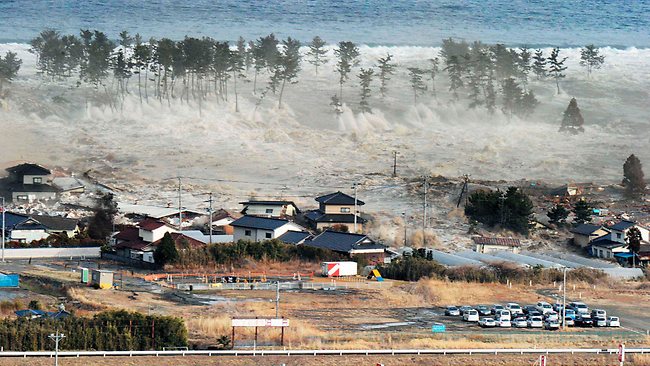
Rev. Franklin Graham thinks the tsunami that hit Japan might mean that Jesus is returning to earth soon.

Graham said that Jesus told his followers that earthquakes were one of the signs of the second coming.

"Maybe this is, I don't know. But regardless, all of us need to be prepared to stand before almighty God," Graham said.

As he explained, an increase in natural disasters was just like how "as a woman gives birth to a child, those labor pains as they begin they start intensifying with more frequency."


Sometimes you just want to say: "Shut up! Will you just please shut up!!"

Thursday, March 17, 2011

The Lorica


I arise today through a mighty strength, the invocation of the Trinity, through belief in the Threeness, through confession of the Oneness of the Creator of creation.

I arise today through the strength of Christ with his Baptism, through the strength of His Crucifixion with His Burial through the strength of His Resurrection with His Ascension, through the strength of His descent for the Judgement of Doom.

I arise today through the strength of the love of Cherubim in obedience of Angels, in the service of the Archangels, in hope of resurrection to meet with reward, in prayers of Patriarchs, in predictions of Prophets, in preachings of Apostles, in faiths of Confessors, in innocence of Holy Virgins, in deeds of righteous men.

I arise today, through the strength of Heaven; light of Sun, brilliance of Moon, splendour of Fire, speed of Lightning, swiftness of Wind, depth of Sea, stability of Earth, firmness of Rock.

I arise today, through God's strength to pilot me: God's might to uphold me, God's wisdom to guide me, God's eye to look before me, God's ear to hear me, God's word to speak for me, God's hand to guard me, God's way to lie before me, God's shield to protect me, God's host to secure me: against snares of devils, against temptations of vices, against inclinations of nature, against everyone who shall wish me ill, afar and anear, alone and in a crowd.

I summon today all these powers between me (and these evils): against every cruel and merciless power that may oppose my body and my soul, against incantations of false prophets, against black laws of heathenry, against false laws of heretics, against craft of idolatry, against spells of witches, smiths and wizards, against every knowledge that endangers man's body and soul.

Christ to protect me today against poisoning, against burning, against drowning, against wounding, so that there may come abundance in reward.

Christ with me, Christ before me, Christ behind me, Christ in me, Christ beneath me, Christ above me, Christ on my right, Christ on my left, Christ in breadth, Christ in length, Christ in height, Christ in the heart of every man who thinks of me, Christ in the mouth of every man who speaks of me, Christ in every eye that sees me, Christ in every ear that hears me.

Sunday, March 13, 2011

Idle unsustainable thought


In the oft-imagined future, the world we will live in is never re-shaped by natural disasters. All the lingering effects that create dystopia or apocalypse are always imagined as man-made. No one envisions the effect of an 8.9 earthquake that shifts an island 8 feet eastward and affects the tilt of the earth's axis.

We have become as gods since the Industrial Revolution, and we still aren't comfortable with it. When the earthquake destroyed Lisbon, 18th century Europe was shaken to its deistic core, and blamed God for no longer being God, or no longer being benevolent (how could such bad things happen to such good people?) We no longer think that way, but every time we envision the future in our fiction, it is bleak, inhumane, and human-created.

Natural disasters that destroy whole cities and reshape the land, never seem to be that critical. Perhaps we don't like to be reminded that we are not in control, even as we fear we are.

We must pray for the people of Japan, and do whatever else we can.

Friday, February 18, 2011

Obligatory Texas History Lesson


Prompted by TPM, who almost gets the whole story. True, when the Texas Senators (no, not a baseball team) fled in 2003 to thwart DeLay's mid-cycle redistricting plan, one Dem returned to Texas and the law finally went through. But they knew to flee to Oklahoma (basically the closest state from Austin, and still quite a distance) because of the Killer Bees in 1979.

And, as the story at Time notes, that time the tactic worked, even though the Senators holed up in a house in Austin not far from the Capitol. So while I sometimes think the entire country wants to be too much like Texas (a right to work state with almost no union representation, and right-wing politics that would make a Neanderthal think twice), in this case the Senators from Wisconsin clearly learned something from the Senators from Texas. Here's hoping they learned it from the Killer Bees.

Tuesday, February 15, 2011

Palmface


TPM:

Some frequent visitors to the Texas Capitol in Austin are obtaining concealed handgun licenses in order to gain quicker access through the building's security screening, Reuters reports.

Concealed handgun license holders can enter the Capitol via an expedited "CHL access" line, while "schoolchildren and tourists" have to pass through metal detectors, according to the report.

The metal detectors were installed last year, after a gun was fired on the Capitol's steps. State troopers are stationed in the "CHL Access" line to ensure the licenses are valid.

....

Carrie Kroll, director of advocacy and health policy for the Texas Pediatric Society, recently got her concealed handgun license in order to gain quicker access.

"Do I think it's silly?" she said. "Yes."

Some lobbyists and even journalists have also applied for the licenses, despite having no intention to carry a gun.

State Sen. Dan Patrick (R) said he carries a handgun with him at the Capitol at almost all times.

"I don't ever want to be in a situation where I don't have the chance to defend myself, my family or my friends," he said. "We live in a world where you can encounter danger at home or work or on the street."

The gunman from last year, Fausto Cardenas, visited Patrick's office before firing shots on the Capitol steps, according to the report. No one was injured.

"Around here, it's not that big of a deal (to have a gun at the Capitol)," said Richard Robertson, who visited the Capitol over the weekend. "Someone from out of state may think we're a bunch of yahoos."
Born here, raised here, lived here almost all my life (including a very long stint in Austin, where I never worried about someone pulling a gun on me.) And based on this story, I think you're a bunch of yahoos.

Wednesday, February 09, 2011

Waiting for the Big One....


NPR this morning:

In Academically Adrift: Limited Learning on College Campuses, two authors present a study that followed 2,300 students at 24 universities over the course of four years. The study measured both the amount that students improved in terms of critical thinking and writing skills, in addition to how much they studied and how many papers they wrote for their courses.
I would like to say my educational experience doesn't bear this out; but it does.

I'm not sure how much "critical thinking" education has ever encouraged. It was fairly well encouraged in my pre-college experience, but not so much that I learned early on to challenge too many prevailing opinions. I seem to have done that on my own, through a peculiarly hard-headed notion that anything I didn't agree with and couldn't discard out of hand, I had to face head on and either accept as valid, or find a good reason to reject. Somebody must have taught me that at some point, because I'm sure I didn't spring sui generis from the brow of Zeus, much less my father. Still, "critical thinking" means, well, being critical; and it's a classic anecdote of college students that they come back home having learned to denounce everything their parents raised them to believe was true.

An exaggerated anecdote, but one with some connection to reality nonetheless. The seminary version of that is the student who comes into seminary a devoted Christian, and leaves a committed atheist. The UCC variant on that at my UCC seminary was that such a student was still ordained into the UCC ministry.* Such stories tell more about the experience of a truly rigorous education where critical thinking is not only encouraged but required, than it does about critical thinking. But try to imagine that outcome in any college today.

The anti-war movement of the '60's was prompted as much by professors challenging the accepted reasoning of the "Best and the Brightest" and the Man in the Grey Flannel Suit as it was a reaction to the horrors of war (because most people experiencing those horrors, or likely to experience them, were not in college). If there is a reason we don't have another '60's generation among us today, it's because no one is emphasizing the kind of critical thinking that should be basic to education. Then again, it's hard to build bricks without straw.

I taught English briefly, in the late '70's when I was a graduate student. I have noticed, in the interim, some decline in the quality of college students, but to be fair I'm now teaching at a community college, not a university. And while the university I taught at was hardly Ivy League, it's possible a slightly better caliber of student attended then than I see now. On the other hand, I'm constantly amazed at instructors whom I see assigning no more than 6 papers in a Freshman English class in a semester, and then requiring each paper be submitted in multiple drafts for review and approval before final grading takes place. I understand the theory of improving composition by editorial review, but can't help thinking it sounds far too much like middle school, and far too little like college-level work.

"If you go out and talk to college freshmen today, they tell you something very interesting," Arum says. "Many of them will say the following: 'I thought college and university was going to be harder than high school, and my gosh, it turned out it's easier.' "
On the other hand, and before you decide I am upholding the standards of academic rigor while my peers collapse into appeasement, consider how many students come to community colleges and need to take Developmental English before they can take Freshman English. I still remember my professors in the '70s', telling me how English majors were once the brightest, most capable students on campus, the most academically gifted and driven among the enrolled. They lamented that, 40 years ago, many students, English majors and non-English majors, needed remedial English classes on grammar and basic sentence structure, before they were ready for Freshman English. This decline has been going on for over a generation now. But if you take students with little preparation and subject them to college standards, you might as well toss them out of school and save everybody the time and effort. The sad fact is, far too many students simply aren't ready to do college work. I understand why my peers assign only 6 papers and then review those extensively before accepting them for grading. They are simply trying to teach people who have not yet been taught.

One of the critiques mentioned in the audio version of that story is that few students report having taken any one class which required them to write 20 pages over one semester. If you assign only 6 papers, and don't assign anything over 3 pages, it's easy not to make that mark. On the other hand, if you assign 6 papers and make each at least 5 pages long, one of two things will likely happen: students will drop your course, or they will turn in papers well under the minimum length. And, most likely, the ones turned in will mostly be garbage. I know some of the problem is motivation: that is, they won't do it. But a large part of the problem is ability: they can't do it. And why not? Because they don't have the apparatus to do the critical thinking necessary to generate enough content to fill 5 double-spaced pages.

5 pages, by the way, is about the minimum length of the research paper I assign every semester; and at the end of the semester I always have students who cannot make that much progress, despite having all semester to work on the paper and presumably having done the research which will pretty much generate the content. They don't do the research, of course, or don't do it very well, because they lack the critical thinking skills necessary to assess and evaluate data, much less to seek it out or to know what to do with it when they get it.

I teach in high school as well, and I can tell you the daily schedule is a crucial difference between high school and college. Meeting the same class 5 days a week gives the teacher ample time to guide the students, or even drill them, on the fundamentals they need to learn (yes, I know some high schools work on a schedule that doesn't require meeting the same class 5 days a week; but the total immersion in school, being on that campus for 8+ hours a day, is the crucial factor). A college schedule assumes the student already knows how to learn, and will attend class having done the work beforehand. Think of it as sharpening a knife edge until it is a razor's edge. You can't do that if the knife is just a blunt piece of steel; or if there isn't a knife there at all.

And yes, I think it will get worse before it gets better; in no small part because of the "consumer culture," the idea that colleges should advertise and entice and serve students the way Wal-Mart is supposed to do:

According to the study, one possible reason for a decline in academic rigor and, consequentially, in writing and reasoning skills, is that the principle evaluation of faculty performance comes from student evaluations at the end of the semester. Those evaluations, Arum says, tend to coincide with the expected grade that the student thinks he or she will receive from the instructor.

"There's a huge incentive set up in the system [for] asking students very little, grading them easily, entertaining them, and your course evaluations will be high," Arum says.
I've been berated for poor course evaluations. It always struck me as odd that you would go to someone because you want to learn from them (i.e., they know something you don't), and simultaneously you could know what they needed to teach you (because you know what you need to learn). I've also been critiqued because my students' grades over several semesters didn't meet the averages of other instructors. Is this evidence I am a poor teacher? Or is it evidence my standards are too high, my expectations too rigorous? Both and a little bit of neither, I'm sure; but drawing too firm a conclusion from such data is a dangerous thing, indeed. And drawing conclusions from such evidence encourages what Arum identifies: pass your students, make them like you, and all will be well; for you as the teacher, anyway. If the students don't actually learn, or more importantly learn to think, well....

They'll be in good company, eh?


*UCC pastors still love to explain "UCC" as: "Unitarians Considering Christ." But we do so cautiously.

Addendum: And yeah, maybe it's just where I live:

Despite significant improvements in test scores both for math and reading, the portion of Texas' adult population with at least a high school education has gotten even worse than it was ten years ago. The percentage of Texas' population with a white collar job has decreased more than 3% between 2000 and 2009, the fourth worst performance by any state. Texas also experienced one of the smallest increases in higher education, ranking 45th in bachelor's degrees and 42nd in advanced degrees.

Population Change (2000-2009): 2,967,222 (14.2%)
Bachelor's Degree or Higher: 25.5% (30th)
Population With White Collar Careers: 12.5% (32nd)
NAEP Math: 18th
NAEP Reading: 34th

Friday, February 04, 2011

Regarding the Suffering of Others


Stay with me, this gets complicated fast.

On Tuesday, Texas started experiencing "rolling blackouts," planned power outages, across the state, due, we were told, to cold weather. Hmmmm....


Texans faced eight hours of rolling electrical blackouts Wednesday and could see more outages Thursday as the coldest weather in 15 years caused power plants to break down.

The Electric Reliability Council of Texas called off the longest period of planned outages in state history Wednesday afternoon. But the state grid operator warned it could initiate outages again Thursday morning if power plants, including three new coal plants owned by Energy Future Holdings, don’t get fixed.

The situation outraged some electricity customers, who overwhelmed call centers. Several top lawmakers said they would hold hearings on the incident and urged Texans to conserve.
I do like how "conserve" is the solution when the power system fails; but seldom otherwise. This isn't the coldest Texas has ever been, nor the first time Texas has ever had winter weather. Conspiracy theories abound, of course:

In the mean time, the average consumers will be screwed (with the blessing of their state government) by what appears to be a psychological operation and a massive electrical grid test. If you live in Texas, don’t be surprised if your electric bill goes up (so they can supposedly build more distribution lines and ‘upgrade’ the grid). After all, you want to avoid experiencing more power outages, don’t you?

Enron was notorious for engaging in this practice in order to increase profits during the ‘California rolling blackouts’ in the late 1990′s, for which the company was investigated by congress. Today, in Texas, electrical power companies engage in the same scam. Furthermore, they do it openly and nothing happens to them. What does that say about the state of affairs in this country? Did we really sink this low in our own complacence and ignorance in just one decade?
But that's mostly because ERCOT (the agency charged with regulating electricity in Texas) has done such a poor job of explaining what's going on:

The blackouts were widely blamed on the cold. This strikes me as preposterous. Yes it’s cold, for Texas. Houston got down into the 20s Wednesday morning, with single digits up in Abilene, but I have a hard time believing that power plants aren’t more robust than that.

But that’s what we’re being told. Apparently 50 out of Texas’ 550 power plants went down Wednesday morning, knocking off 8,000 mw, or about 12% of demand. Lt. Gov. David Dewhurst said the problem appeared be inadequate winterization and that the trouble centered on two new coal-fired plants owned by Luminant (a subsidiary of Energy Future Holdings, formerly TXU) which suffered a broken pipe and a frozen pipe. What about the other 48? Still unclear.

Also compounding troubles: another 12,000 mw worth of plants were offline with scheduled maintenance. As of Thursday morning 3,000 mw of plants were reportedly still offline because of the cold.

Texas needs to know why this is happening and who is responsible for allowing this weakness in our power grid. If Wisconsin can keep the lights when temperatures drop to -30, Texas ought to be able to deal with temps in the teens.

It really is a matter of life and death. Cutting the power to important hospitals is irresponsible, and Oncor, the north Texas power distributor has apologized. While in Houston the death of Stephen Caldwell is blamed on the outages. Caldwell, 29, reportedly required an oxygen machine to help him breathe. When the power went out he called his family for help, but by the time they got there he was dead.

So far the grid-managers at the Electric Reliability Council of Texas, or ERCOT, haven’t given an adequate explanation of what happened and how to fix it. Lawmakers say they’ll get to the bottom of it. The last time Texas faced rolling blackout was during a 100-degree heatwave in 2006. Finger-pointing after that one caused the head of ERCOT to step down.
I've produced all this by simple Google searches. What I haven't produced is any better explanation than I've found in that quote. I do have to note the forcing the head of ERCOT to step down in 2008 didn't really fix the problems in 2011....

Nor has the situation improved today; and note what is meant by "conserve", at least in El Paso:

Due to the extreme weather conditions over the past several days, El Paso Electric has not been able to restore a significant amount of its local power generation.

El Paso Electric continues to operate under a curtailment plan and we are asking all customers, business and residential, to immediately reduce as much electrical usage as they can.

El Paso Electric is asking businesses to curtail their usage except in situations of critical needs.

El Paso Electric is also asking customers to curtail usage in their homes.
Do not use appliances such as the washing machine, dishwasher, or electric clothes dryer Turn off extra lights, electric water heater and other electric appliances that you do not absolutely need. Minimize the use of your electric range or oven when preparing meals.
As I write, the temperature in El Paso is 34F.

I said this gets complicated; following the bouncing ball:

New Mexico Governor Susana Martinez, a Republican, declared a state of emergency due to gas shortages, closing government offices not providing essential services, according to a statement posting on her website. New Mexico Gas Co. said rolling blackouts in West Texas and “other problems” had cut gas deliveries to the state, forcing supply interruptions to customers in several towns, according to a statement posted yesterday on its website.

El Paso Corp., owner of a gas pipeline in the state, said in a statement on its website that demand is unusually high due to cold weather. Additionally, blackouts in Texas shut down processing plants and well freeze-offs slowed supply.

“We’re seeing situations where company X or company Y scheduled a certain quantity of gas and may be taking more off the system than their nominations,” said Richard Wheatley, a spokesman for Houston-based El Paso Corp. "Normally we have enough gas in the pipeline system to counteract that kind of situation; we can move gas around."
I know about the natural gas shortage in New Mexico because I have family and friends living there. What happened? The rolling blackouts in Texas:

Some 25,000 New Mexicans were without natural gas after a freeze in west Texas led to rolling power outages that interrupted electricity to natural-gas compressor stations.

"We had natural-gas supplies," said Monica Hussey, spokeswoman for New Mexico Gas Company. "But we couldn't get the supply on hand out of storage and to customers because it needs to go through compressor stations."
Which is ironic, since:

New Mexico is a prime natural-gas producer and is ranked fourth nationally.
But they didn't count on Texas not being able to generate electricity during a cold snap. And this is one of the coldest winters on record in New Mexico. So this isn't an inconvenience; it's life threatening.

This may be, despite conspiracy theories, an infrastructure problem. It is in Mexico, anyway:

Mexico said Thursday it was temporarily suspending an offer to provide electricity to Texas to help the U.S. state weather an ice storm that forced rolling blackouts, because of severe cold in Mexico's own territory.

Mexico's Federal Electricity Commission had said Wednesday it had agreed to transmit 280 megawatts of electricity to Texas.

But on Thursday, the commission said it was temporarily suspending the transfer because below-freezing temperatures in northern Mexico have caused some damage to the generating capacity of its own plants, causing some power outages in several parts of Chihuahua state and a reduction of about 3,800 megawatts in generation.

The commission also said Mexico needed to ensure there was enough electricity to meet domestic demand, in the face of a severe cold snap that dumped snow on the border city of Ciudad Juarez, across from El Paso, Texas.
Is this due to Texas' population growth, up over 20% since 2000? Maybe. What's really interesting is the interconnectedness of us all, connections our public discourse pays no attention to. Had you heard New Mexico was without heat? The entire state? I haven't found any reporting on the blackouts in Texas that mention how we've harmed New Mexico and even California. This isn't a story out of New York, or the East Coast, or California, or even the second most populous state in the Union (which would barely be noticed this winter were it not for Super Bowl XLV in Dallas), so it isn't a story at all.

Are we connected when we pay no attention to the connections?

Thursday, February 03, 2011

Regarding King Canute....


So, Egypt is in revolt because of Tunisia, and Tunisia is in revolt because George W. Bush spread the seeds of democracy. Right?

Or is Egypt in revolt because of Obama? Both David Axelrod and the right wing say so, for very different reasons.

Or is Egypt in revolt because Mubarak is a dictator the U.S. backed for 30 years because of Israel and Camp David (and fear of the Muslim Brotherhood), and because of the example of Tunisia, and the uprisings in Tunisia and Jordan are because of unemployment and rising food prices? That seems much more likely.

Which, oddly enough, sort of makes it our fault, doesn't it? Funny how thinking everything revolves around you, obscures the fact that you are involved in everything. Whether you like it or not.