Monday, September 17, 2018

Lest Ye Be Judged


The biggest problem with gossip is that it is always judgmental.

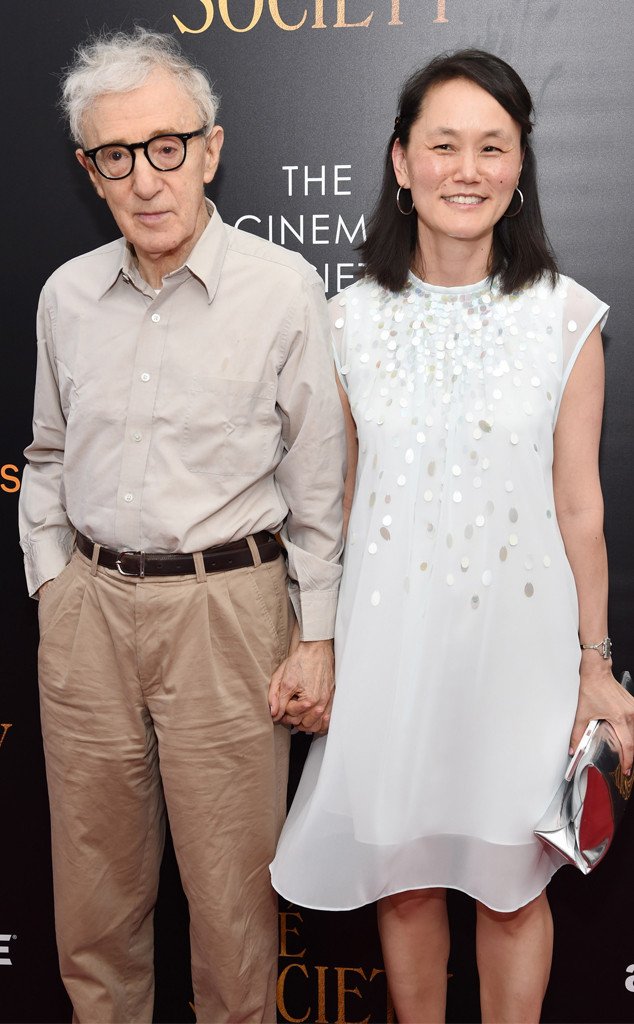
Woody Allen's wife Soon-Yi Previn gave an interview that was published this week.  I mostly ignored that news because I don't know (but pretty much don't believe) if Mr. Allen sexually assaulted Dylan Farrow as a child.  I've spent enough time with family law cases to believe Ms. Farrow would make up the allegations and encourage her daughter to believe them (children at the age of 7 are extremely susceptible to suggestions from their parents, and extremely eager to please their parents.  It's the major problem with the "child abuse" cases of many decades ago, with lurid tales of "satanic practices" that people believed, even when such things supposedly took place in broad daylight in the public setting of a day care or a pre-school).  I was relieved that at least the interview seems to have taken all the air out of the "Mr. Allen-stole-Soon-Yi/raped her as a child."  Nothing in the interview supports those lurid suggestions that Mr. Allen ripped his now-wife from the cradle; but Ms. Cauterucci finds ways to imply Mr. Allen is a white slaver, anyway.

Nor, according to Ms. Previn, did Mr. Allen steal her from the arms of a loving family.  Is it true Ms. Farrow was "Mommy Dearest Redux"?  I don't know, and I don't care.  But where gossip is concerned, such judgments are always the concern:

 (In 2015, Mariel Hemingway said a fortysomething-year-old Allen flew to visit her at her parents’ house when she was 18 to try to convince her to travel to Paris with him; when she confronted him with her suspicion that he would make them share a room, he left.) 
Actually, he spoke to Ms. Hemingway's parents, and they left it up to her.  She declined the offer, he left quietly, and nothing more was said.  Besides, she was 18, presumably the age of consent in New York at the time.  Ms. Hemingway recounted the story to describe how gentlemanly Mr. Allen was.  Ms. Cauterucci uses the story to be sure we understand what a predator he is, and therefore he must be guilty of the crime he's never been charged with, and implicitly of still playing Svengali to his wife.

The whole discussion of the interview is on this line:  Ms. Previn is manipulated by her husband, who is in the room during the interview (who knew the interview was a police investigation and the witnesses should have been questioned separately?).  This, of course, infantilizes the 47 year old woman, but she must remain perpetually a child so we can sit perpetually in judgment, and remain perpetually outraged.

Merkin also periodically lets Allen jump into her conversations with Previn to correct his wife. When Previn says Allen has reshaped her life by giving her “a whole world that I wouldn’t have had access to,” Allen interjects to clarify that he “provided her with material access and opportunity, but it’s all her,” and that he’s “more introverted and nondescript.” 

The bastard!

Another journalist might have confronted Allen with the way he described his role in their relationship to the Hollywood Reporter in 2016:

She was an orphan on the streets, living out of trash cans and starving as a 6-year-old. … And so I’ve been able to really make her life better. I provided her with enormous opportunities, and she has sparked to them. … She’s very sophisticated and has been to all the great capitals of Europe. She has just become a different person. The contributions I’ve made to her life have given me more pleasure than all my films.

This far creepier characterization positions Allen as both white-savior colonizer and parent, raising a Korean-born child into the Westernized wife of his desires. Merkin’s failure to mention it betrays the apparent purpose of the profile: not to give the long-silent Previn the chance to claim her life story as her own, but to make one last-ditch effort to save Allen’s legacy from the bright lights of the #MeToo movement. 
Well, I suppose, yeah, that is a "creepier" description, or at least a disturbing story of Ms. Previn's childhood*, but "white-savior colonizer...raising a Korean-born child into the Westernized wife of his desires"?  Seriously?  It's my understanding from the interview they started dating when Ms. Previn was in college.  I think the reference to travel is for that period, not when she was an adolescent.  Is Mr. Allen really guilty of a sin for taking his girlfriend/wife (whenever the trips occurred) abroad?

I mention this because this response to the interview is an overheated reaction to a non-story sparked only by Amazon cancelling the release of Mr. Allen's latest film.  Maybe they looked at it and said "Nope, not really what we paid for."  Maybe they panicked over actors now refusing to work with Mr. Allen, and regretting that they ever had (never stopped Scarlett Johansson, a movie that provoked almost as much controversy  as "Manhattan" but only for her age v. Mr. Allen's, and that was many movies ago).  Who knows?  But in an age when people are being put in cages in Texas for the temerity of applying for asylum in this country, and the President is declassifying DOJ documents and records of private conversations the better to belittle the special prosecutor, the story of Mr. Allen and his wife are rather small beer.  And frankly, it doesn't aid the story of Dr. Christine Blasey Ford, who is going to have a hard enough time getting a fair hearing (as Dahlia Lithwick points out, the accuser is always tardy in making her accusation, no matter when it is made).  The life of Woody Allen is an old chestnut, and a hoary one.  His wife says she gave the interview because of the Amazon cancellation and the things being said about her husband.  Devotion to one's beloved cuts no ice with Ms. Cauterucci:  Mr. Allen should be tarred and feathered and Mrs. Allen be made to wear a scarlet "A".  Because otherwise women will never have justice in America.

Or something.  I've given up figuring out why people get so angry about other people, especially other people they don't really know.  That, too, is a sin in the interview:  that the interviewer was a family friend.  Again, I didn't realize all celebrity interviews should be conducted as if they were hostile witnesses and the truth could only be obtained by harsh and demanding questions.  But Mr. Allen deserves no less than the Grand Inquisitor, and his wife deserves shaming just for being married to him.

Or maybe for taking so long to break her silence.  Wouldn't that be ironic?


*but the interview confirms it, and I seriously doubt the original interview inferred it was Mr. Allen who took her off the streets of Seoul and brought her to America to live with Ms. Farrow.  So what's creepier than distorting facts to make a point you can't make otherwise.

It's rainin' fake summons down in Texas

Not the act of a winning campaign:

The fund-raising appeal comes in an envelope with the words “SUMMONS ENCLOSED — OPEN IMMEDIATELY” written across it in large capital letters. In the upper left-hand corner are three lines of text: “Official Travis County Summons, Voter Enrollment Campaign Division, Ted Cruz for Senate 2018.”

And the return address? It says the “official summons” has come from Senator Ted Cruz.

The letter inside the envelope is more clearly part of a fund-raising effort. The Cruz campaign logo appears at the top of the letter and recipients are given the option to donate a preselected amount of money or to write in their own denominations.

You also gotta wonder:  what part of government does Cruz want to do away with, and what part does he want to exploit to scare people into opening envelopes?

The NYT notes the FEC doesn't think this violates their rules.  But the author of a provision in the Texas Deceptive Trade Practices Act says it does violate Texas law:


Which doesn't mean Cruz is going to jail, or is even going to be sued for the civil penalty.  But it doesn't make his campaign look any better.

Sadly, this is supposed to be funny:

Wotta campaigner this guy is.

Sunday, September 16, 2018

Heckuva Job, Brockie


Trump's FEMA director proves his loyalty:
“I don’t know why the studies were done,” the FEMA director shrugged. “In my opinion, what we’ve got to do is figure out why people die from direct deaths, which is the wind, the water and the waves — you know, building collapsing, which is probably where the 65 number came from.”

“And then there’s indirect deaths,” he continued. “So, George Washington study looked at what happened six months after fact. And what happened is — and even in [Hurricane Florence] — you might see more deaths indirectly occur as time goes on because people have heart attacks due to stress, the fall off their house trying to fix their roof. They die in care crashes because they went through an intersection where the stop lights weren’t working.”
Or die when a tree falls on their car, which was probably gonna happen anyway, right?  There was a report that one of the deaths attributed to Florence was a man packing to leave his house ahead of the flood waters. I can't remember the cause of death, but it was attributed to the storm.  I suppose we should argue over adding that one to the count.

Because we should only be concerned about people who died for the "right" reasons. And we should argue vigorously about how many people deserve our generic and anonymous concern. On such issues turn the fate of nations.

“You know, the other thing that goes on,” Long added. “Spousal abuse goes through the roof. You can’t blame spousal abuse after a disaster on anybody.”

Especially among brown people, donchaknow?

These people have to look up to see the mole people.

Because what's more important than North Carolina right now?

Totally illegal. The trials, convictions, plea deals, indictments: totally illegal. Right?

Saturday, September 15, 2018

Still Timely

Except in retrospect, Nixon doesn't seem all THAT bad.

The Hill He Wants To Die On


This really wasn't that hard to find (#GoogleIsYourFriend):


September 2, 2017:  Trump visits Houston


September 7, 2017:  Relatively low Harvey death toll is 'astounding' to experts.  It was 70 at that point.


Or:


So the total death toll from Hurricane Harvey is 82 or 88, depending on whether you accept the Texas Tribune's report, or the report in WaPo.  Not really a controversy worth stirring.  Harvey started pummeling Houston on August 25, 2017, and dumped about 64 inches of rain on the area before it was finished.  Much of the Texas Gulf Coast was affected; the city of Rockport, which took the eye of the storm, was virtually wiped off the map.  But Houston didn't suffer the 3 week loss of power it did 9 years earlier, when Hurricane Ike went directly across the city  Still, you will note the death toll rose over 500% in 6 weeks, and almost 100% after Trump's visit.  Such is the nature of death tolls after major storms.  The count in Puerto Rico was delayed for months because of the conditions there, conditions Trump's government did precious little to alleviate (he blamed it on the fact Puerto Rico is an island).

Still, Trump relies on experts like Geraldo Rivera:

And damns the Puerto Ricans with faint praise, noting how corrupt Loud Obbs says the PR government is:

He likes that Ed Rollins quote because Rollins credits the paper-towel throwing with Trump personally restoring power to the island, although some parts of the island still don't have power a year later.  Loss of power is the primary culprit blamed for the massive death toll after the storm.  The nature of the calculations is obviously beyond the feeble powers of Mr. Rivera to understand, but it all makes you wonder:

Is this really the hill the POTUS wants to die on?  Apparently it is.  It's said he fears a "Katrina Moment" in his Presidency.  I, for one, would welcome him making Puerto Rico and Hurricane Maria into his "Katrina."  It would be fitting for the fatal wound to be so self-inflicted and deliberate.  As to the foolishness of this controversy itself, the Governor of Puerto Rico deserves the last word:

Adding:  funny how many people are talking about the slap at Trump, v. the number talking about the request for respect and empathy.  So it goes, eh?

And apparently the death count for Florence is going to be "magically" inflated, too.  What is wrong with this man?

Starbucks went to Italy


And made the same coffee I've been making at home for 40 years.*

Nothing against Starbucks (they have improved the quality of coffee for purchase by the cup), but I find this hilarious.

*admittedly, I prefer my coffee to Starbucks non-espresso brews. YMMV, and all that, but I don't get my beans from them.

Friday, September 14, 2018

History 101: Again

Yeah, pretty much...

There are two ways of defining the worship space in Christianity, and the difference turns on whether you have a congregation led by a priest, or by a pastor.

Generally speaking, if the church has a priest, then the worship space is the property of the church, and even the form of worship comes from the church hierarchy.  The classic example is the Roman Catholic church, but Episcopalians are not that different from the Roman liturgy, and Lutherans show a surprising similarity to the Catholic liturgy (surprising only because what most people know about Lutherans is Garrison Keillor, who ironically isn't).  A church led by a pastor lays claim to the worship space; the pastor is allowed charge of it, but within more distinct restrictions.  (A favorite short story is comprised of letters to a C of E rector about who in the congregation will get to put up what decorations when for the Christmas season, in the worship space.  We're never quite discussing absolute control here.)  I've seldom seen, for example, a Protestant worship space that didn't include an American flag near the pulpit or at least flanking the chancel.  Some churches try to balance it with a "Christian" flag, something I think flag makers invented in the '50's to sell more flags, but the intent of the national flag is clear.

When I was still in a pulpit in Houston, I was asked to host a visit from a visiting German pastor, because of the historical connections between the UCC and the German Evangelical and German Reformed churches.  The pastor was a woman, younger than me, and she asked why we had a flag beside the pulpit.  I explained I didn't like it, and she confessed she thought it disturbing, especially given the history of Nazi Germany that she, like me, didn't remember but had learned.  Her escort/driver for the day immediately launched into a defense of the flag in the church, distinguishing it from any sense of state intrusion into worship by saying the flag represented people who had died for American freedom.  He was of my father's generation, and the gap between the three of us was obvious.  Once a year in that church we celebrated "Scout Sunday," because the church sponsored a Boy Scout troop.  It required (and here, especially, is where the congregation controlled the worship space and the order of worship, at least once a year) the trooping of the colors, which meant the American flag and various Boy Scout colors were marched into the chancel from the nave, and all stood and recited the Pledge of Allegiance to the flag before worship could commence.  The strongest protest I could mount was to stand silently during the pledge, my hands at my side.

I bring this up because of this:

Pastor Mack Morris wanted to take a stand. Preaching in front of his Mobile, Alabama, congregation on Sunday morning, positioned just to the left of an American flag, he declared that he was sick and tired of the way clothing brand Nike had, in his view, disrespected America and its people.

“The first pair of jogging shoes I wore were Nike jogging shoes,” he told his congregation, “That was in the early ’80s. I’ve been wearing Nike jogging shoes since 1980. I got news for you. I’ve bought my last pair of Nike shoes.” He produced two branded items — a Nike wristband and a headband. Then he cut them up right there at the pulpit.

His audience’s response? Raucous applause.

I'm not really surprised by that, but then, I remember when pastors could lose their place if they just mentioned from the pulpit that maybe the Vietnam War wasn't such a good idea after all, or that (especially in the South, where I grew up, but just as common elsewhere, I think now) Martin Luther King might have a point (he became, like all saints, a saint only in death).  Tara Isabella Burton thinks this one event is not just a protest against Colin Kaepernick or Nike, but  a "powerful symbolic act":

It reveals the virtually unprecedented degree to which white evangelical theology, and an extremely narrow (white, conservative) understanding of “patriotism,” have converged in the post-Trump age. White supremacy, evangelical identity, and a distinctively Christian form of nationalism have combined.
This "convergence" is unprecedented only if you have no knowledge whatsoever of the history of Christianity in this country.  The understanding of "patriotism" has been narrowing since at least the end of World War II.  If you watch as blithe an example as "The Best Years of Our Lives," you won't find one John Wayne-style character giving a speech about liberty and victory a la Wayne's speech by Davy Crockett "The Alamo" (a speech that makes me long for the bluntness of the real Davy Crockett, who told a crowd after he lost a political race:  "You may all go to hell, and I will go to Texas."  Even if it isn't true, it looks great on a coffee mug.)  There's even a scene with a dissenter against the war, after it has ended; he still holds to a conspiracy theory about why it happened and why it didn't need to.  England tries to hide the complicity and sympathies of its ruling class for Hitler; America tries to ignore that there was not, after all, complete unanimity about the "Good War."

Christianity and nationalism have been locked in an unholy marriage for as long as I can remember.  God wanted us to win World War II, and God wanted us to be prosperous (and white) after the war; God wanted us to fight the godless commies and Korea and Vietnam, and God didn't look too kindly on black preachers stirrin' up the black folk.  Ah, yes, I remember it well.

Burton recognizes this, to some degree:

John Fea, a professor of history at Messiah College in Pennsylvania and author of Believe Me: the Evangelical Road to Donald Trump, told Vox in a telephone interview on Thursday that Morris’s actions represented a combination of two elements. The first, he said, was “conservative evangelicals’ commitment to the idea that America is a Christian nation, and that somehow the American flag not only symbolizes generic nationalism but that the nation was founded by God, that it’s a nation created by God. So [people think], how dare Colin Kaepernick take a knee.”

Secondly, he said, “Christian nationalism has always been connected with whiteness. It has always been about [the idea of] America’s founding by white Christians.”

These ideas, Fea said, have existed throughout American history. But Donald Trump’s campaign and election have them to the fore. Furthermore, he said, we’re seeing an unprecedented relationship between the president and the evangelical religious establishment, in which pastors take “marching orders” from Trump’s own discourse.
Well, yes, Trump is a loose cannon on the deck of the ship of state, and everyday Raw Story runs another video about another white person have a public breakdown about their fear of a brown planet, public displays obviously (?) connected to the behavior of the President (sometimes the causal connection there is in the eye of the beholder.  And, as Andrew Bacevich points out, Trump really is a continuation of history, but a rupture with it.).  But is this "unprecedented"?  No, of course not.

And I keep thinking of the counterfactual, which no doubt exists somewhere in America:  what of a UCC congregation where the pastor preaches just the opposite of what this pastor in Alabama said, to the approval of his congregation.  Jeremiah Wright pastored a UCC church of over 8000 members, and made many a fiery statement from a more distinctly left position on the political spectrum.  Until Barack Obama ran for President, who had ever heard of Jeremiah Wright?  Why were his sermons (in full, not in the cut-and-paste versions released in the campaign of 2008) never a signifier of greater, more serious, or even more disturbing, things?  Because he was black?  Because he was UCC?  Because he was "liberal" and therefore represented nothing beyond his parishioners?

And who does Mack Morris represent, beyond Woodridge Baptist Church?*

*which seems, curiously, to have removed itself from the internet.  TIB notes the video of the sermon has been removed from Vimeo; as far as I can find, the website of the church has been removed, too.

Thursday, September 13, 2018

Bending Reality Like Gravity Bends Light


Bacevich is right, Trump is not governing. But Trump is also incapable of even appearing human. The best metaphor is a black hole. Trump us the personification of a black hole. He us trying to bend reality around him.

Wednesday, September 12, 2018

Reading Rainbow

Frankly, most of what I read on the intertoobs (obsessively, let us be honest) is of the quality of this:

Still, it’s disconcerting to read a Woodward book that reveals a presidency just as malignant and dysfunctional as the Nixon administration, although in different ways. I confess that I didn’t expect to see two presidents with such monumental character flaws twice in my lifetime. If I didn’t know better I would think there’s something wrong with the Republican Party that it keeps electing these people.
Of course, the Republican Party didn't elect Donald Trump to the Presidency; the American people did; or at least the ones who bothered to vote.  We don't really get very far blaming "them" for what "we" don't like, as if there is a wall between us, and we are only responsible when we approve.  "They" are always responsible for what goes wrong, whether "they" are in the opposing political party, or just don't understand the world correctly, as "we" do.

So let us all give thanks for Andrew Bacevich:

To a far greater extent than Trump’s perpetually hyperventilating critics are willing to acknowledge, the United States remains on a trajectory that does not differ appreciably from what it was prior to POTUS #45 taking office. Post-Trump America, just now beginning to come into view, is shaping up to look remarkably like pre-Trump America.
That's his thesis; on the way to establishing it, he argues that Trump has ceased to govern, if indeed he ever did:

If you spend your days watching CNN or MSNBC or reading columnists employed by the New York Times and the Washington Post, you might conclude otherwise. But those are among the institutions that, on November 8, 2016, suffered a nervous breakdown from which they have yet to recover. Nor, it now seems clear, do they wish to recover as long as Donald Trump remains president. To live in a perpetual state of high dudgeon, denouncing his latest inanity and predicting the onset of fascism, is to enjoy the equivalent of a protracted psychic orgasm, one induced by mutual masturbation.
The state of high dudgeon is not peculiar to the internet, in other words.  It exists in the "real world," which in many ways is a virtual as the one imagined to be salable by Silicon Valley or present in speculative fiction.  And it is as pointless in one place as it is in the other.  I like pausing to consider that, but Bacevich's point is this:

Yet if you look beyond the present to the fairly recent past, it becomes apparent that change on the scale that Trump was promising had actually occurred, even if well before he himself showed up on the scene. The consequences of that Big Change are going to persist long after he is gone. It’s those consequences that now demand our attention, not the ongoing Gong Show jointly orchestrated by the White House and journalists fancying themselves valiant defenders of Truth.
The change that is happening is not necessarily the change we've wanted, but it is the change we have experienced at least since the 1970's.  The U.S. economy was onward and upward until the '70's.  Post-war America built schools and universities and highways and "infrastructure," and then we sat back to enjoy it.  In the '70's inflation started changing aspirations, credit cards started turning us into the consumer society Bacevich derides in his analysis, and as the Fed raised interest rates to wring inflation out of the economy, it brought on both a recession in the '80's, but also the effective repeal of usury laws across the country (interest rates on loans as established by the Fed exceeded the statutory limits of most usury laws; something had to give, and the first real rollback of a regulation designed to protect "little people" gave way to the needs of the financial markets and, most importantly, credit card companies.).  Recessions and "bubbles" became a normal feature of the U.S. economy after that (shades of the 19th century!), and today the country is still in recovery from the Great Recession of 2008.  That's the "Big Change" Bacevich is talking about, the structural change in an industrialized economy from manufacturing to consumption, though it's hard to see how manufacturing functions with consumption on the other end.  Still, these are fundamental questions we have refused to acknowledge, much less try to answer.

But isn't Trump "dangerous" and powerful and soon to embroil us all in his chaos and ineptitude?  Nah.  Bacevich reviews Trump's more notorious actions (the ones the courts haven't shut down, most of those immigration matters), and he concludes:

The point of this informal midterm report card is not to argue that Donald Trump has somehow failed. It is rather to highlight his essential irrelevance.

Trump is not the disruptive force that anti-Trumpers accuse him of being. He is merely a noxious, venal, and ineffectual blowhard, who has assembled a team of associates who are themselves, with few exceptions, noxious, venal, or ineffectual.
And it's true.  Trump is not Uber, or Lyft, or Netflix/Amazon/Hulu convincing people to get off of cable (or even the digital revolution in broadcasting, making so many more over-the-air stations available cable is truly irrelevant even for people who don't pay for a streaming service).  And if he and his associates are noxious, venal, and ineffectual it's because, well, that's what we are as a nation. Is Trump, for example, responsible for the hurricanes of last year and this year, or the fires ravaging California?  Or is he in a long line of Presidents who basically did nothing besides, at best, pay lip service to a problem we've known about, or should have known about, for almost a century?

The nation’s too-little, too-late response to climate change for which a succession of presidents share responsibility illustrates the great and abiding defect of contemporary American politics. When all is said and done, presidents don’t shape the country; the country shapes the presidency — or at least it defines the parameters within which presidents operate. Over the course of the last few decades, those parameters have become increasingly at odds with the collective wellbeing of the American people, not to mention of the planet as a whole.

Yet Americans have been obdurate in refusing to acknowledge that fact. (emphasis added)
Some will say he's dangerous because the GOP still stands behind him.  But this morning a news report mentioned, only in passing at this point, that GOP analysts are beginning to think that maybe Trump doesn't have the hold over his base that all the pundits insist he has.  Certainly if Trump can't turn out his voters in November, he won't have any supporters worth counting on in January, because that amorphous, anonymous "base" won't be calling the shots in the halls of Congress.  18 months ago the GOP was looking at the political landscape and expecting to extend its control of the Senate into a much larger majority in just two years.  Now, rather like 1974 after Nixon won by the greatest landslide in American history in 1972, they barely dare hope to keep their one-vote majority in the upper chamber.  What has Trump disrupted?  The expectations of the pundit class and the blatherskites on the internet (your humble host included).  What has changed since he took office?  Not much of anything, really; and nothing at all that won't change back in two years.

Speaking of disruption:

The cultural front opened by 9/11 keeps widening, and the terms of the struggles along those fronts, as each new technology opens them, are almost impossible to recognize immediately. In 2015, Jeff Giesea published his famous essay on memetic warfare in the NATO journal Defence Strategic Communications. Despite its immense influence—it predicted, and possibly shaped, Russian techniques of disinformation in Ukraine, Russia, and the United States, and Giesea went on to run significant elements of Trump’s election campaign—the essay’s key insight has not really been dealt with seriously. Russian meme factories achieved, with minimal expense and no direct violence, their country’s deepest foreign-policy aims: a sharp decline in U.S. influence in the world, the endangerment of the post-World War II alliances of the liberal order, and the humiliation of the notion of human rights. There has been no retaliation.

Memetic warfare is only the latest element of the diathetical struggle that has been ongoing since the arrival of the internet. The cultural front is along every point of the network—television, the press, movies, songs, sermons, advertising, and social media. Everything that gives meaning is a battleground. Diathetics is the rearrangement of the enemy’s mindset by spectacle and the means of its consumption. This is a new kind of war and a deeply confusing one. Confusion is its purpose. The problems of assessment are substantial. The line between what is military and what isn’t has blurred, and the cultural front seems ridiculous, beneath the dignity of the military and totally beyond the purview of soldiers anyway. Memetic wars, wars of popular culture, are ridiculous. That does not alter their effectiveness. A reality television star with the world’s most elaborate comb-over has helped achieve Russian foreign-policy aims.

Even to look at 9/11 as a work of culture, to investigate its significance, is fraught in itself. The occasion is sacred, suitable for solemn reflection. Real people really died. But as painful and grotesque and offensive as it may seem, if you want to understand America’s current vulnerability, you have to look at 9/11 as a show. It is a war show that the United States lost and continues to lose.

This is a much more difficult article to summarize; and I won't do it the injustice.  The thesis, based on the efforts (in history) of T.E. Lawrence, is identified as the use of diathetics as a weapon of war; it is applied to the work of Osama Bin Laden, to argue, as that quote above concludes, that America lost, and continues to lose, the "war on terror."  But not because we have trampled on civil rights in the name of national security, humanity in the name of torture that "works," or even rising defense budgets in the name of might makes right makes powerful.  No, the thesis is subtler than that:

T.E. Lawrence, who turned himself into the pop culture icon Lawrence of Arabia, was the great innovator of guerrilla information war in the 20th century. His best-known platitude held that “[t]he printing press is the greatest weapon in the armoury of the modern commander.” His autobiography Seven Pillars of Wisdom provides the fine details of how he came to that understanding. Lawrence was sick, and in camp, in the sweltering heat of his fly-ridden tent, when it occurred to him that Carl von Clausewitz and the other great military theorists of earlier eras would have considered the war he was waging unwinnable. The Arab forces could not destroy the enemy, take the major strongholds, or break the courage of their opponents, which was how the great generals of the past had defined victory. The insight crept up on him: What if those definitions were all wrong? What if, instead of winning the war by the traditional definitions of victory, the definition of victory changed? “[A]s I pondered slowly, it dawned on me that we had won the Hejaz war,” Lawrence writes. “I brushed off the same flies once more from my face patiently, content to know that the Hejaz War was won and finished with: won from the day we took Wejh, if we had had wit to see it.” He didn’t need to win. He just needed to decide he had won and convince the world. The struggle was to change the definition of victory, to change the meaning of the events rather than the events themselves.

The term Lawrence gave to this kind of semantic warfare was diathetics, a phrase borrowed from the Greek philosopher Xenophon. It was a battle for the stories people tell and for the public consciousness that emerges out of the stories that people tell.

"We had to arrange [our soldiers’] minds in order of battle just as carefully and as formally as other officers would arrange their bodies. And not only our own men’s minds, though naturally they came first. We must also arrange the minds of the enemy, so far as we could reach them; then those other minds of the nation supporting us behind the firing line, since more than half the battle passed there in the back; then the minds of the enemy nation waiting the verdict; and of the neutrals looking on; circle beyond circle."

Diathetics is an extension of guerrilla warfare, in the sense that it is used by the weaker force against the stronger and uses the lines of communication against those who have laid them down. The sabotage of lines of communication turns the greatest strength of the more powerful force—the ability to convey information and materiel across distance—into vulnerability everywhere along the line. Rather than sabotage the lines of communication along the periphery, diathetics sabotages the network at the center, the source of the meaning being communicated.

Osama bin Laden understood diathetics instinctively and explicitly. “It is obvious that the media war in this century is one of the strongest methods,” he told Mullah Mohammad Omar in a letter in June 2002. “In fact, its ratio may reach 90 percent of the total preparation for the battles.” The front is cultural, the conflict over narrative.

Think about that last sentence a moment, because the conflict Donald Trump ceaselessly tries to stir is over narrative.  He had the largest crowds at his inaugural; he has accomplished more in 18 months than any President in history; the recovery of Puerto Rico from two hurricanes in a row was an "unsung success."  And, of course, his favorite hobbyhorse:

The conflict is always over narrative, n'est pas?

As I say, I can't do it justice (and I've probably mangled Bacevich's argument, too); read the original and decide for yourself.  This is much more thoughtful and well-reasoned stuff than the froth I usually refer to, and I commend it to your careful attention.  After all, in these days perhaps more than others, we must remember the admonition Dom Crossan attributes to Jesus of Nazareth: "You have heads, use them!"



Anything to be sure he's not responsible

What teacher was handing out grades on the FEMA effort? Texas is still recovering, by the way, but we have no Mayor Cruz, so no one is noticing.

And what did Mayor Cruz do to obstruct recovery of her city? And why is she so powerful she delayed recovery of the whole island?

Tuesday, September 11, 2018

No wonder I'm grinding my teeth

Because they are there for him, and he has come to praise Trump, not to bury his ego beneath the dignity of his office.  And because he is not just a national embarrassment, but an international one:

Maria, he said, was the "hardest one we had by far because of the island nature", adding: "I actually think it was one of the best jobs that's ever been done with respect to what this is all about.

"The job that Fema [the Federal Emergency Management Agency] and law enforcement and everybody did working along with the governor in Puerto Rico, I think was tremendous. I think that Puerto Rico was an incredible, unsung success." 

And while we're on the subject of hurricanes:


Sleep well, all y'all on the East Coast.


Squatter's Rights

Nope.

That article apparently prompted somebody in the White House to put this together, complete with mocking soundtrack so you can't quite hear what Obama says (or that he's talking about manufacturing jobs, which are not coming back to America):

Barack Obama is living rent free in Trump's head.

Something Else Obama Couldn't Say!

The Most Years Ever!

Monday, September 10, 2018

A Category Four Hurricane is Bearing Down on America's East Coast


Clearly the hurricane is not that important....

While We're Talking About Bubbles


Nike reported a 31% sales boost during the Labor Day holiday weekend this year over last year after the [Colin Kaepernick] advertisement debuted online.

The Boy in the Bubble


Yeah, that bubble is not a one-man operation. 
Pettypiece worried that Trump is living in a bubble of his own creation. The president, she said “is so confident in his instincts when it comes to his political instincts, business instincts, he is not listening to anybody around him, whether it’s national security, public relations, or communications. He, as he always has been and now increasingly so, feels he is going to follow his gut on every issue.”

Well, as long as Trump listens to Fox&Friends and Sean Hannity and people like Michael Caputo (on NPR's "1A" this morning, insisting the "deep state" is out to get Trump, even as Tim Weiner and Juliette Kayyem directly refuted the conspiracy theory and said anyone who believes in the "deep state" conspiracy is an idiot.  Caputo never took that bait.), he will continue to believe his "gut."  Caputo went so far as to invoke the "no true Scotsman" argument.  When it was pointed out that most of the complaints Trump had arose from his staff and their inability to function in government, Caputo answered that Trump staffers were insufficiently loyal and supportive of Trump because they were "compromise" candidates forced on Trump and therefore were now undermining him.  Forced on him, of course, by the "deep state."  He had an excuse for every fact presented to him that Trump is simply incompetent.  Like the Big Idea, Caputo believed Trump cannot fail, he can only be failed.

It was a rather enlightening view of the conspiracy minded people Trump associates with (and here we recall what a fan Trump was of Alex Jones, at least once upon a time).  Trump is living in a bubble, but he is also listening to people around him; the people he agrees with, anyway, like Michael Caputo.

Beto for Senate


Texas has been a one-party state since Reconstruction. Up until the election of Bill Clements as the first GOP governor in Texas history, that one party was the Democrats. Even after the first election of Clements it took another decade to turn Texas blue. And yet, for as long as I can remember, Texas regularly sent one GOP Senator to Washington.

So the idea of sending one Democratic Senator to D C. is not such an anomaly as many pundits want to make out. And besides, Ted Cruz is a lousy candidate.

Democrats won so automatically in Texas that when they started losing statewide, they didn't know what to do. Only this year have I seen Democratic candidates run enthusiastically rather than reflexively. No candidate encapsulates this enthusiasm better than Beto O'Rourke. And no candidate is a more clumsy campaigner than Hillary Clinton except Ted Cruz.

His own supporters in Texas were outraged at the yard sign gap.  His campaign manager tried to excuse it as a policy decision not to waste money on yard signs.  The reality more likely is Cruz didn't have the money for them, while Beto did.  Cruz recently admitted he didn't have money for TV ads, which is when the donor started stepping up.  Still, Cruz can't dent Beto's momentum.

Look at what the donors to Cruz are getting for their money. Beto was in a punk band; Beto is for eminent domain (which is what Trump would have to use the length of the Texas border to build his wall); Beto will bring tofu and died hair to Texas. That last is significant because Cruz made that claim in Humble, just north of Houston. He dare not say it in Houston, the most ethnically diverse city in the country where Japanese, Thai, Vietnamese and Chinese restaurants crowd the same streets alongside Indian, Greek, Mexican, steakhouses and hamburger joints. Bring tofu to Texas? Cruz, how out of touch are you?

A recent Texas Monthly article on this race pointed out that the last time Democrats won big in the state, voter turnout topped 50%.  Is that likely to happen again? Turnout for the Democratic primary set a record. If that translates into higher turnout, especially along the deep blue border where Beto is best known, interesting things could happen.  Two Republican House members are already considered vulnerable, something unthinkable even two years ago.  It would seem Democratic voters see a reason to vote, for once, and they are ready to take advantage of it.

Some state offices are comfortably GOP; some federal offices are not. Some state offices are up in the air. Texas won't become a two-party state in November; but it wouldn't be the first time it had Senators from both parties in D.C.

Sunday, September 09, 2018

The 3 U.N.-Horsed Men of the Boobocalypse


Let me start this post with the first proviso:  my wife is a very intelligent person with a very demanding job, so she doesn't spend time on-line like I do.

I mention that because an article like this ("The human need for ‘chaos’: Here is why extremists spread conspiracy theories and fake news") immediately makes me look to the numbers.   Partly because conspiracy theories have always been with us, and partly because we seem to think they are more pervasive now than at other times in our history.  Most of American racism is based on conspiracy theories (black men lust for our white women, for example; and away from racism, the moon landing was faked, vaccines will kill you, 9/11 was an inside job, etc., etc.).  Much of eastern Europe thrived on conspiracy theories under the Soviets.  That may be a better explanation for their seeming rise there. Here we are less used to it in public life, but it has never been less prevalent, except to people who confuse the internet with reality.  How many Trump supporters are there, actually, who adhere to the wild conspiracy theories espoused by the likes of Alex Jones? (and what does it say about the "liberal" reputation of Austin, Texas, that Jones lives there?).  The article has three people pictured in it:  Joe Arpaio, Alex Jones, and Donald Trump.  My wife would recognize Trump, but not Arpaio or Jones.  If I named them, she might not even be sure who they are.  I doubt anyone in her office would know.  I doubt most of my students would know, this semester or in recent semesters.  And yet for those of us who are on-line, they are three of the most dangerous people in the world.

Really?

I recently saw an article that asserted that some 23,000 people nationwide adhere to the QAnon conspiracy theory, and this was presented as a number large enough to evince concern.  Really?  I went to school in a small East Texas town you've probably never heard of, and it was larger than that. I went to the University of Texas at Austin, when the student body exceeded 50,000 (I think it's close to 60,000, now, but I'm not sure).  23,000 out of 350 million is a forgettable, anonymous small town in flyover country.  It's probably not enough votes in one place to sway the electoral college, much less scattered randomly across 50 states.

I'm sure there's a "human need for 'chaos' ".  I'm sure there are people, as Alfred said in "The Dark Knight," who just want to watch the world burn.  I don't think Donald Trump is one of those people.  For one thing, he's not as malevolent as Heath Ledger's Joker; for another, he's not as coherent.  Donald Trump is not an agent of chaos (as the Joker was), Donald Trump is a toddler with a loaded shotgun.  He's chaotic because he's incompetent, not because he revels in disorder.  He's dangerous because he's become the President, not because he's got a plan, or even motive and means, to destroy democracy.

Look at his tweets (again).  He's told Jeff Sessions to investigate the author of the anonymous op-ed.  On what grounds?  Kellyanne Conway says we don't need no steenken' grounds, we just need to be suspicious (which is not the same thing as the legal concept of "reasonable suspicion).

“From what I understand, there can be an investigation if there is criminal activity,” Conway said. When Tapper said “there doesn’t appear to be any,” she replied, “I don’t know that and I don’t think you know that.” Asked again if she believes this person broke the law by criticizing the president, Conway said, “I have literally no idea, nor do you, what else this person has divulged.”

“I think this person is going to suss himself or herself out,” Conway predicted. “I think cowards are like criminals. Eventually they confess to the wrong person.”

The closest she comes to a coherent argument there is that cowards=criminals, and so they should be treated as criminals, and we must investigate the coward who has probably committed a crime we aren't even aware of yet!  We don't know what they might have done, so we must presume they are guilty of something!  5th Amendment be damned!

Or some such nonsense.  This is either to divert suspicion from her, or because she's as dumb as her boss (or, third option, wants him to think so).  But it is arrant nonsense, and the greatest concern it raises is that it echoes the statements of the President.  The effect is corrosive, but not signs of immediate chaos and doom.  Trump is not an agent of chaos, he's a source of incompetence, a tool in the hands of others (Stephen Miller, who's been most effective at getting his foul ideas turned into government policy), but not really a force in himself.  He can't even bring himself to fire people.  Comey learned he was fired from a tweet someone told him about.  John Kelly famously had to fire Omarosa, and Trump acted like he knew nothing about it (and was powerless to reverse it, quite a different picture than the "I alone can do it!" image he thunders at his rallies).  He is, as I said, a toddler with a shotgun:  dangerous because of the situation, but in himself, harmless as a babe.

The reference to "The Dark Knight" is actually fortuitous.  The Joker is convinced he can scare enough people into creating chaos themselves, and like a chain reaction it will run riot through Gotham City.  But the people, without Batman's direct intervention, decline to be so cowardly, so base, so self-interested.  In the climatic scene two boatloads of people on ferries hold the power to destroy the other boat (and save themselves), and both ultimately decline the offer.  That has been the reaction to Donald Trump:  not joy and triumph that chaos is ascendant, nor even fear and loathing that chaos is coming (I've seen that in action, and it's not a feature anywhere right now).  People have generally declined the offer to destroy each other in the name of evading chaos.   The reaction, in fact, has been against chaos and toward order, against scapegoating and fear mongering, and toward reasonableness and optimism.  The "audacity of hope" Obama tried to run on single-handedly, may yet be finding fertile soil and amenable gardeners.

There certainly isn't any rush to embrace the Mad Toddler as the only one who can save us (a promise he made in the campaign which he has, unsurprisingly, broken).

Saturday, September 08, 2018

Why Beto Is Likely To Win

Because if that's all you've got. Besides, people actually like Beto:

Friday, September 07, 2018

See If This Adds Up

Aren't you investigating that?  I thought the NYT was "failing" and "fake news!"

Because Trump loves to bluster, but when it comes to doing anything:

Trump often attacks the House minority leader in public but privately “treats her with a sometimes awkward solicitousness,” according to a new Time magazine profile of Pelosi.

Pelosi casually mentioned once in a White House meeting that participants should “pray for success” on immigration, according to an aide briefed on the meeting.

“Are you going to pray?” Trump asked, but Pelosi ignored him and kept talking.

However, the president kept interrupting and asking Pelosi to “do a prayer.”

Trump finally realized Pelosi was not going to agree to his request, so he instead turned to Vice President Mike Pence and asked him to pray.

Classic bully, right?

“To date, the president has seemed like he has the potential to be dangerous,” [GOP Strategist Tim] Miller said, “but really he’s been mostly pathetic.”

To illustrate his point, the strategist brought up the case of Trump’s Twitter fury against Attorney General Jeff Sessions for recusing himself from the Russia investigation.

“He’s done a lot of talk about subverting the justice system, he’s done a lot of tweeting about it, he’s done a lot of venting about it on background to reporters even though he says that that’s a bad thing to do,” Miller said, “but he hasn’t actually done anything yet.”

“We are right to be extremely vigilant,” the strategist said, “but, to date, I think what to expect in the next few weeks is a lot more sad tweeting.”

We hear the stories about staff convincing Trump not to do something, but was he really going to do it anyway?  He announced on Twitter that transgendered soldiers would now be persona non grata.  Whatever happened to that, anyway?  He repeatedly pours scorn on Mueller and Sessions and the entire DOJ; on Twitter.

What does he ever do about it?  And his response to the NYT Op-Ed?   Well, the White House said:

“Nearly 62 million people voted for President Donald J. Trump in 2016, earning him 306 Electoral College votes – versus 232 for his opponent,” the statement released by White House press secretary Sarah Huckabee Sanders reads. “None of them voted for a gutless, anonymous source to the failing New York Times.”

And Chuck Todd pointed out:

“I have a feeling I know who dictated this statement,” Todd joked, suggesting that it sounded like Trump himself wrote it.

And that's as vicious as that's going to get:  words, but never actions.  Consider the Press Secretary's statement about the "gutless loser," well, that's as tough as the White House investigation is going to get.  And then Trump will have to tell Kelly to fire whoever they hang it on; unless it's Kelly.  Then who does Trump send to do the job?

Because you know he won't do it.  The worst part about this is that anyone not convinced Trump is a paper tiger by now, is not paying attention.  And the world is certainly paying attention.  The world well beyond the American shores.


Thursday, September 06, 2018

Schoolhouse Wreck


It's almost like we need a constitutional system of checks and balances, where the three major branches of government have authority and responsibility for oversight of the other two:

“It’s just so similar to what so many of us hear from senior people around the White House, you know, three times a week,” [U.S. Senator Ben] Sasse told Fox News’ Hugh Hewitt Thursday morning. “So it’s really troubling, and yet in a way, not surprising.”

Yes, the events of this week are troubling, and many reporters with White House contacts confirm the released details or Woodward's book and the allegations in the anonymous op-ed, so it's not really surprising.  Dangerous and worrisome, too, I dare say.  Too bad there's nobody in Washington who can do anything about it, huh?

WITCH HUNT!


I really don't think Pence wrote the op-ed.  Not his style,  But it would be doubly funny if he did, because there's not a damned thing Trump could do about it, except freeze him out of the White House.

Pence could just retire to the Naval Observatory and work on his memoirs; or his plans for 2020.  He really oughta just say "I am Spartacus!," especially if he isn't.  It would improve his standing and burnish his reputation*, and cost him nothing.  Trump's gonna take him down the way Clinton took down Gore anyway; he might as well get something for his time.

And "gutless loser"?  Is everyone in the White House now permanently 12 years old?


*no, not by much, but every little bit, amirite?

UPDATE:

Yeah, it's pretty obvious who wrote that statement (hint:  not Sanders).  Here's how that worked out:


Which I'm sure we'll be told is "fake news!"  Because.....

Alligators, alligators everywhere....

I'm reminded of the old saying: "It's hard to remember why you came to drain the swamp when you're up to your ass in alligators."

"He would basically be like, 'We’ve gotta get rid of them. The snakes are everywhere but we’re getting rid of them,'" said a source close to Trump.
Trump would often ask staff whom they thought could be trusted. He often asks the people who work for him what they think about their colleagues, which can be not only be uncomfortable but confusing to Trump: Rival staffers shoot at each other and Trump is left not knowing who to believe."
When he was super frustrated about the leaks, he would rail about the 'snakes' in the White House," said a source who has discussed administration leakers with the president.

"Especially early on, when we would be in Roosevelt Room meetings, he would sit down at the table, and get to talking, then turn around to see who was sitting along the walls behind him."

"One day, after one of those meetings, he said, 'Everything that just happened is going to leak. I don’t know any of those people in the room.' ... He was very paranoid about this."
Trump knows who he can trust:


And he knows how to solve the problem:

The news is just a distraction from how great everything is!  And "Declassification" will drive the snakes out of Ireland!  Er, the White House!  Whatever!  Trump is the Pied Piper of Irish saints!

Wednesday, September 05, 2018

Well, scratch the "conspiracy theory"


Trump is accepting that the op-ed is real (not "fiction," like Woodward's book).  Of course, that doesn't mean the diehards who follow Trump on twitter (and may be Russian bots, who knows?) all agree with Fearless Leader:
Yeah, I'm guessing bots; that last entry on the list is too much of a giveaway, along with the logo.

And since we can't do anything about Trump in the meantime, we might as well enjoy the show:

“That’s just his initial reaction,” The Atlantic‘s McKay Coppins noted. “In the coming hours and days we are going to see a more erratic president, more erratic tweeting lashing out.”

“I got a text before I came on-air from a former Trump advisor who’s kind of a Trump loyalist who was throwing around the word coup,” Coppins added.

Republican strategist Rick Wilson mused that the “paranoid” president “will not trust anybody in the White House now, at all.”

“Trump is going to indulge in all of this wild, paranoid cookiness,” Wilson said. “You talk about a witch hunt? He’s about to execute one there with everything but ladies up on a pile of lumber.”

“It’s gonna get nuts in the White House,” the GOP strategist said. “It’s gonna be glorious yet terrifying.”

I don't think it can get more terrifying for the nation.  "Glorious" works for me, though.  As well as some of the tweets:
Although Charlie Pierce is dead-on.  Anonymous and his/her fellow "officials" are not heroes.  Yeah, that conversation could be a whole 'nother thread.

But if this is the way it's gotta go down, ugly and with no redeeming "At long last, sir..." moment, well, I'm steppin' out for more popcorn.

What color is the sky


in Trump's world?

“So if the failing New York Times has an anonymous editorial, can you believe it, anonymous, meaning gutless, a gutless editorial. We’re doing a great job. The poll numbers are through the roof, our poll numbers are great, and guess what? Nobody’s going to come even close to beating me in 2020, because of what we’ve done. We’ve done more than anybody ever thought possible, in it’s not even two years,” he concluded.

The latest polls at 538, reporting individually, show a disapproval rating ranging from 50% (Selzer and Company) to 55% (Ipsos).  The highest approval rating is Rasmussen, at 44% (with a 54% disapproval rating).  His aggregate approval rating has never been above 48% since he took office, and his aggregate disapproval has not been below his approval rating since February 4; of 2017.

Everything he says is dangerously delusional, including "and" and "the."  I mean, he's done more in less than two years than anybody?  No; just:  no.

The table at that link doesn't cover people like LBJ, who took over in the middle of an uncompleted term (apples to apples, the comparison must be), but Trump would just look worse compared to LBJ, who beat out FDR for legislative accomplishments.

And his tweeted response to this?


L'etat, c'est moi!  And apparently he is at war with this editorial writer.   Although according to that editorial, Trump is the one "adhering" to our "enemies."

Coup de Dunce


So here's the response to Woodward's book, beyond what Trump has tweeted at least three times now (i.e., the statements of Mattis and Kelly denying everything, because who ever heard of them even using such language, my stars!):


By Robert Redford, I guess; is that movie already out?


President Trump is facing a test to his presidency unlike any faced by a modern American leader.

It’s not just that the special counsel looms large. Or that the country is bitterly divided over Mr. Trump’s leadership. Or even that his party might well lose the House to an opposition hellbent on his downfall.

The dilemma — which he does not fully grasp — is that many of the senior officials in his own administration are working diligently from within to frustrate parts of his agenda and his worst inclinations.

Which pretty much confirms everything of signal importance in Woodward's book, unless there is a grand conspiracy between the New York Times and Bob Woodward to create a complete fiction and sell it as news.  Barring that InfoWars level of "reasoning," it's pretty hard now to debate the veracity of almost anything in Woodward's book, despite the best efforts of Mattis, Kelly, Parscale, and Giuliani (a/k/a the law firm of Dewey, Cheatum, Howe).  Minor facts may be wrong, but the base reporting is now confirmed.

And remember, Woodward's book was "leaked" to WaPo, so the conspiracy is a complicated one at this point.

Oh, and there was a cogent argument to be had that Democrats should not focus on impeachment, but rather on investigation.  Unless they take the Senate by a very wide margin, that's still a good argument.  Still, can we afford this kind of slow moving coup d'etat for two more years?